


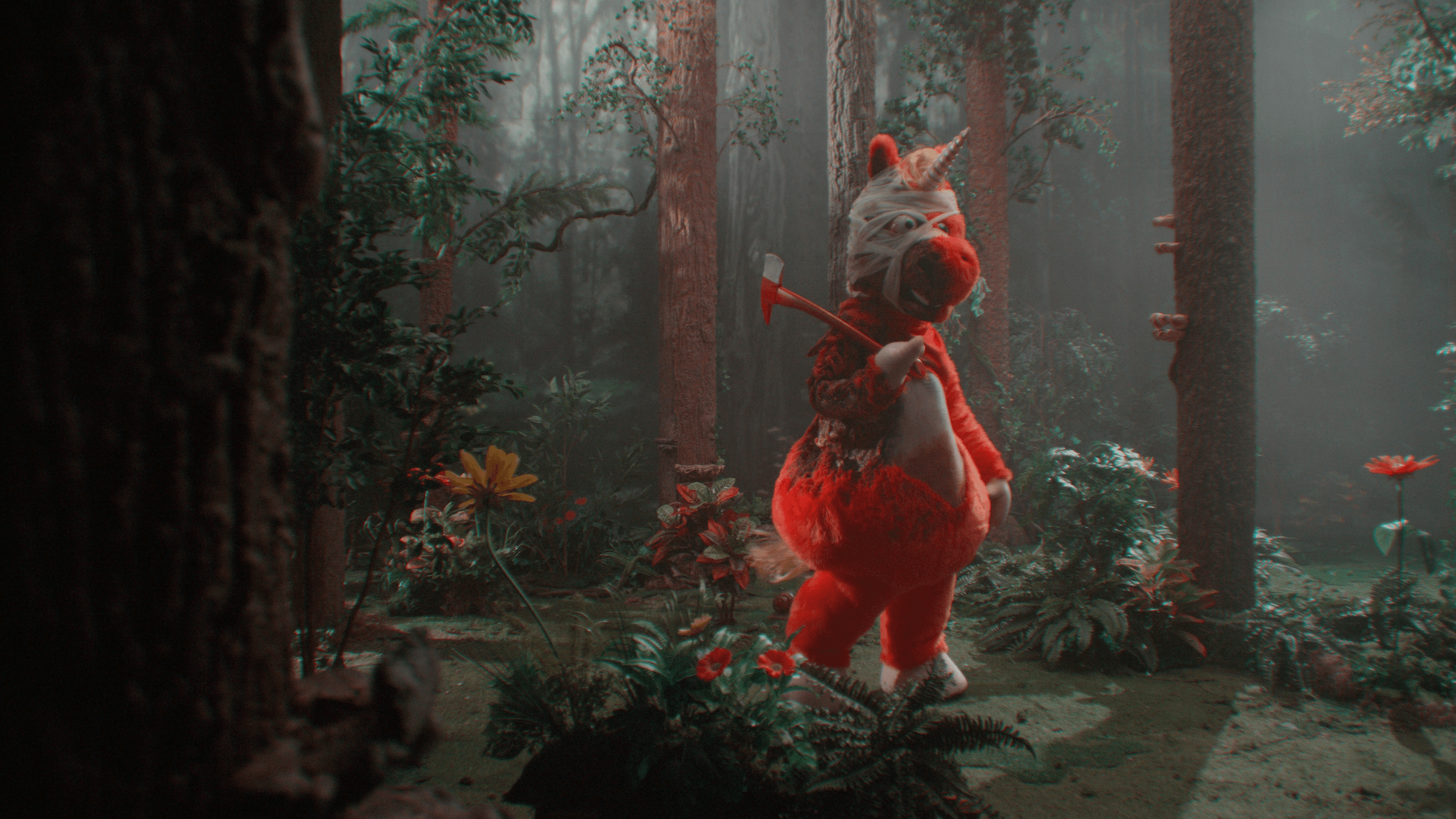
Buddy is hitting theatres on August 28, after a festival run that started at the 2026 Sundance Film Festival and has since included SXSW, the Cleveland International Film Festival, Overlook, and, most recently, Fantasia in Montreal. Somewhere along the way, it also forced me to accept that mascot horror is officially its own subgenre.
I caught up with Kelly ahead of the theatrical release to talk about how that world came together, assembling a cast that includes some pretty enormous names, working with cinematographer Zach Kuperstein, and some easter eggs buried in the fake credits of It’s Buddy!.
There is enough material now that the basic idea is pretty well established. Five Nights at Freddy’s is probably the most obvious mainstream example, while something like Winnie-the-Pooh: Blood and Honey takes familiar childhood imagery and pushes it in a much cheaper and nastier direction. Buddy comes from that same broad space, except the starting point here is basically: what if Barney was a psychopath?
That was more or less the idea that BoulderLight Pictures brought to Casper Kelly. The company, founded by J.D. Lifshitz and Raphael Margules, has been behind a pretty impressive recent run of genre films, including Barbarian, Companion, and Weapons. Kelly was not immediately convinced by the mascot-horror pitch, but eventually found an angle through memories of watching children’s television and wondering what it would actually mean to live inside one of those shows.
Kelly has spent much of his career working in the uncomfortable spaces underneath familiar television and pop culture. Too Many Cooks remains the obvious reference point, while Your Pretty Face Is Going to Hell, Adult Swim Yule Log, and the Cheddar Goblin sequence in Mandy all play with some combination of absurdity, satire, genre conventions, and existential anxiety.
Buddy is the strongest feature-length extension of that work so far. Kelly has much more room here to build a world and sustain characters, and the film remains extremely funny without relying entirely on the joke of watching a psycho version of Barney chase children around a television set. There is a level of care in the production design, cinematography, puppetry, performances, and sound that makes the world feel considerably larger than the initial premise suggests, while the emotional material gives the cast something believable to play underneath all of it.
Perhaps even more importantly, though, it is also a very fun movie.
What is Buddy About?
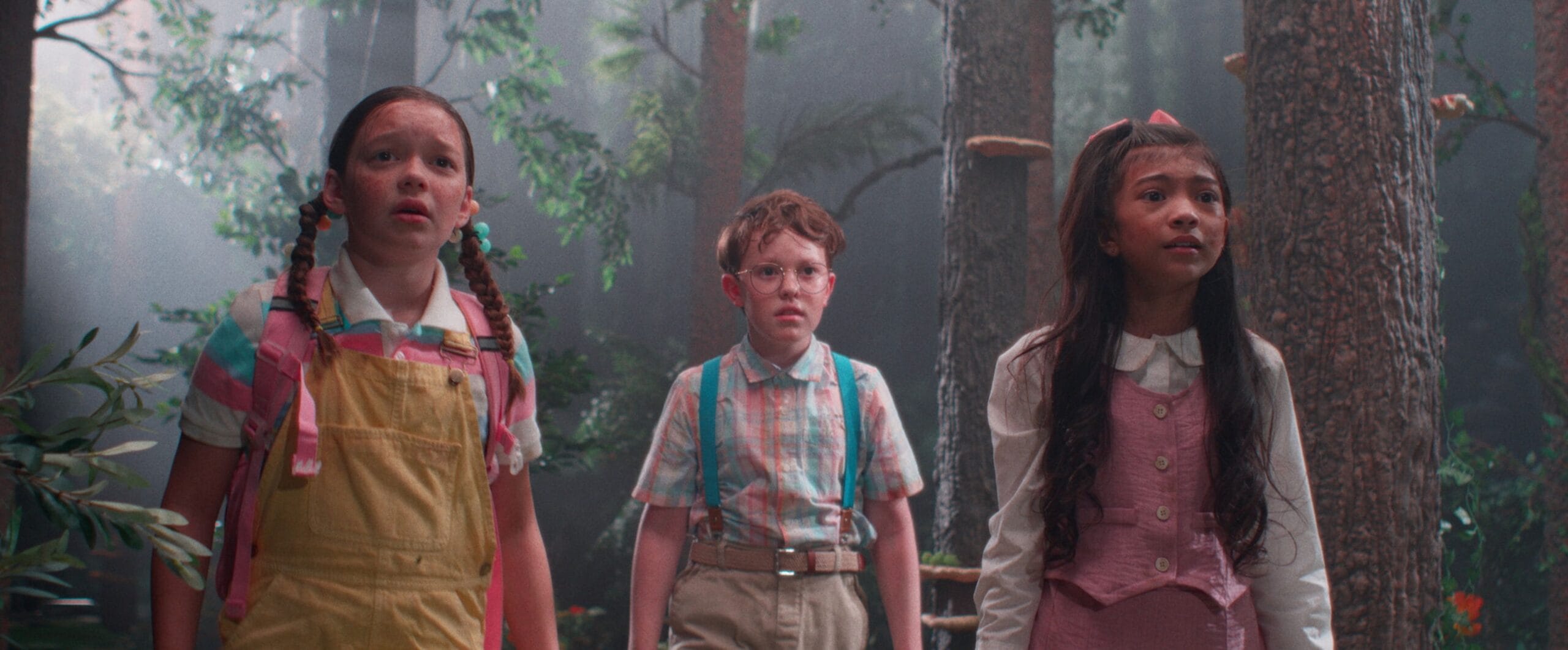
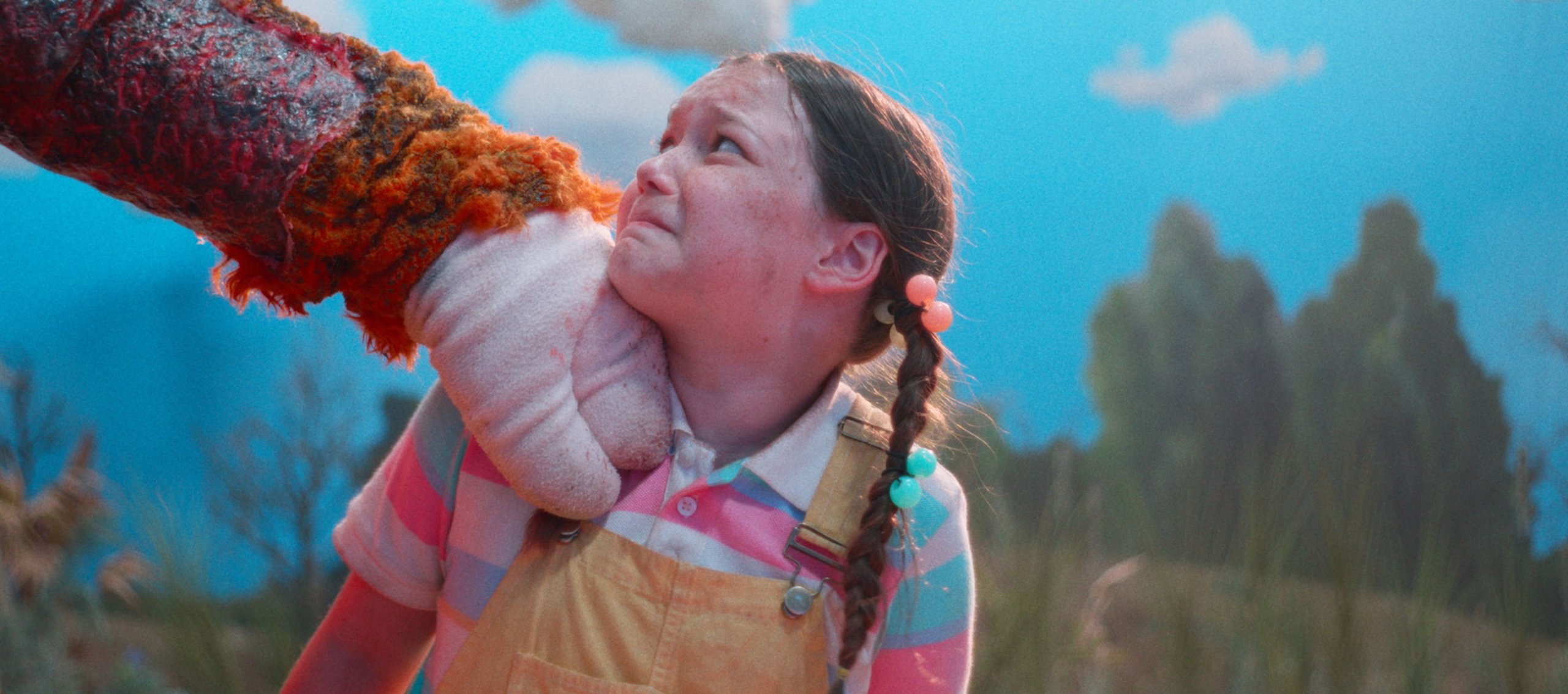
The fictional It’s Buddy! will feel familiar to anyone who grew up with Barney & Friends. Buddy is a giant orange unicorn, voiced by Keegan-Michael Key, who lives alongside a group of children, puppets, talking objects, and various other pieces of children’s television logic. There are songs, games, lessons, and an assumption that everyone involved is happy to participate.
The premise starts to break down when one of the children decides he would rather not.
From there, Kelly keeps expanding what initially appears as a relatively contained piece of children’s television satire, and part of the fun is gradually realizing that the world is much larger, and its rules much less obvious, than it seemed at the beginning.
Kelly has talked about growing up jealous of the kids who appeared to “live” inside children’s television shows. As he got older, those memories started producing stranger questions. Why does everyone always follow the story? What happens if one of the kids does not feel like participating? Why does nobody behave the way actual kids behave?
Those questions give Buddy considerably more to work with than a simple evil-mascot premise. The children understand their world largely through Buddy, who occupies several roles at once: friend, teacher, caregiver, entertainer, and authority figure. Once they begin questioning him, they also have to question much of what they understand about the world around them.
The Barney & Friends influence is undeniable from the beginning, but I also brought forward Blue’s Clues and Dora the Explorer as two other potential influences, which Casper confirmed before filling in the blanks.
“Pee-wee’s Playhouse, for sure. Thomas the Tank Engine,” he added.
There was one other show that Kelly considered but apparently decided was too strange even for Buddy.
“I wanted to do something with Teletubbies, but that’s just sort of its own dimension,” he said. “I have to save that for a sequel because that’s its own thing, you know?”
Casper Kelly and the Cast of Buddy

The cast Kelly ended up assembling is star-studded, to say the least. Along with Key, Buddy stars Cristin Milioti, Topher Grace, Michael Shannon, Patton Oswalt, and Clint Howard, alongside a young ensemble led by Delaney Quinn.
Kelly told me that Milioti was one of the first major pieces to come together.
“Cristin came on first, which was a big deal, and that sort of helped us get other people,” he said.
The timeline made the rest of the casting process more complicated. Because so much of the film depends on child performers, the production was working against the end of summer. Moving too far into the school year would have meant additional restrictions around both working hours and education.
“We couldn’t slide any later,” Kelly said. “We had to rush, rush, rush on the pre-pro to get all the on-camera actors in place. So it came together quickly.”
The voice cast had a little more flexibility because some of those performances were finalized after the physical material had already been shot. Key recorded Buddy after the suit performance from Sergey Zhuravsky, while several of the puppet characters ultimately kept voices that had already been provided on set.
“Betty Bunny is voiced by Jimmica Collins, who was on set as a puppeteer, and Charlie the Train is voiced by Devon Hawkes Ludlow, who was a puppeteer,” Kelly said. “We liked their voices, and there just was no point in replacing them.”
That approach fits the broader production, where much of the appeal comes from seeing physical performers interact with actual suits, puppets, and sets. Buddy is polished, but the polish does not erase the fact that much of this world was physically constructed. The puppets have texture, the suits occupy space, and the actors are responding to things that were actually there.
Key has spoken publicly about the world-building being one of the things that drew him to the film, along with the fact that there was a relatively traditional emotional story underneath all of the stranger material. The movie needs both, particularly once it starts moving beyond the initial children’s-show premise.
Delaney Quinn and the Young Cast of Buddy
The child performances are especially interesting because these actors have to maintain the exaggerated register of children’s television while gradually revealing more complicated characters underneath it.
Quinn, who plays Freddy, was already familiar to me from Mary Bronstein’s If I Had Legs I’d Kick You, one of my favourite films from last year, although she remained obscured from the camera there. As such, the demands placed on her in Buddy are significantly different.
Children’s television has its own performance language. Lines are delivered a little more clearly, reactions are larger, and everyone tends to operate at an enthusiasm level that would feel bizarre in almost any other context. That exaggeration has to remain believable inside It’s Buddy!, even as Freddy and the other children begin experiencing fear, frustration, suspicion, and confusion that do not fit comfortably within the show.
Quinn is especially good at letting those things coexist. As Freddy, she never suddenly becomes a completely different character once the story gets darker. The broadness of the children’s-show performance remains, but small changes in expression and delivery gradually make it clear that there is a kid underneath it who is processing much more than the format is designed to accommodate.
Caleb “C.J.” Williams, Tristan Borders, Luke Speakman, and Madison Skyy Polan are working through the same problem in different ways. Their characters need to feel like they belong in the artificial rhythm of It’s Buddy! without becoming interchangeable children waiting for the horror plot to happen around them.
The film gets a surprising amount of personality out of that group, which becomes important once the stakes move beyond whether or not someone wants to dance along with Buddy.
How Buddy Recreated ’90s Children’s TV: Cameras, Aspect Ratios, and Sound
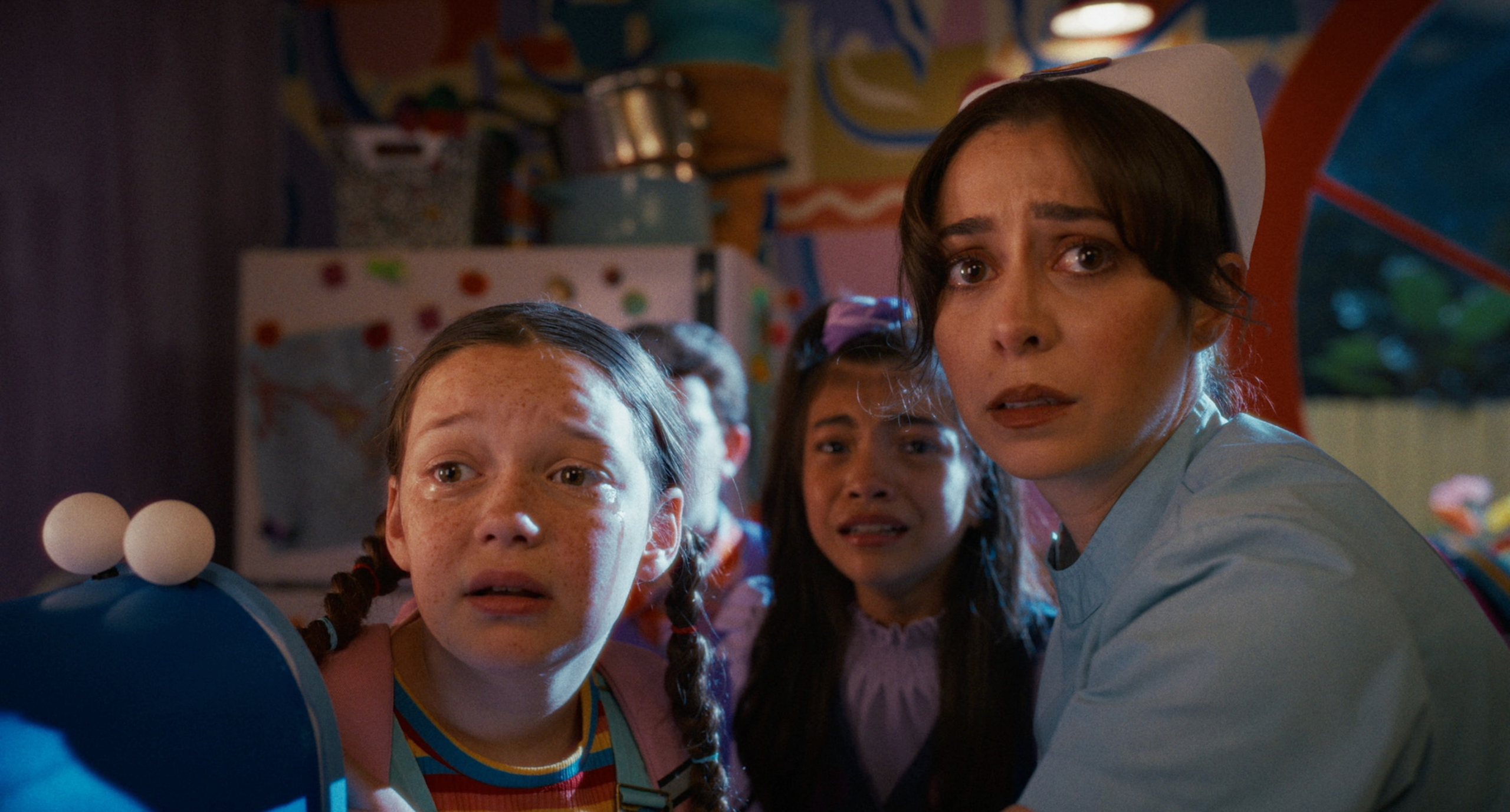
The visual work is probably my favourite element of the film.
Kelly worked with cinematographer Zach Kuperstein, whose credits include Barbarian, The Vigil, Woman of the Hour, and Don’t Move, to recreate the specific texture of a lower-budget ’90s children’s program.
“It felt right for the ’90s world of Buddy, which is sort of like Barney, to mimic the look, resolution, and colour treatment of a CRT cable show as much as possible,” Kelly told me.
They initially considered using actual period cameras, but the practical reality of doing that on this production quickly became a problem.
“We were going to use period cameras, but we were only able to get ahold of two of them, and one of them wasn’t working,” Kelly said. “If the other one stopped working, we didn’t have a lot of leeway in terms of time. So I made the hard decision to shoot with modern cameras and work on it in post.”
Even then, Kuperstein was not relying entirely on post-production to create the look. Kelly described a testing process that included changing how much of the sensor was being used in an attempt to move the captured image itself away from the clean resolution of a modern digital camera.
The finished It’s Buddy! material gets surprisingly close to the texture of an older children’s program. Colour obviously plays a role, but so do the resolution, framing, lighting, and production design. They started by asking how this show would actually have looked rather than applying a generalized retro treatment after the fact.
What I found more interesting, though, is that the movie does not maintain one visual language for television and another for everything outside it.
Kelly and co-writer Jamie King were already discussing aspect ratio while writing the script.
“We’re going to put the audience in this sort of claustrophobic 4:3 aspect ratio for a while,” Kelly said. “It’ll be fun to break them out of it.”
As the film progresses, the aspect ratios are revealed as more intricate and nuanced than simply creating a dichotomy between a TV world and a “real world”. Kelly and Kuperstein allow that relationship to become more complicated as the characters discover more about where they are. These shifts also become part of a larger visual system that also includes changes in colour and texture.
And this same idea carries into the sound mix.
“The Buddy world is in stereo,” Kelly told me, “and then at a very tense part of the movie, it becomes 5.1.”
This is yet another detail that explains why some of these shifts feel larger than what is happening inside the frame alone.
In addition to the cinematography, Devon Hawkes Ludlow served as the lead puppet designer and puppeteer, working with a larger team responsible for the various creatures and versions of Buddy that appear throughout the film. Much of what appears practical on screen genuinely is, and that gives the world the slightly imperfect physical quality that children’s television from this period often had.
The Fake Credits: Boltzmann Brains, Bostrom, and Simulation Theory
One benefit of watching a festival screener on a laptop is the ability to pause, which became unexpectedly useful during Buddy. The fake credits attached to the different pieces of It’s Buddy! contain a collection of names that start changing as the film progresses, and at least some of them appear to have more behind them than a throwaway joke.
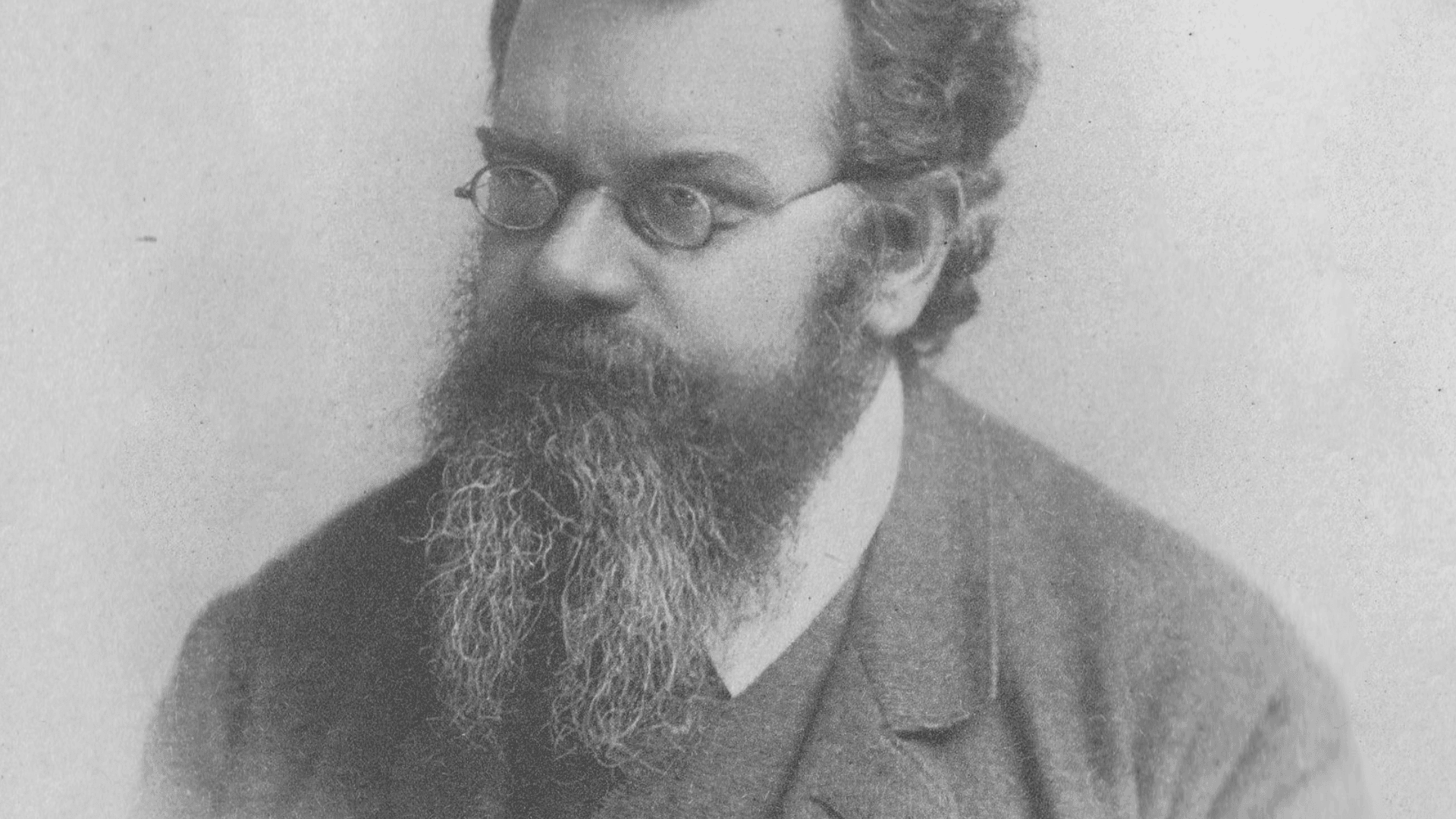
The one that immediately stood out to me was Lou Boltzmann.
I had not thought about the Boltzmann brain in years, but the name triggered a vague memory from my undergraduate degree. When I asked Kelly whether the connection was intentional, he immediately recognized what I was talking about.
“Yes. Thank you. Yes, you’re the first.”
The Boltzmann brain problem gets complicated quickly, but the relevant part here concerns the reliability of memory and observation. In certain cosmological models, it becomes possible to imagine a conscious observer appearing through a random fluctuation, complete with apparent memories of a history that did not actually occur. The thought experiment therefore creates the unsettling possibility that coherent memories are not, by themselves, proof of a genuine past.
That connects rather neatly with some of the questions Buddy eventually starts asking about what its characters know and why they believe it.
The conversation became even more interesting as Kelly explained another relation concept hidden in the “credits”: simulation theory.
“Suppose you believe that we’re eventually going to get the technology where we can simulate reality,” he said. “Then it follows that once we have that ability, we’ll probably be able to do it many, many times.”
The argument he had started describing very much resembled that of philosopher Nick Bostrom and his well-known simulation argument. Bostrom presents a trilemma in which civilizations either fail to reach the technological point required to create detailed ancestor simulations, reach that point but largely choose not to run them, or create enough simulations that simulated observers could vastly outnumber original biological ones.
The part I did not put together until after the interview is that another fake credit in Buddy is Bert Bostrom.
Later (perhaps as the simulation progressed), it becomes Buddy Bostrom.
I did not ask Kelly about that particular name, so I cannot confirm that it is a reference to Nick Bostrom. Given that Lou Boltzmann is confirmed, though, and that both names sit inside a film increasingly concerned with how its characters understand their reality, I would be surprised if Bostrom were completely accidental.
There are several other names buried throughout those credits, and Kelly was content to leave most of them unexplained. He did offer one much simpler connection: Jamie King’s daughter is named Freddy, while his son is named Finn, another name that appears in the film.
What Casper Kelly Hopes People Take From Buddy
Near the end of our conversation, I asked Kelly what he hoped people would be saying to each other when they walked out of the theatre.
“I hope they have a great time and are surprised and scared and laugh and are moved,” he said.
That is pretty close to my experience with the film. Buddy is extremely fun, strange, violent, and well suited to watching with a crowd. The scale of the production also makes the theatrical release worth taking advantage of. There is enough happening with the image, sound, puppetry, and production design that I would much rather see it on a big screen than watch it alone on a laptop again.
Kelly’s ideal reaction, though, extends beyond whether the audience has a good time.
“I hope they say something along the lines of, like, ‘Hey, I want to talk about this. Let’s go grab dinner or a beer and talk about this. I have some theories.’ That’s what would make me happy.”
That is probably the best recommendation I can give for Buddy. See it with some friends, enjoy how increasingly weird it gets, and then go somewhere afterwards and try to work through the parts Kelly has deliberately left open.
He is already writing two more scripts, one on his own and another with Jamie King, both of which he described as a little more science-fiction-oriented.
And if Buddy happens to reach exactly the right person, Kelly had one other preferred reaction to the film.
“I’m actually an executive at A24, and we should give this person an overall deal to just keep making movies.”
In that sense, Casper Kelly is much like the rest of us.
Special thanks to Mongrel Media for facilitating this interview.


Pingback: ‘Buddy’ Lifted By Small But Potent Fandom