


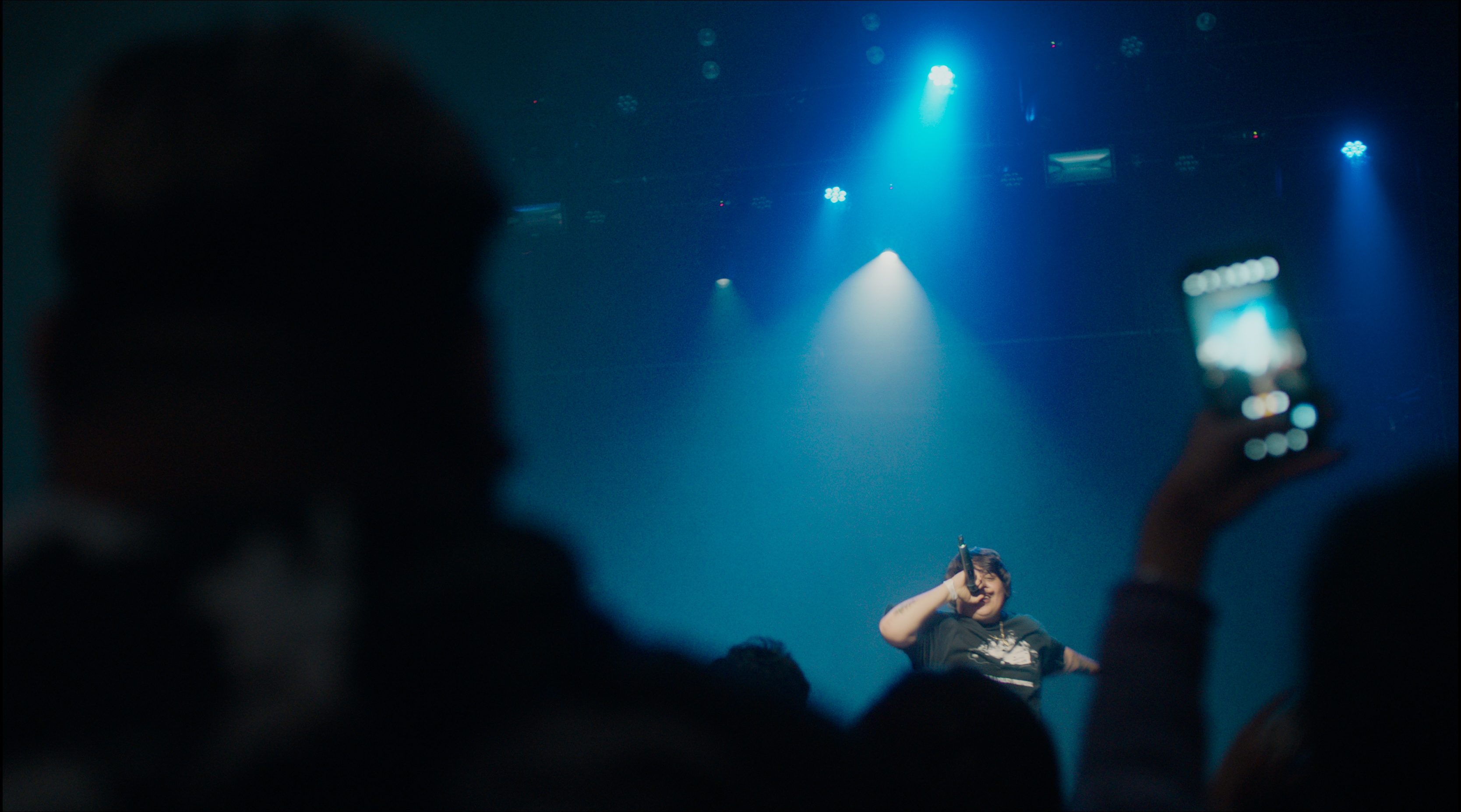
Three Indigenous rappers at very different points in their careers were enough to put Turtle Island Rap at the top of my CUFF.Docs watchlist. The hip-hop was an obvious draw, but so was the prospect of seeing how director Alexandra Lazarowich would bring their stories together without forcing them along the same path. One remark from the film, though, stayed with me for reasons that had relatively little to do with the music.
“If I set my sights really high, I might disappoint myself.”
That’s Wiidaaseh, reflecting on his ambitions. At first, it sounded rather sad, as though he were trying to protect himself from the disappointment of wanting too much. The trouble was that I recognized exactly what he meant. I’ve reached goals in my own creative work that once felt enormous, only to spend an embarrassingly small amount of time enjoying them before worrying about the next project. Something you’ve worked toward for months, or even years, can suddenly feel like a stepping stone. You move the goalposts, and the thing you wanted barely gets a moment to register.
During our interview, Wiidaaseh gave me a different way of understanding the remark. “I really try to enjoy all of the little wins that I get,” he explained, “because it makes it feel like that journey is fulfilling the whole way through.” He still has big plans for his music, but he wants to enjoy making it while he works toward them. Hearing him explain that made me question why I’d come to accept moving the goalposts as a normal part of creative work.
Lazarowich spent three and a half years following Wiidaaseh, A$h Da Hunter, and Travis Thompson through performances, recording sessions, setbacks, and time with their families. Their music and their circumstances are very different, but all three are still pursuing their careers when the film ends.
Ahead of the CUFF.Docs screening, our conversation turned to the music, the lives surrounding it, and how you make a documentary about people whose stories are nowhere near finished.
Alexandra Lazarowich and the Three Sounds of Turtle Island Rap
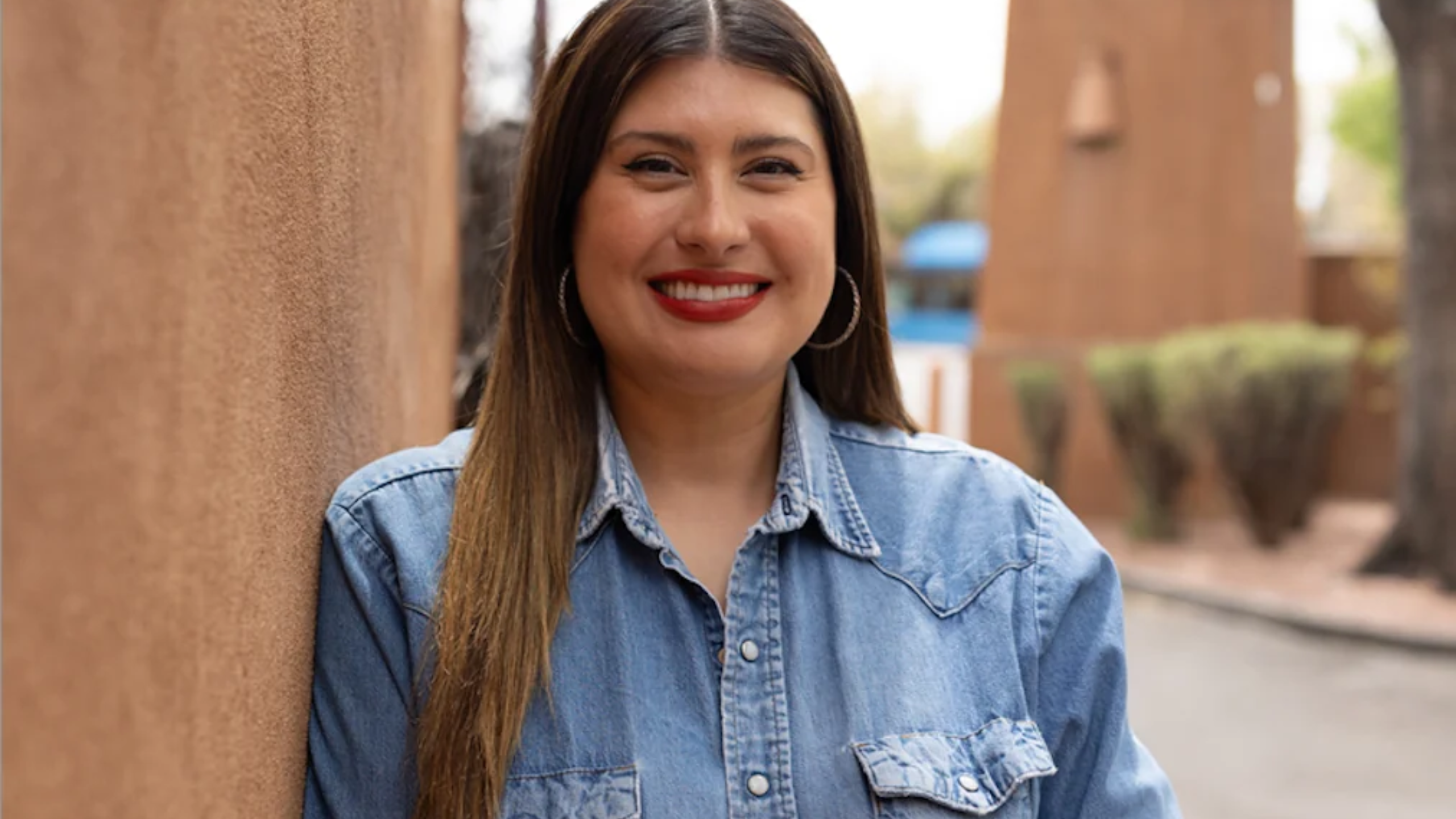
Documentaries examining historical injustice and trauma experienced by Indigenous peoples are important. So are films celebrating Indigenous art, community, and excellence. Turtle Island Rap has room for all of it.
Lazarowich arrived at the project about five years ago through Toronto-based Scenario Media, which worked on Hip-Hop Evolution. I have a soft spot for that series, partly because I’ve followed its host, Shad, since seeing him at Warped Tour back in 2008, of all places. Some of the early conversations about the documentary involved making a history of Indigenous hip-hop and its influence. It’s a worthwhile subject, but Lazarowich kept coming back to the musicians who were making it right now.
“We were always trying to capture the music and the rap and the hip-hop, but I also think we were trying to capture a modern interpretation of what Indigenous community looks like in 2026,” she explained. “For me, that was always sort of the driving force in making the project: we wanted to showcase Native people being Native today.”
She and the team met Indigenous rappers, DJs, b-boys, and other performers, asking about the music they were making and what they wanted to do next. There were far more possibilities than the production could follow. “There was almost too much talent,” Lazarowich recalled.
Musical differences mattered as much as where the artists came from. “We wanted the music to be at the forefront,” she said, explaining that they didn’t want the documentary to be “one note.”
A$h Da Hunter, a member of the Yavapai-Apache Nation with Hopi ancestry from Arizona, is the most confrontational. There’s a real battle-rap quality to her delivery, with aggressive bars that sound as though they’re aimed directly at whoever happens to be in front of her. Travis Thompson, a Navajo Nation rapper from Seattle, has a more commercially refined sound, which makes sense given his collaboration with Macklemore on “Corner Store” and the audiences he’s reached beyond his local scene. Wiidaaseh, an Anishnabek artist from Wiikwemkoong Unceded Territory who now lives in Toronto, is closer to the alternative and underground side of hip-hop. His lyricism and the personal quality of his writing resonate with me most, although someone else might leave wanting to hear more from A$h or Thompson.
There isn’t a monolithic Indigenous experience, and there certainly isn’t one way to make hip-hop. Lazarowich knew some viewers would arrive with a narrower idea of both, but that was even more of a reason to ensure the film came to life. “I think a lot of people who aren’t fans of hip-hop have an idea about what rap is or what Indigenous rap is,” she said. “And we always wanted to provide an alternate point of view for our audience who was going to watch this film eventually.”
A$h Da Hunter, Travis Thompson, and Wiidaaseh: Life Beyond the Stage
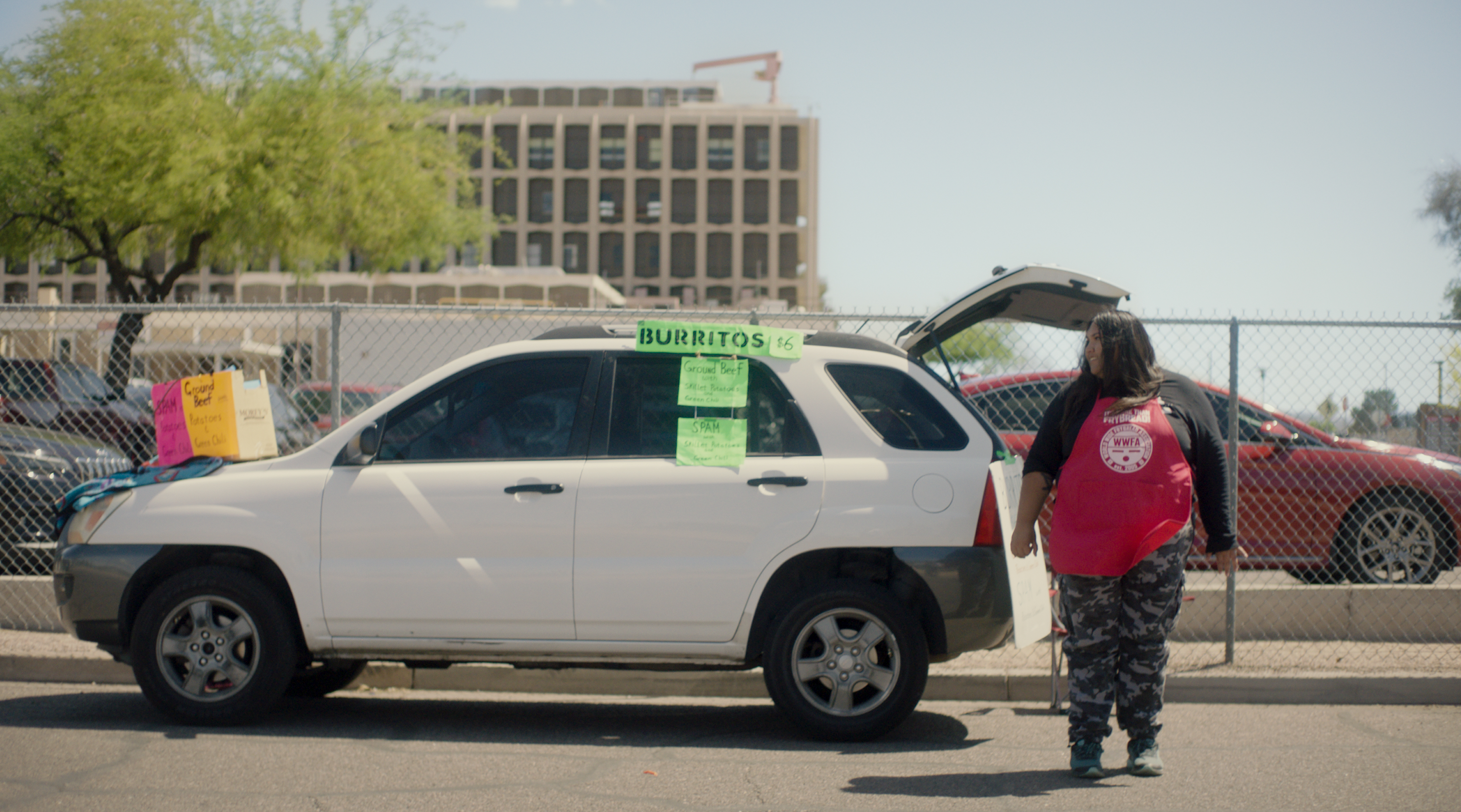
Lazarowich spends a good amount of time with the artists away from the stage. The performances give us a sense of their musical identities, but the hours between them tell a different story about what it takes to keep going.
A$h performs with this unapologetic, combative confidence, as if picking a fight might be the most enjoyable thing in the world. Then we see her and her mother selling food out of their vehicle to make ends meet while she travels to competitions, trying to put herself in front of the right people. She’s also contending with assumptions about Indigenous rappers and female artists in a genre that isn’t always especially welcoming to women. It’s difficult to hear those performances quite the same way once you’ve seen the work and financial uncertainty surrounding them. The aggression is still there, but there’s a lot more behind it than the stage persona alone can communicate.
Thompson has his own frustrating version of that uncertainty. A feature on a Macklemore track would seem like a major step forward, and his music has the polish to make a much larger audience easy to imagine. He’s had a taste of that recognition, but the next stage hasn’t arrived as easily as he’d hoped. When you’ve already had a break that other artists would give anything for, what else is supposed to make the difference?
Wiidaaseh has faced rejection from arts organizations and disappointing encounters with supposed record labels. Meanwhile, there’s the work of making the music itself. He writes, produces, records, mixes, and masters his songs, taking on responsibilities that could easily be spread across several people. That independence gives him control over his sound, but also leaves him with an extraordinary amount of work whenever outside support falls through.
He was a little skeptical when the documentary team first got in touch. Friends who worked in filmmaking had taught him that a promising conversation didn’t necessarily translate into a funded production. He agreed to take part, but wasn’t entirely convinced the cameras would ever appear. Then, a couple of months later, a crew turned up during an Indian Giver music-video shoot.
“Oh my God, this is actually happening,” he remembered thinking. He laughed at his own disbelief. The first days of filming were nerve-racking, but Lazarowich and the crew took the time to get to know him and his family, including his parents and what sounded like an extraordinary number of cousins.
“They were very careful with that and very intelligent with that when they were going through the actual filming process,” he said of the care taken with the three Indigenous stories. “We became friends, and it was more just like hanging out, and there were cameras nearby.”
Indigenous Joy, Family, and Cultural Identity in Turtle Island Rap
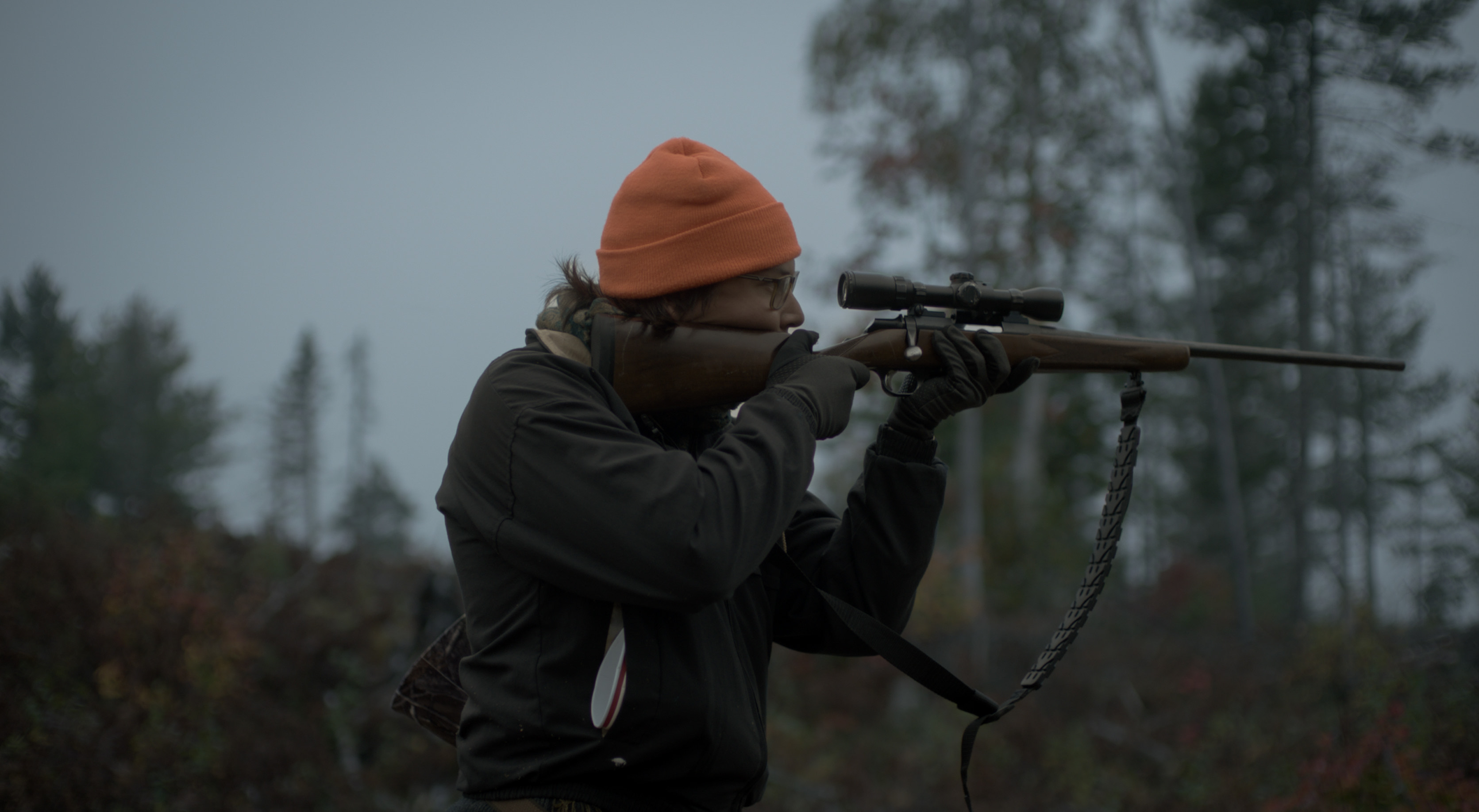
The scenes with Wiidaaseh and his parents are among the film’s strongest. Lazarowich takes her time with the people who know him beyond the music, giving us a sense of their lives together.
Lazarowich is a Cree filmmaker from northern Alberta and a member of Lubicon Lake First Nation. Her short documentary Fast Horse won a Special Jury Award for Directing at Sundance in 2019, and Turtle Island Rap is her documentary feature debut. Joy, community, and Indigenous excellence have appeared throughout her work, raising the question of how consciously she returns to those experiences when Indigenous pain and historical trauma so often dominate media portrayals.
It took looking back over a decade of filmmaking for Lazarowich to recognize the pattern herself. Growing up in northern Alberta, she experienced racism and saw Indigenous people represented in ways that bore little resemblance to those around her. “I think my goal as a filmmaker was always to show a portion of my personal experience of growing up, which was Indigenous excellence, which was community, which was laughter, and showcase that to an audience who may not have experienced that.”
That interest is evident when she talks about the scenes with Wiidaaseh’s family. Lazarowich described herself as nostalgic, and there was a personal reason she wanted those moments in the film. “I think with this film specifically, one of my favourite, sort of, all of my favourite moments are when we get to see Wiidaaseh with his mom and Wiidaaseh with his dad, because I relate to that so deeply,” she told me. “To be able to capture your family on a big screen and have that forever, and you can have this piece of ephemera that will last forever, is one of the things I’m always trying to do with the projects I work on.”
She imagined a family returning to the film fifty years from now: “And that’s your grandma, and she’s no longer around, but she’s here forever in this film.” To someone’s family, those few seconds might become the only moving images they have of a parent or grandparent, which makes you reconsider what might make a shot worth keeping in the final edit.
We also see Wiidaaseh perform men’s fancy dance. His mother moved him and his sister away from the reserve when they were young, looking toward better educational and employment opportunities in the city.
“I’m definitely still really close with my Indigenous identity. It’s a core part of who I am,” he told me. “Even though my mom had moved away, she had moved us away for very good reasons. She was looking towards my future and my sister’s future.”
He has continued hunting with his father, who later moved back to the reserve, and has danced throughout his life. His mother brought the family to ceremonies and remained involved in cultural and spiritual practices while working as an elder and educator. They made those connections a part of life in the city, rather than something he had to leave behind.
“I have my mom who’s adapted her Indigenous identity in the city,” he said. “So it’s never left me at all. I still feel very, very connected to it. And that is because of my parents.”
Beyond TIFF and CUFF.Docs: An Unfinished Story for Turtle Island Rap
After three and a half years of following the artists, how do you know you’ve reached the end of a documentary, rather than simply the point where you have enough material to make one? Turtle Island Rap leaves the rappers’ futures uncertain, a choice that raises a practical question about when and why the cameras stop rolling.
“Well, what’s the ending of the film? We’ve been following these people for three and a half years. Like, what’s the ending? And what would satisfy an audience?” Lazarowich recalled the team asking. They’d discussed what a satisfying conclusion could look like, but none of their subjects was about to stop making music. “I don’t think it is a film about wrapping something up necessarily,” she told me. “I think it’s about setting them up for the next part of their journey.”
By this point, we’ve spent enough time with A$h, Thompson, and Wiidaaseh to understand how little a single performance, collaboration, or rejection can settle about a music career. All three will have work to do after the cameras leave. Lazarowich finishes the documentary without pretending they’ve finished anything themselves.
She also knows the frustration of hearing no. “I relate to all three of these artists because I’m an artist too, but my medium is film and TV,” she said. “And film and TV is a grind.” After twenty years in the industry, she’d submitted films to TIFF several times without getting in. When Turtle Island Rap went in for consideration, she wasn’t feeling especially confident. “Well, they’ve always said no to me before, so who knows?” she remembered thinking.
And then TIFF said yes. Lazarowich described sold-out screenings, cheering audiences, and the chance for many of the Toronto-based crew and Wiidaaseh’s relatives to attend.
Wiidaaseh was on vacation when she called with the news. He laughed about having to process that he was going to one of Canada’s biggest film festivals because someone had made a documentary about his life. “It was very surreal the entire time, even leading up to it, and I was freaking out,” he told me. “I was just like, ‘Oh my God, this is insane. This is just insane.’”
One of Lazarowich’s favourite memories was from a street interview outside Toronto’s Bisha Hotel, with Wiidaaseh standing beside her. She caught herself thinking about how unlikely she was to experience that particular moment again. She’d been trying to put some of his advice to use.
“Every day at TIFF, I was trying to take in the little moments and clocking it in my brain,” she explained, describing how she reminded herself, “Okay, you should enjoy this. It’s not stressful. It’s a fun thing. It’s a good thing.” After years of hearing no from TIFF, Lazarowich was finally there, taking advice on how to enjoy it from one of the artists she’d spent years filming.
The filmmakers are hoping to bring Turtle Island Rap to Indigenous communities across Canada and the United States after the festival run, including places where people may never get to a screening in Toronto or Calgary. The Halluci Nation, whose members Tim “2oolman” Hill and Ehren “Bear Witness” Thomas are creative producers on the film, have experience touring Indigenous communities. The plan is to bring the documentary alongside concerts and DJ events. Lazarowich compared it to a MuchMusic dance party. “They get to see the film, but they also get to experience a party.”
Wiidaaseh has plenty of music in the works, too. He recently released “To Death,” collaborated with A$h on “STFU,” and mentioned another release coming around the CUFF screening. Just as we were saying goodbye, Lazarowich remembered one last detail she wanted to share. The Halluci Nation had worked remotely with all three rappers on an original song for the film’s end credits, with a separate release hoped for in the new year.
When I taught high-school social studies, I’d play The Halluci Nation’s “Electric Pow Wow Drum” for my students and we’d analyze it together. I’ve followed their music for years, so hearing about the new collaboration just as the interview was ending was a welcome surprise. Between the music and the proposed community tour, there’s plenty more ahead for the people in Turtle Island Rap.
For more information about Turtle Island Rap and its proposed community screenings, visit the official Turtle Island Rap website.
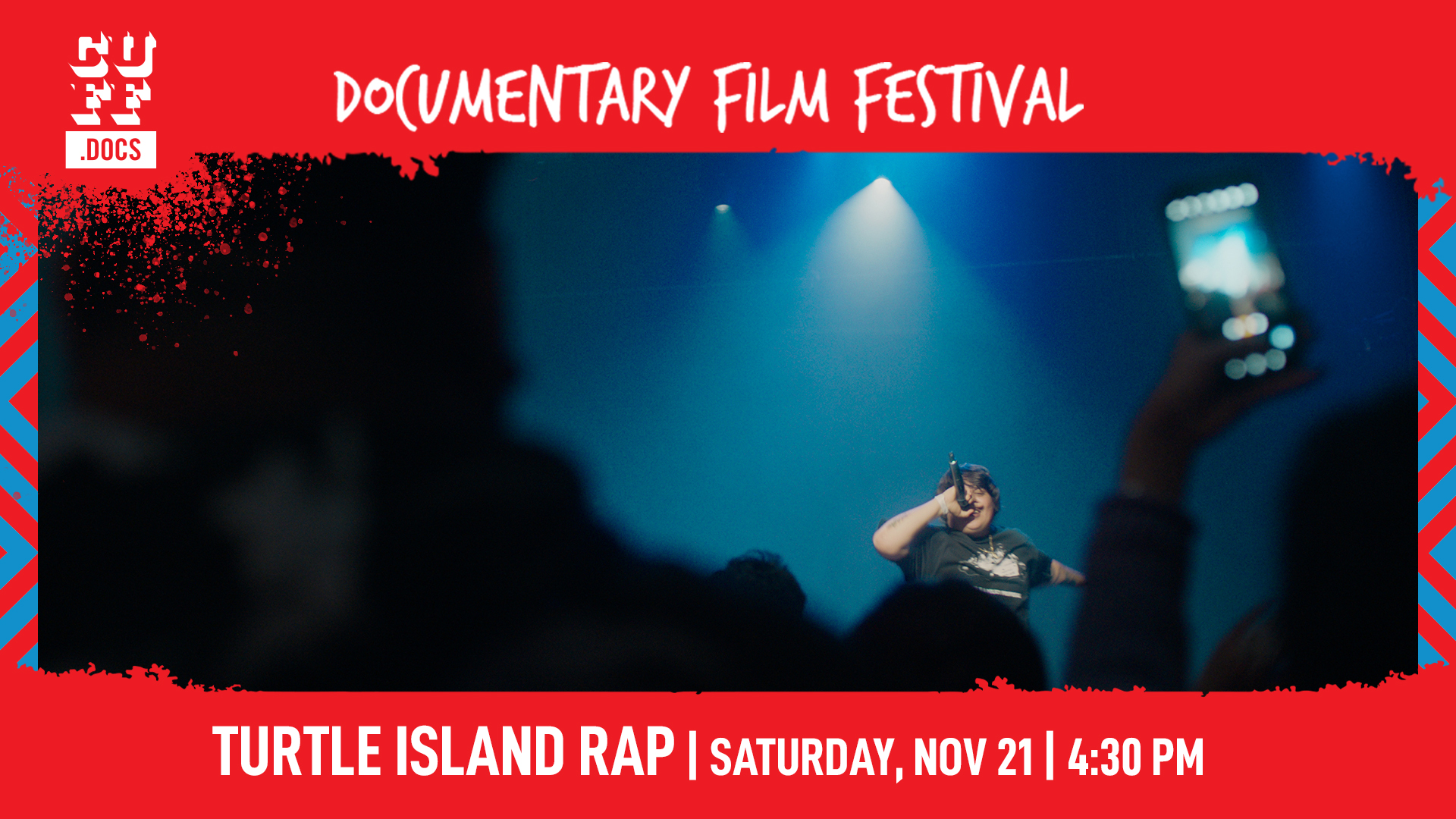
Turtle Island Rap screens at CUFF.Docs on Saturday, November 21, 2026, at 4:30 p.m. at Globe Cinema, with Lazarowich, Wiidaaseh, and producer Jessica Ford scheduled to attend. Lazarowich has family and friends in Calgary, and CUFF previously supported Fast Horse. She’s looking forward to returning with this film.
The film’s impact campaign accepts contributions toward the proposed community tour.


