


Matthew Rankin has become one of Canada’s greatest working filmmakers, and this is hardly an accident.
Rankin has dedicated his life to art, having realized relatively early that the pursuit of academia and more conventional historical scholarship wasn’t quite for him. And while I’m sure I would have appreciated his academic papers, I’m selfishly glad he decided to bring those interests to the screen instead.
Born and raised in Winnipeg, Rankin began making films as a teenager, eventually finding a creative home among the wonderfully eccentric filmmakers of the Winnipeg Film Group. After studying history at McGill University and Université Laval, he returned to Winnipeg, collaborating with filmmakers like Mike Maryniuk and Walter Forsberg on experimental works that explored everything from livestock auctioneering to the strange cultural identity of Winnipeg itself.
His rise to broader recognition has largely come through his feature filmmaking career, beginning in 2019 with The Twentieth Century. Naturally, he chose a conventional subject for his debut: the life of Canadian prime minister William Lyon Mackenzie King, reimagined through German Expressionism, theatrical absurdity, and an abundance of sexual repression.
Having established himself with such an accessible introduction, Rankin followed it up with 2024’s Universal Language, a multilingual exploration of identity and human connection set in an alternative Canada where French and Farsi coexist, bringing together Iranian poetic realism, Winnipeg absurdity, and Québécois cinema gris.
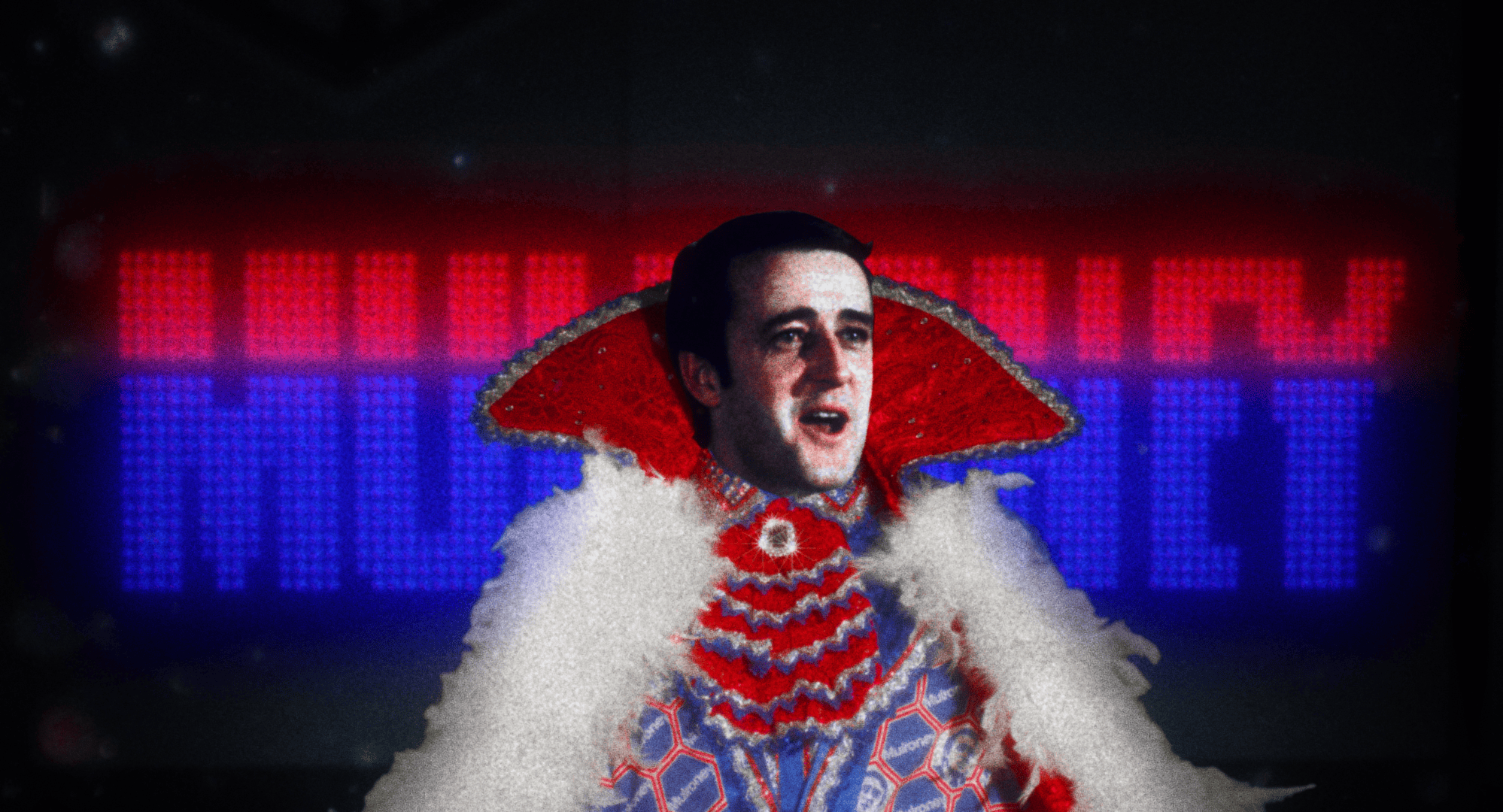
And for his latest film, Ladies and Gentlemen, Brian Mulroney, Rankin took the logical next step: a maximalist, aggressively edited archival documentary that remixes historical political propaganda, 1980s television, and experimental animation to explore the rise of Canada’s 18th prime minister and the wonderfully oxymoronic world of “Progressive Conservatism”.
A fairly standard trajectory for a filmmaker looking to broaden his audience.
And yet, the recognition has followed. The Twentieth Century won Best Canadian First Feature at TIFF in 2019 and a critics’ prize at the Berlinale in 2020. Universal Language earned audience honours at Cannes and recognition at TIFF in 2024, while Ladies and Gentlemen, Brian Mulroney somehow managed to win TIFF’s Midnight Madness People’s Choice Award in 2026.
In our conversation, we explore the complicated constructions of identity, their inherent ironies and contradictions, the artificial binaries of Canadian politics, the relationship between historical truth and cinematic artifice, and the potential collapse of the simulacrum in an increasingly AI-generated world. We also discuss experimental filmmaking, Winnipeg’s artistic community, and why genuine creativity might ultimately depend on something as simple as making movies with your friends.
You know, just a casual Friday, wind-down, conversation.
Matthew Rankin on Identity, Oppositional Binaries, and Progressive Conservatism
Adam Manery
Something that draws me to your work is your exploration of identity, particularly its inherent contradictions and ironies. You’ve explored this through Winnipeg identity and Québécois identity, among others.
What draws you to these contradictions and ironies within our subjective identities?
Matthew Rankin
Because identity, nationalism, religion, the economy, structured ideology, politics, even media: these are structures that we have invented as humans to organize the chaos of the world. And sometimes that can be a great thing. There’s a use of nationalism that can create great solidarity between people.
We live in a complex society with people that we don’t all know, and people that we might not even particularly like or agree with, but still, when we are gathered into some sort of national synthesis, we care about each other. We don’t necessarily agree on everything, but there’s a fundamental concern for your neighbour because we share citizenship.
So that can be good. But of course, we also know that these things can be utterly pathological and insane, and can amount to all manner of zealous, fanatical expression.
For me, I like to approach it with a certain amount of irony. And I don’t mean irony as some kind of cool, detached judgment, but as being aware of a thing and its opposite simultaneously. These are constructions. They are artificial.
They can have real-world value, but they can also have the opposite. So it’s important to look at them with a certain amount of irony. When we look at these structures as absolutes, that’s when we start to get really into trouble. So I think it’s important to be aware of a thing and its opposite simultaneously.
What interests me most as a filmmaker is how we put the world together, how we construct it. The interplay between our lived experience and these structures that we create, and the contradiction between them. These are things that I find really interesting as an artist and also just as a normal person.
Adam Manery
In your latest film, Ladies and Gentlemen, Brian Mulroney, you explore divisions that, at least on the surface, seem binary: anglophone and francophone, liberal and conservative. Here in Alberta, there’s also this Alberta-versus-Ottawa mentality. Do you see these divisions as artificial constructs?
Matthew Rankin
I think when we get into binaries, that’s the danger of absolutes, right? When we start to look at the world in terms of oppositions instead of complexity, that’s when we start to get into trouble.
That’s why I find this particular story of the Progressive Conservative Party really fascinating. Because, of course, “progressive conservative”, what does that mean? It’s such a Canadian oxymoron. It’s so strange.
It’s actually a very democratic idea. I went through almost 80,000 pieces of film and video, and a lot of this was Progressive Conservative propaganda of the era: infomercials they produced, publicity materials, speeches, recorded conferences, and also journalistic material. But what I drew from all of that is how complex a coalition that party actually was.
Of course, you had this very reactionary end to it, which was very right-wing and composed of these angry guys, which took the form of Peter Pocklington at a certain point in the ‘80s. These angry guys wanted capital punishment and just total, brutal free-market capitalism.
They didn’t care about conserving the environment. They believed that the fluoridation of water was going to turn us all into bilingual communists and this kind of stuff, right? But then, on the other end of the party, you had a completely different element. It’s hard to believe, but there was a left wing to the Conservative Party.
These were people who were feminists and environmentalists. Protecting the environment used to be a cardinal conservative value. The idea that we can’t just blow everything because we have to conserve for the future. It’s the same logic by which conservatives are fiscally responsible. You can’t just blow all the oil because we’re going to need it for later. So let’s go easy on it.
Conserving the environment: this is the essence of conservatism. You conserve something. But even beyond that, Robert Stanfield believed in universal basic income. That was part of his platform at one point.
So it’s really strange that these two oppositional binaries, let’s call them that, existed within the same political movement. Why put them together?
And that’s interesting. That was the struggle of Joe Clark, to try to put these tensions into a functioning synthesis. And he ultimately got completely engulfed by the right wing of the party. Brian Mulroney came along, and he had his own scheme of how to put all these pieces together, and he succeeded in a big way.
But as we know, it didn’t last forever. It would start to fragment, and out of that would emerge the Reform Party and the Bloc Québécois. And, of course, now the Conservative Party today has no progressive element in it at all. It’s just pure reactionary politics.
So it’s interesting to me, the idea that we would try to create a synthesis rather than leaning into a reaction. And I feel like our political culture, since the collapse of this party, I think it’s sad for our political culture that particular pressure point no longer exists, and it has unravelled into reactionary binaries.
Because I think it’s a very democratic idea that we’re all neighbours here. We’re all going to have to put a little water in our wine and meet somewhere in the middle.
And that, to me, is less and less tenable today because we have indulged in binary thinking.
And as I was making it, of course, I was aware that inevitably, when you make a film about Progressive Conservatives from that era, we will see it from the perspective of today, which, of course, is a very, very different time.
Matthew Rankin on the Construction of Centrist Identity and Committing to Specificity
Adam Manery
I don’t want to turn this into a purely political conversation, but I know you come from a history background, and I actually used to teach politics, so I find this interesting on several levels.
You’ve discussed the Progressive Conservative identity and the collapse of big-tent politics. Do you see any potential reemergence under Mark Carney? At least on the surface, some of his policies resemble what might historically have been described as Progressive Conservative.
Is there a genuine resurgence of that kind of political coalition, or is that idea, too, something of an artificial construct?
Matthew Rankin
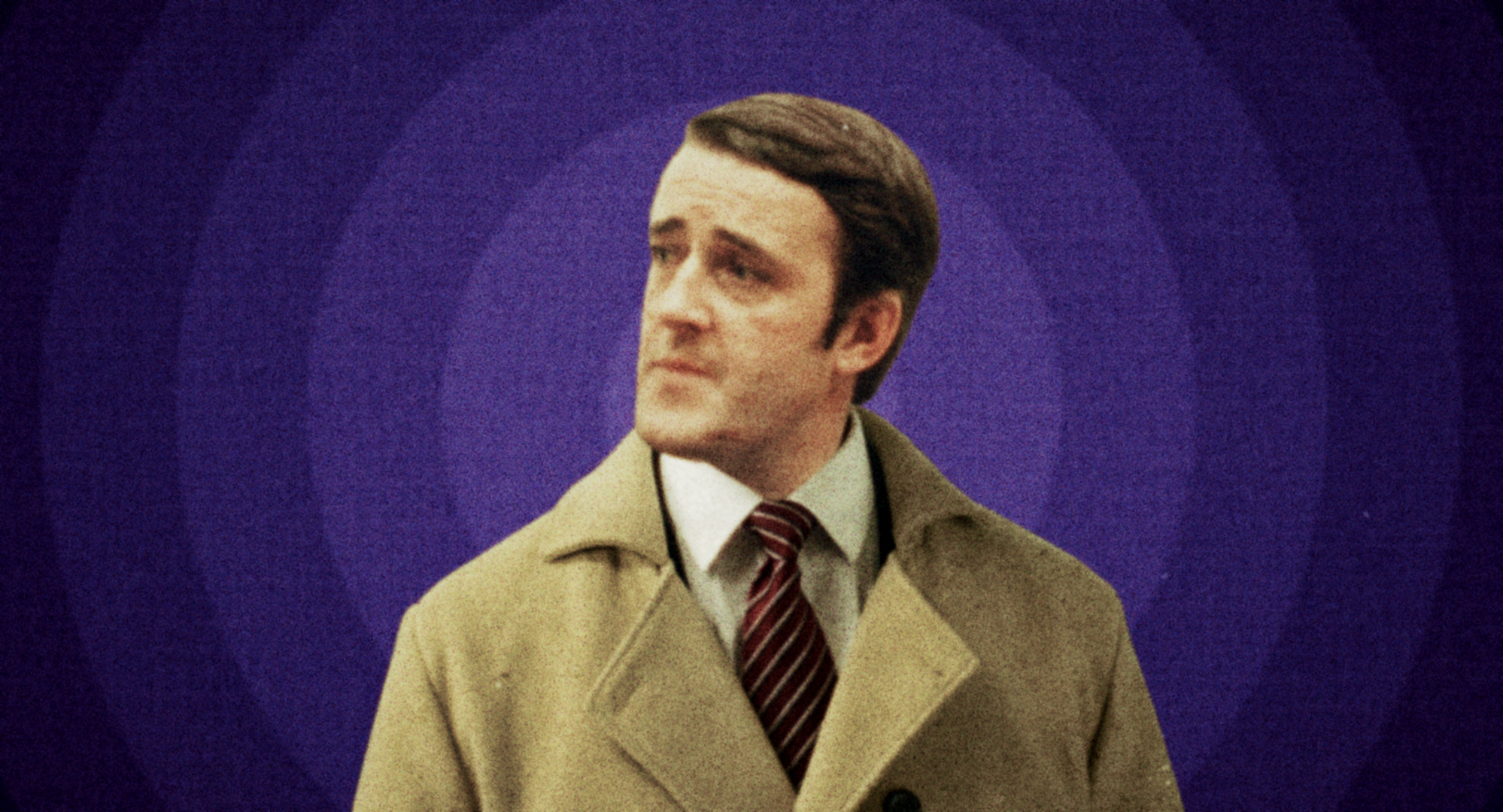
I don’t know, I’m of two minds about it. I met a Progressive Conservative senator last summer, and she told me that, in her view, Carney did represent progressive conservatism as she understood it from that era. And I think that makes a lot of sense.
I think from Mulroney onward, you see Jean Chrétien, in many ways, continuing on a very similar path to Brian Mulroney. And that’s why I say I think we’re still living in Brian Mulroney’s Canada to a large extent.
But I think it’s tricky. I think Carney is an austerity politician, and the immiseration that might emerge from that is one that will feed crypto-fascists. So, in a way, it’s kind of a snake biting its own tail.
Of course, Mark Carney is a much more reasonable person and does attempt to speak from the centre and a place of compromise. But I think austerity is always something that’s going to feed reaction. So the two are feeding each other in a weird way.
But yes, the space of the centre is something that has become more and more fragile. I think people became understandably irritated by centrist politicians because people have governed from the centre as a way of protecting their own power and their political longevity. Adapting to moods in society to such a point that politics stops having any meaning at all. But that isn’t, to me, leadership.
I think leading from the centre is a very different matter. I made a film about Mackenzie King, The Twentieth Century. Mackenzie King rejected a boatload of Jewish refugees during the Second World War, in large part because he felt he was going to lose some political capital. Because, in his judgment, Canadians were culturally antisemitic.
And though he knew it was right to accept these refugees, he felt he might lose some political capital by doing that. Instead of leading on the issue, instead of saying, “Hey, this is the right thing we should do,” he said, “No, no, we’ll send this boat back.”
So that is a kind of centrism, following a mood in society he consciously knew to be wrong. And I think that’s the danger of centrism, which people understandably get upset about.
But I’m talking about real leadership, real centrism, real compromises. We have to care about people we don’t know. We have to somehow build a coalition between all of these elements, and leadership requires bringing out the best in people, leading from the best in people.
And I think too often politicians will lead from the worst in people. The worst expression of a society is the easiest way to get political capital. Rage bait functions by the exact same logic. That is something we have leaned into, sadly. And I think the centre is a more and more fragile space.
I find centres really interesting. I’m a person who has lived between many different spaces, many different cultural zones. And I like the centre. I like living between pressure points. That’s where I feel most at home.
And I think actually most people are like that. I think most people are composites, and we’re living between spaces. We have different identities in different spaces that we occupy. We play different roles depending on different contexts. We have different jobs. We have different relationships.
And rather than organizing these into binaries, I think there’s a way we can create a complex synthesis out of it.
Adam Manery
That’s fascinating, particularly the different ways of approaching centrist politics. Some of it can feel like a “contrived centrism”, which connects to something you’ve discussed in filmmaking and something I’ve always been passionate about: finding universality through specificity rather than watering down a story to appeal to the broadest possible audience.
You’re unafraid to fully commit to the specificity of your approach, and Ladies and Gentlemen, Brian Mulroney is no exception. Why do you think this has resonated with audiences?
Matthew Rankin
[Ladies and Gentlemen, Brian Mulroney] is more extreme. I feel like it’s a very Canadian pathology to think, “We understand this, and it’s funny or enchanting or interesting or tense for us”. But out there in the world, “They won’t get it”. And Anglo-Canadian cinema has always been particularly concerned about that problem. But I think it’s a fake problem.
The pleasure of watching a movie is being plunged into a world that you don’t know about, and you have to figure it out. I think that’s the genius of Quebec cinema, for example. Quebec cinema has been so dedicated to its specificity and has been so honest about it.
And if only Quebecers understand it, fine. This is just me expressing myself and following what is thrilling to my soul. But I actually think that’s why Quebec cinema has become one of the great cinemas of the world, because it’s so precise.
A film like Mommy by Xavier Dolan, the French in that movie is so specific. Really, only Quebecers will completely understand it. You show that movie in France, and it’s subtitled in French. They’re speaking French, but it’s also subtitled in French because they won’t understand what’s being said.
And to not censor oneself, to lean straight into it: this is how we talk. We have to make films that speak the way we speak, that refer to things we understand. And not everyone is going to get every reference, but there’s enough material for them to find their way in.
And it’s very enchanting to be in a world that is so precise. I watched Succession not that long ago, and I don’t understand 50 percent of what’s going on in that show. I don’t understand the world of high finance. I’ve never read a biography of Rupert Murdoch or even checked his Wikipedia page. If I’d done all that, I might understand something more in watching that show, but it doesn’t really matter.
I like being in a world where I don’t have all the information, and it’s not even giving the information. It’s just happening, and you identify patterns. You see where the power is, and there’s something very enchanting about watching a film and putting the pieces together.
So that’s what I think about when I think about this movie. Of course, things play differently, even in different regions of the country. There are little narcotic synapse stimulations for various regional pathologies that might not be interchangeably understood.
But it doesn’t matter. The way in is with these characters and their intrigue and what’s going on. And then after that, it’s another matter. But there’s a value to just doubling down on parochialism. At least, that’s my gamble. It could be a terrible mistake.
Matthew Rankin on Canadian Filmmaking and the Artifice of “Truth”
Adam Manery
I think the audience response to your film bears that out. You don’t win audience awards without resonating with people, right?
But I don’t think if you asked a random Canadian on the street about Brian Mulroney, they’d be able to tell you all that much. And I find it interesting that we often seem to know more about American presidential history than our own history and identity.
Do you see that as something uniquely Canadian, or is it a more universal phenomenon?
Matthew Rankin
I’m not sure, really. I do think that, of course, American politics is not foreign to us in any way. We do follow it. It does have a huge impact on us. And perhaps, in a way, it’s more familiar to us than Canadian politics.
Even just the way Canadian politics works is often lost on people. The fact that we elect a parliament rather than a president, the way they do in the United States, that’s sometimes lost on people.
It used to be that you’d go to the video shop and the Canadian films would be in the foreign film section. Maybe it’s a similar phenomenon: we just don’t encounter it. Pop culture doesn’t really make a lot of space for it.
But also, we don’t do it. There’s not a lot of impetus for us to do that ourselves. So it’s interesting to get into it because, of course, it’s unusual that we have an encounter with something that is really directed at us specifically.
My observation is that, from a Canadian film perspective, for a long time the pathology was to try to make it as generic as possible. To present Toronto as a “President’s Choice New York” and frame out the CN Tower and any telltale signs, because there was this feeling that we were on the edge of a gigantic market.
And if we could just move into that market, we would be part of this untold glory of the North American mainstream. But I don’t think we got very far with that. There were about 30 years when Canada was really focused—when financing was really focused—on evacuating the parochial and trying to create these low-budget Hollywood movies with no celebrities in them, which didn’t have any purchase on anybody.
What Canadian is watching that? But something that speaks to our reality in a precise way, we’re starting to see the value of it. I can think of a lot of really interesting Canadian films that have come out in the last, even the last five years, that have been willfully parochial. You’re a fan of Nirvanna the Band the Show the Movie, right?
It’s pure parochialism. And that’s part of its charm. And that movie has had enormous purchase beyond Canada even. So I think that’s telling. I hope that might give some pause.
Adam Manery
I think there’s something more truthful in that approach, as much as we can use the word “truth.” It’s another concept with inherent contradictions.
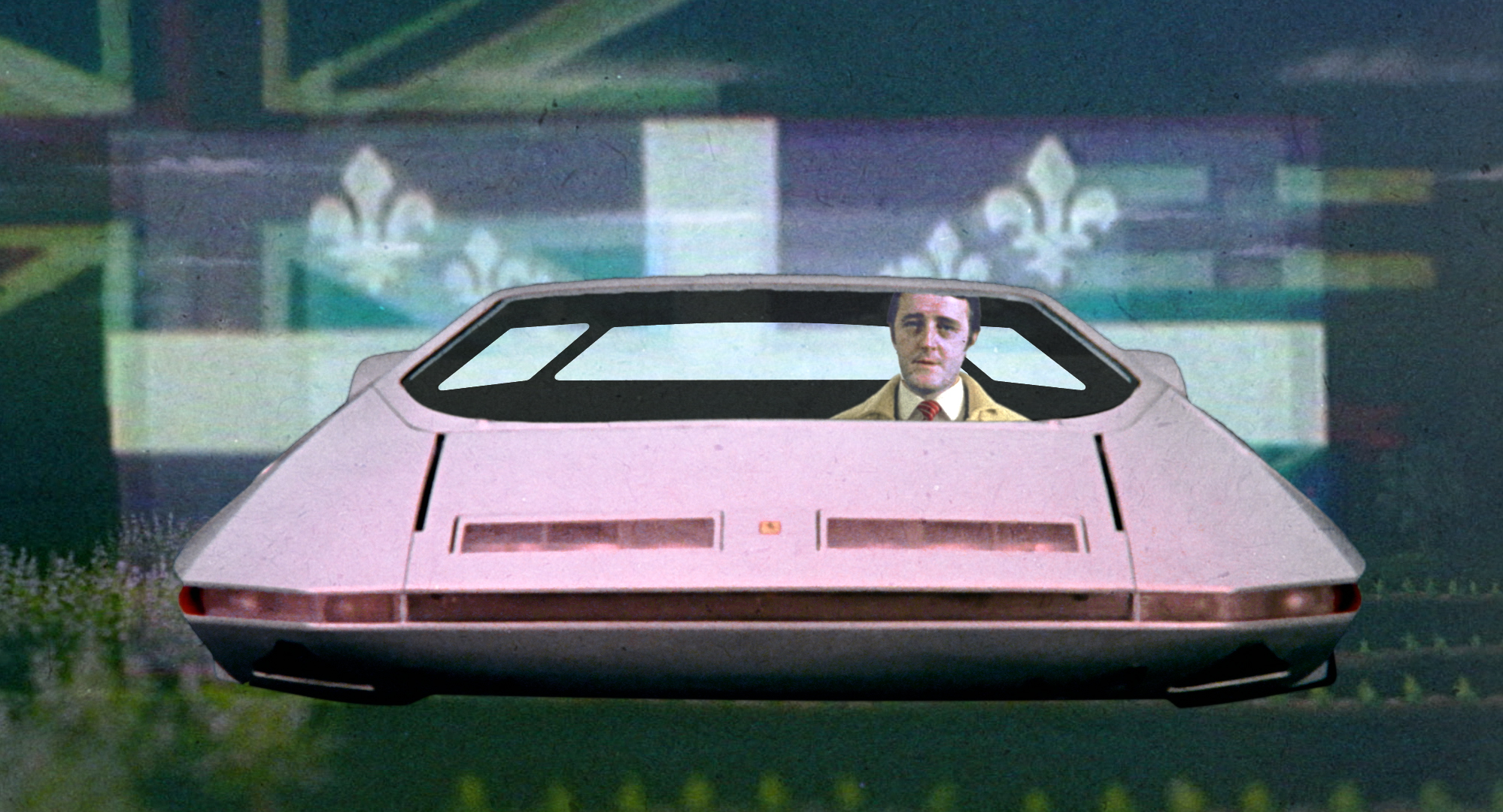
I’m curious how that notion of truth connects to Ladies and Gentlemen, Brian Mulroney. You’re exploring real history, but through a very maximalist artistic approach, throwing a lot at the viewer and taking significant liberties in how events are reconstructed. Mulroney didn’t actually arrive at the 1976 Progressive Conservative Convention in a cape and a race car.
How do you approach historical “truth” when you’re reconstructing real events through such a maximalist artistic lens?
Matthew Rankin
There’s something unrelenting about Mulroney. The guy just can’t be stopped. He’s a force of nature. The sheer energy of this man is just completely astounding to me. So I wanted the film to have that same kind of maximalist, unrelenting quality. And I also wanted it to be like a stream-of-consciousness broadcast day from the 1980s.
But you’re right, there are very flagrant interventions into the historical record. The challenge of making a documentary, I think, is always to illustrate a real phenomenon that is not necessarily visually manifest. So how do we do that? Lots of the time, that involves a cunning use of artifice, because the arc of film history has always leaned towards verisimilitude.
And typically, when we intervene as artists, we try to keep it as hidden as possible so that people forget they’re watching a movie and think what they’re seeing is real. They have a sense of verisimilitude. The simulacrum is something they find to be authentic and real, and they don’t doubt it. But I actually think that when watching a film on a historical subject, you should have some element of doubt about what you’re seeing.
And I like to really underscore my interventions. All the interventions in the movie are very, very blatant. I don’t hide anything. And it does undermine the simulacrum. But I think it’s good to expose it. I feel like the danger of cinema is in hiding it.
This is why cinema is used for propaganda, the reason it’s used for advertising. The reason we’re now living with so much anguish about AI is entirely because of its capacity to imitate reality in a completely irresistible way. But it’s complete and total fiction.
I can tell you that I’ve done a lot of TV interviews. I did one just yesterday, and the guy at a certain point said, “Hey, would you mind pretending to talk on your phone for a minute? We need some B-roll of you doing this.”
And that’s a mise-en-scène, right? This is blocking. I’m becoming an actor in that moment. It’s a performance, and it’s not real at all. But this is normal journalism. It will be edited into a little report, and no one will ever doubt it. People will watch this and think, “Okay, well, he’s talking on his phone.”
And they will never see the fiction in it. The fiction remains completely hidden. And it’s not like there’s a lie at work. But it is there to illustrate something real through means that are not.
So it’s interesting to blow the roof off of that and show the work. Show the intervention and really be blatant about it. And that actually opens up new realms of image-making in a way that can resist the simulacrum of an increasingly AI-generated world. Because that’s the thing: art is going to have to respond to AI. Cinema does not have to be about verisimilitude. It can be something else.
In the case of Mulroney, I’m always using it to illustrate a historical fact.
For example, in the example you cite, Mulroney’s unveiling in 1976. He arrives on the stage, and it presents as a Liberace Vegas floor show. He begins levitating, and there are figure skaters swirling around him and fireworks. No one is going to watch this and think this actually happened.
But it is there to illustrate something that did happen, which is that Mulroney was accused of being too garish and too sleek, putting on too much of a show and too much razzmatazz. And they accused him of trying to buy the leadership by spending too much money.
So this was my way of illustrating that critique, which is completely defensible from a historical point of view. But I’m blatantly intervening in the form in order to do that. And I’m not hiding it at all.
Matthew Rankin on AI, the Collapse of the Simulacrum, and Making Movies with Friends

Adam Manery
I’m interested in the simulacrum’s potential collapse, at least in its current form, with the rise of AI. And I don’t want to ask the generic “What are your thoughts on AI?” question.
I’m more curious about how this might liberate filmmaking. I know you’ve spoken about how photography opened up new possibilities in painting, and I wonder whether we’re approaching a similar moment in cinema. How do you see this changing what’s possible for filmmakers?
Matthew Rankin
Yeah. Can you hold the line one second? I realize my computer is about to die. I’ve got to plug it in. One second. One second. [exits his digital screen]
Editor’s note: Did I instruct Matthew to stage this interruption, a carefully constructed moment of apparent spontaneity, to illustrate his humanity and reinforce his relatability? I guess you’ll never know.
Matthew Rankin
[returns to his computer] When the photograph was invented, it freed up painting. Painting was very similar to cinema up until the photograph, in the sense that the ambition of painters throughout centuries was to perfect verisimilitude and get as close to the “real” as possible.
Then the photograph came along, and it could do it much more easily, with less effort and eventually, less money. So this created a certain amount of existential turmoil for painters, but it also led painting into all manner of new exploration. Painting became infinitely more experimental and radical in a way that it had never been for centuries.
And it just blew the top off of it. What you could suddenly do with paint was really exciting. And it had to define itself against photography, right? Painting suddenly had to do something photography couldn’t do.
And that’s actually a really wonderful situation to be in for filmmakers. What humans can do is going to be the gold standard. I really believe that. We’re going to have to think carefully about what humans can do that robots cannot.
Our relationship with the artifice of cinema has transformed over time. At the very beginning of cinema, you have a shot of a train speeding towards the camera, and everyone ran out of the cinema because they thought they were going to get run over. It was that real for them.
And imagine watching a Western in 1950. It would be completely insane. You can’t Google the Old West. You have no access to any of this. You’re not surrounded by images. You’re seeing things you’ve never seen before. Incredible.
Seeing Star Wars for the first time, or 2001: A Space Odyssey in the 1960s. Amazing. You’d never seen images like this.
Now we’re surrounded by images. We have so many images, and you see an explosion or an extraterrestrial in a movie, and it’s so boring because we know how it’s done. We know there are computer-generated effects, and we’ve seen it all before.
And we need new images constantly. We need images that we haven’t seen before. That is what enlivens and energizes cinema.
So the fact that AI has snuck up behind us and is now very sophisticated: I was tricked for the first time last week. Which is very humiliating, but I was tricked, and I don’t like that.
So that’s the thing we have to think about: what a human can do that a robot can’t. And this is going to lead us somewhere really interesting.
For example, I made a short film years ago which involved a lot of painting on celluloid. I did it by hand, frame by frame, with coloured inks, paint: all these different techniques.
And it represents extreme human effort. I’m really proud of that movie. It’s called Mynarski Death Plummet. And I showed it at Sundance, and the first question was, “What hardware do you use? What computer software did you use to make those images?”
We have become so accustomed to the idea that a computer makes everything that we don’t even imagine humans doing anything. Human knowledge and human effort… it’s lost. It’s losing so much value because of what computers can now do.
So we’re going to have to double down on what humans can do which a computer cannot. It will lead cinema in new directions, and our encounter with it will be very different. I think it will also open up new channels for experimental filmmaking.
I watched You Can See Everything the other week, and it’s incredible to watch what, to my eyes, is essentially an experimental film connecting on such a mass scale.
I think it’s because we’re starved for this. We’re starved for new images that are not created by robots, that are not the same things we’ve seen before. We need new directions. We need new images. This is the essence of our relationship with art: we need to see things in new ways.
But cinema has always been focused on recycling formats that have passed.
So, I don’t think AI is going to end cinema. I think cinema will transform as a result of it.
Adam Manery
I’d like to agree with you. I think that’s true most of the time.
But speaking of human experimentation, you come from this remarkable community of filmmakers in Winnipeg.
I’m curious about the origins of those collaborations with folks like Mike Maryniuk and Walter Forsberg, and others. How did those relationships emerge? Did you all just sort of collide creatively, or was there something that brought you together?
Matthew Rankin
In the case of Mike, we made a film together called Cattle Call, and it emerged very organically. We were driving to Saskatoon, and we saw a cattle auction was going on in Leross, Saskatchewan. We stopped to check it out, and this auctioneer was incredible. Mike and I nearly passed out. He was so good. These guys, when they’re good, they’re amazing. It’s a strange form of extreme speech that’s just incredible.
We were really inspired by Norman McLaren and Oskar Fischinger and these early filmmakers who made “visual music”: animated films that look the way music sounds. So we became inspired to make a film that looks the way auctioneering sounds.
And we made it very spontaneously. We had all these techniques we wanted to try out. I don’t think we wrote a script. We just found some auctioneers and followed them. We did five or six different shoots, and the whole thing was done pretty fast. Within six months we’d finished the whole thing.
But Mike is just my friend, and the same with Walter. We were both interested in archiving old Winnipeg televisual ephemera. We did this project together, Kubasa in a Glass, and we went around collecting material from different people around Winnipeg.
And it was just so much fun. I feel like all creativity passes through friendship. That’s why we start making films. It’s a fun thing we do with our friends, and that’s a spirit that’s important for filmmakers to protect.
There are filmmakers wearing Napoleon hats who want to take over the universe, angling for some sort of big break with a powerful handshake. And there’s so much business surrounding filmmaking, on a certain level, that it can become this very transactional corporate manoeuvre.
But when it really works, it’s always a question of friendship. I love to make films with my friends, people I’m really close to, who I share a real artistic fellowship with.
And Mike and Walter are still people I work with. Walter did some work on Mulroney, and when I was animating these Diefenbaker sequences, I called Mike a couple of times to get his input.
So it’s all friendship. The Winnipeg Film Group in that era was a very collaborative environment, and we were all helping each other out. There were a lot of really interesting filmmakers doing stuff there at that time. And it was really wonderful. It was truly utopian.
Today, it’s become a much more toxic kind of place in Winnipeg. Each time I go to Winnipeg and talk to Winnipeg filmmakers about the scene, I inevitably have to endure these smouldering landfills of trash talk about these very, very puny, tiny, inter-artist resentments.
It seems like the city has been engulfed by that. Well—certainly not Mike. Mike is a true leader. He’s going down with that ship and has always been a great community leader, very generous with his knowledge and very supportive of everybody. And he’s really carried on that spirit, which is what I associate with Winnipeg 20 years ago.
Because that’s how community operates. It’s an ecosystem, right? But again, it can dissolve into these binaries. There are two experimental film festivals in Winnipeg, and from what I understand, there are two of them because the two groups hate each other. So they both wanted their own festival.
Which is just insane to me.
For me, it’s a collective undertaking. And it’s a beautiful thing when everybody’s on the same wavelength, and everybody has something to say with the movie we’re making together.
Adam Manery
I love that. Matthew Rankin: the power of friendship. That’s the sell. Go make a movie with your friends.


