

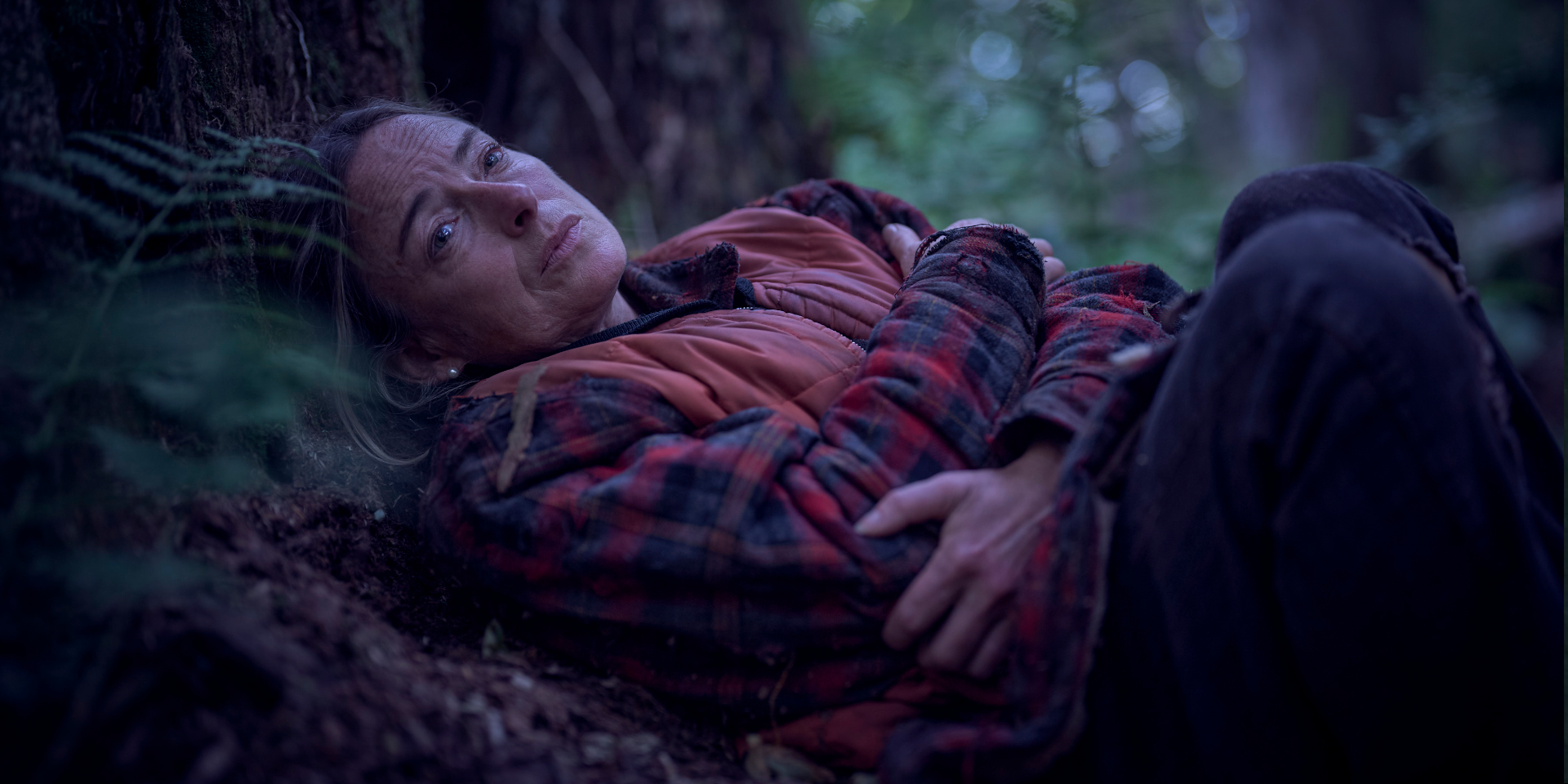

Someone’s Daughter played as part of the 2026 Fantasia International Film Festival, where it made its world premiere.
Someone’s Daughter begins before it gives us anything to look at. A tense, slowly rising score plays over the opening credits while writer-director Wiebke von Carolsfeld holds back the image. By the time the screen opens up, we are already in the middle of a kidnapping.
The sequence establishes the film’s method. Someone’s Daughter does not rush to explain itself, and von Carolsfeld understands that the uncertainty surrounding these characters is more interesting when we have to sit inside it.
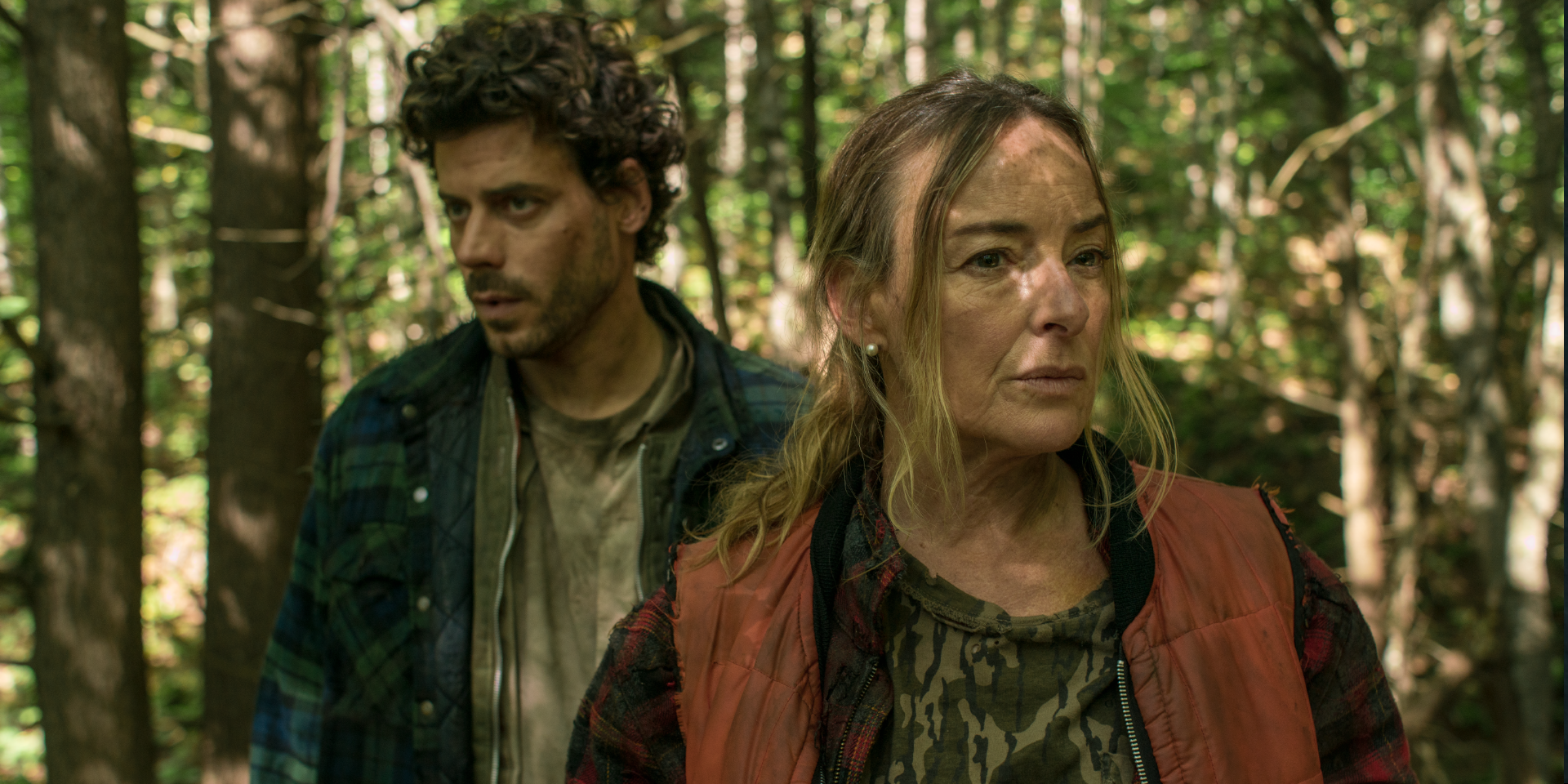
Someone’s Daughter begins when Dr. Borden (Peter Outerbridge), a father convinced that the justice system failed his daughter, kidnaps criminal defence lawyer Sam (Pascale Bussières) and Paul (François Arnaud), the former client she successfully defended against sexual-assault charges. He then abandons them in the Canadian wilderness.
At first, this looks like another male-centred revenge film: a grieving father punishing the people he believes destroyed his daughter’s life. Von Carolsfeld lets that expectation settle before turning it over. The story increasingly becomes about Sam, the choices she made, and what happens when professional distance no longer protects her.
What is Someone’s Daughter About?
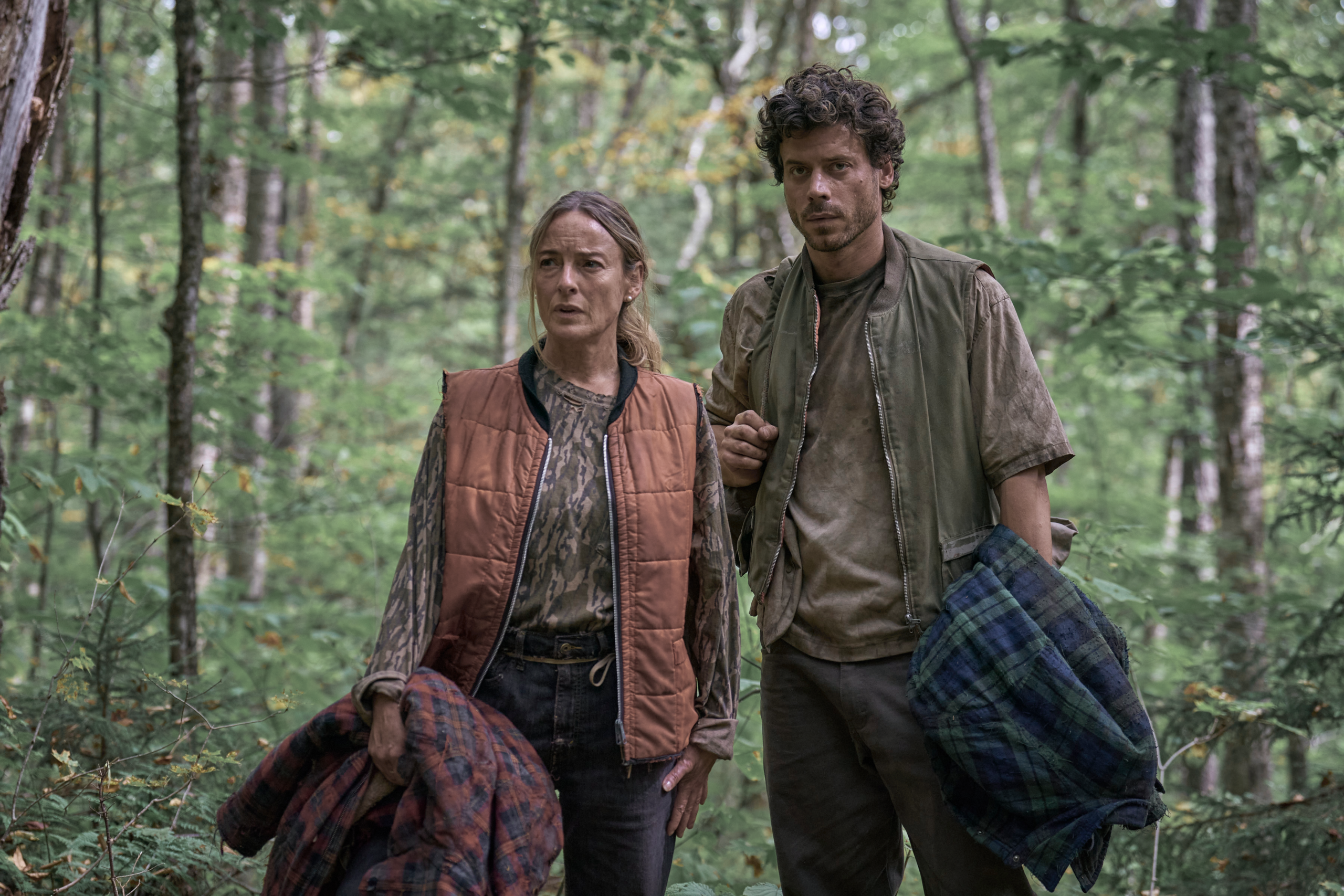
Once Sam and Paul are stranded, survival gives the film an immediate structure. They need shelter and a route off the island, but Someone’s Daughter is less interested in wilderness mechanics than in what the environment forces to the surface.
Paul is charming, frightened, helpful, defensive, and difficult to read. Sam knows the version of him that could be presented in court. She does not necessarily know the person beside her in the woods.
The film does not give us a clean answer about Paul and then wait for Sam to catch up. We work through his behaviour as she does, watching vulnerability sit beside moments that feel calculated. Each gesture, however performative it may be, reveals something about his character.
Bussières and Arnaud carry nearly the entire 96-minute runtime, and the quieter scenes allow their relationship to remain unsettled without constantly manufacturing new threats, outside of the possibility of wolves greeting them in the night.
The Significance of “Someone’s Daughter”
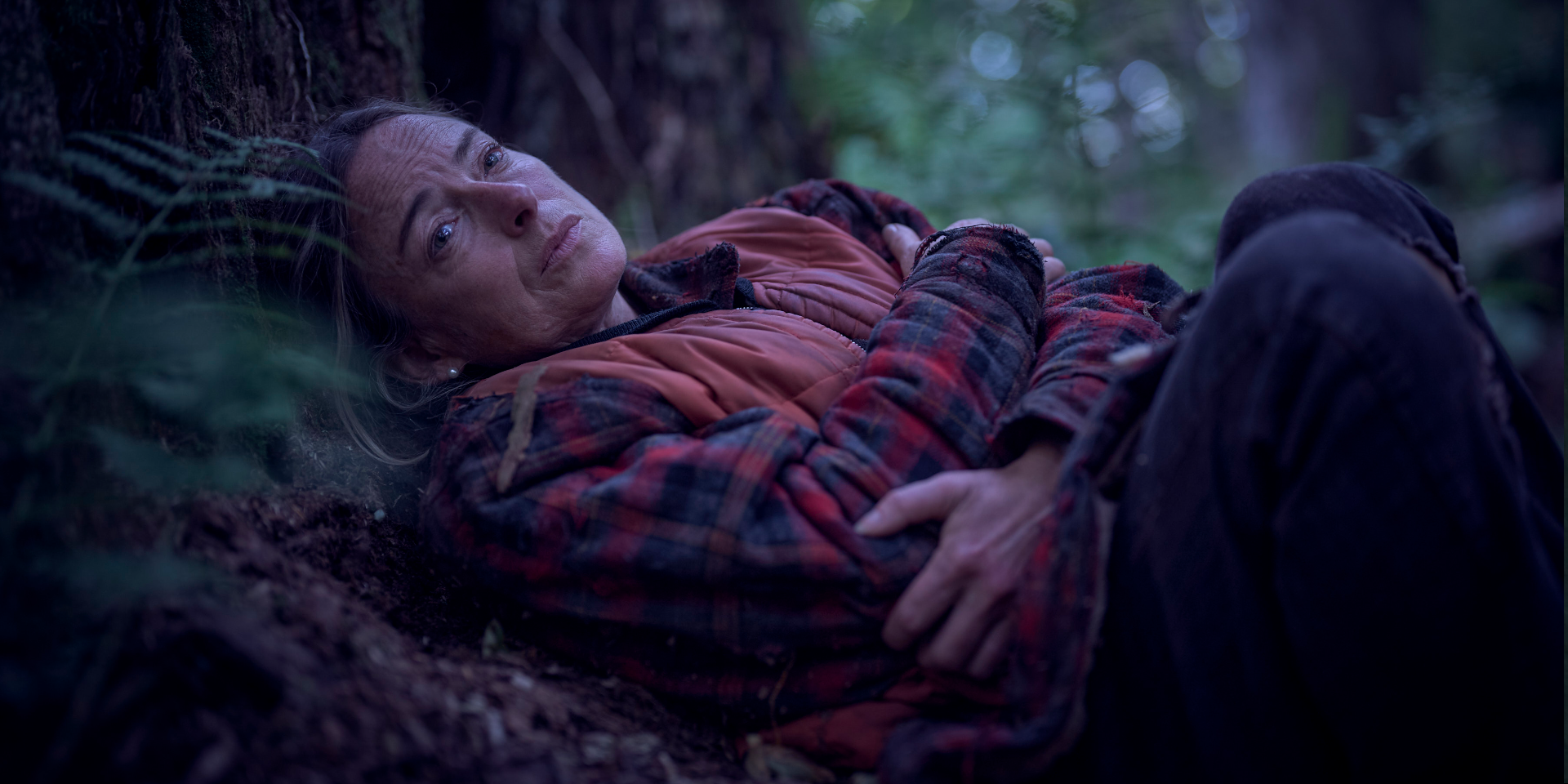
The title is the film’s most provocative idea because “someone’s daughter” is so often presented as an argument for empathy. Men are told to imagine that a woman is their daughter, sister, wife, or mother before recognizing the seriousness of what has happened to her.
There is something deeply strange about that framing. It supposedly humanizes women, but only by centring their relationship to a man. The woman is not granted value simply because she is a person. Her value becomes easier to understand once a man can imagine where she fits within his life.
Dr. Borden’s daughter, Lydia, is the reason the story happens, yet she remains strangely absent from the way the others discuss her. They refer to the accusation, trial, and aftermath, but repeatedly avoid saying her name.
She becomes an idea before she is allowed to remain a person. Borden transforms her pain into a revenge mission. Paul sees her through the accusation that supposedly ruined his life. Sam knows her largely as the opposing figure in a case she needed to win. The woman at the centre keeps disappearing beneath everyone else’s version of her.
Doing the Job and Living With the Consequences
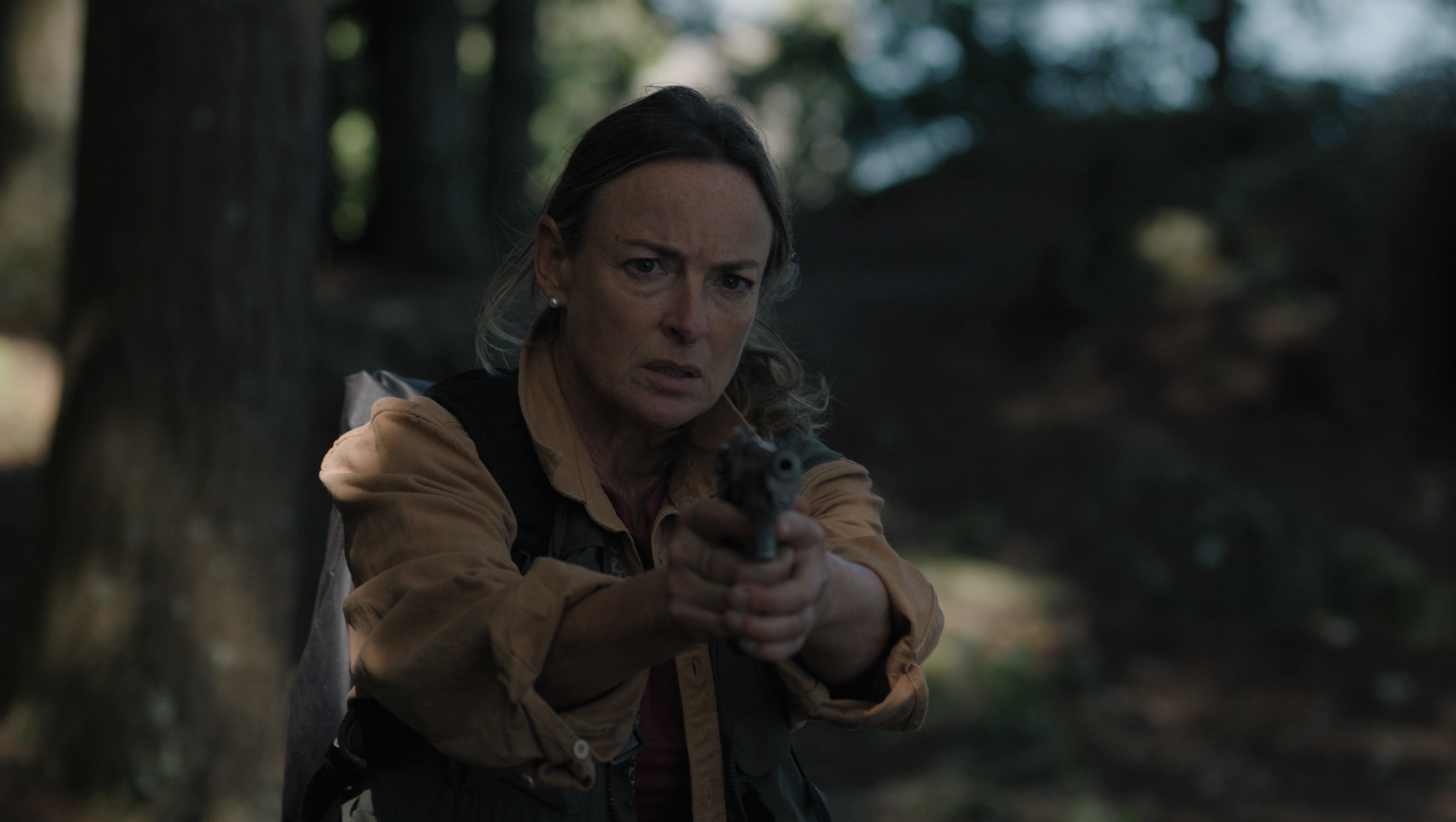
Von Carolsfeld’s interest in the premise was partly prompted by the trial of former CBC broadcaster Jian Ghomeshi and the work of his lawyer, Marie Henein. The question is uncomfortable: why do women choose to defend men accused of sexual violence, especially in cases where guilt may appear obvious to the public?
Sam’s answer is professionally coherent. Everyone is entitled to legal representation. A defence lawyer advocates for a client rather than deciding guilt in advance. The presumption of innocence cannot only apply to people whose innocence feels plausible.
The film does not dismiss that argument, but pushes beyond it. “I was only doing my job” can be legally coherent while remaining morally incomplete. Performing an institutional role does not erase the consequences of how that role is performed or the harm that success may enable.
Sam has treated the courtroom as a place where persuasion matters more than truth. At one point, she even questions the very notion of “truth” as anything absolute. That position is easier to maintain while the consequences remain abstract. In the wilderness, she must depend on the man whose story she helped make convincing. The distance between advocate and client collapses.
This idea extends beyond lawyers. Institutions divide responsibility until no individual feels accountable for the final result. Someone’s Daughter asks when professional competence becomes complicity with what a harmful system produces.
Gender Roles, Performances, and the Canadian Wilderness

At first glance, Paul looks like he may be the person who should take charge in a wilderness thriller, but Sam is the more capable survivor.
That reversal does not turn Sam into an invulnerable action hero. She remains frightened, uncertain, and capable of serious misjudgment. Her competence does not protect her from manipulation, nor does her victimization erase the choices that brought her into this relationship with Paul.
Bussières is strongest when Sam is thinking rather than explaining. There are moments when neither she nor Arnaud feels completely grounded, but both remain solid across a difficult two-hander. Arnaud, now much more recognizable through “Heated Rivalry,” is well suited to a role that depends on charm never feeling entirely safe. This performance adds to a growing list of interesting recent performances, like his role as the mechanic in Annapurna Sriram’s Fucktoys.
Outerbridge gives the opening the force it needs, while Michael Greyeyes is wonderful in a late appearance as Kent (and remains one of my personal favourite underseen Canadian actors).
The Eastern Townships locations add another layer to the tension. The forests, lake, and isolated cabin are beautiful enough that I occasionally thought I would love to spend a weekend there, despite watching two people endure a traumatic ordeal. It is refreshing to see this part of Quebec used so effectively rather than another familiar British Columbia wilderness.
The film also finds room for Robert Frost’s “The Road Not Taken.” As a former high school English teacher who taught the poem repeatedly, I appreciated the reference. It remains one of the most confidently misunderstood poems in the English language, and I am not going to derail this review by explaining it. I will only say that it is more ironic, and much less celebratory of individual choice, than its reputation suggests.
Is Someone’s Daughter Worth a Watch?
Yes, Someone’s Daughter is worth a watch. It is not revolutionary, and there are moments when the performances and dialogue do not always feel as natural as the film needs them to be.
Still, von Carolsfeld handles difficult material with patience. She keeps her cards close, allows our perception of Paul to shift alongside Sam’s, and waits until the final act to reveal how far the film has moved away from the revenge story it initially appeared to be.
The result is a thoughtful thriller that is most effective when it stays quiet. Its questions about empathy, professional responsibility, and the stories people tell themselves are more interesting than any simple verdict it could offer.


