


Before La Bola Negra has properly introduced any of its three stories, its opening credits are already doing something interesting with history. Black-and-white photographs are covered, partially and sometimes aggressively, with bright pink paint. The older images do not disappear completely, but they are never presented as untouched archival objects. Something contemporary has been placed over them, changing the way we see the image without erasing what was there before. That relationship between inheritance and reinterpretation runs throughout the 155-minute film from Javier Calvo and Javier Ambrossi, better known collectively as Los Javis. La Bola Negra premiered in Competition at Cannes, where the two received the Best Director prize ex aequo.
A runtime of two hours and 35 minutes is always slightly intimidating, particularly for a film divided across three historical periods, but this film never allows itself to drift. In fact, Los Javis appear to have complete control over every beat. They move between large-scale historical reconstruction and extremely intimate moments without allowing one to overwhelm the other, while the cinematography, production design, editing, sound, and score reinforce the connections between people who initially seem separated by time and space.
The pink paint over those opening photographs becomes a useful image for thinking about what the film is doing with history. The past remains visible, but it is being encountered, altered, and reinterpreted from the present. Calvo and Ambrossi have spoken about inheritance, particularly in relation to a generational disconnect they see in contemporary Spain, as the rights available to gay men today can feel stable enough that the struggles of earlier generations are not always fully recognized. La Bola Negra keeps returning to that gap between what has been inherited and what has been remembered, asking what later generations do with the art, stories, and histories that survive.
What is La Bola Negra About?
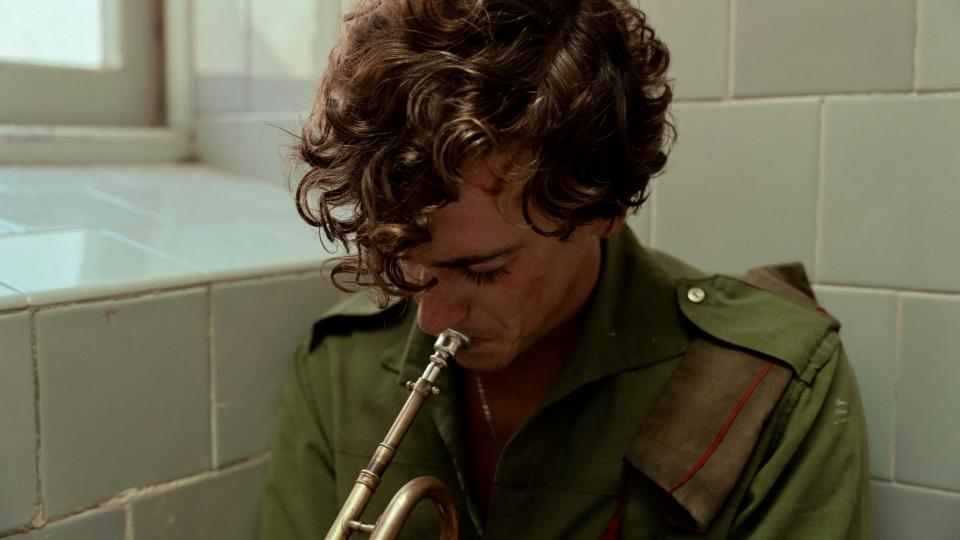
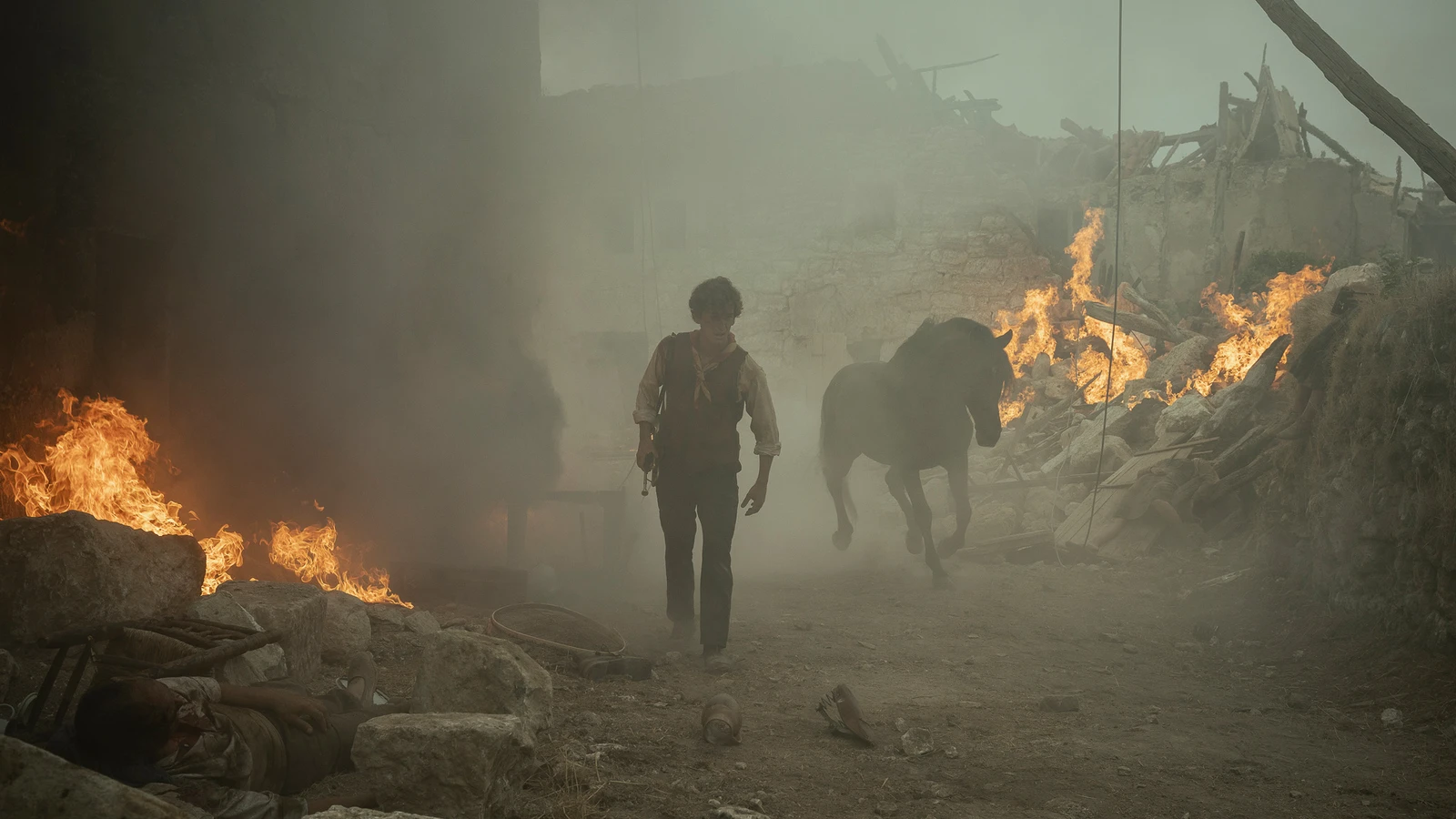
The simplest explanation is that La Bola Negra follows three men across three periods of Spanish history: 1932, 1937, and 2017. Carlos (Milo Quifes) is a young man in Granada attempting to enter an elite social institution while negotiating the expectations of his father and the consequences of being known as homosexual. Five years later, during the Spanish Civil War, Sebastián (Guitarricadelafuente) encounters Rafael (Miguel Bernardeau), a fictionalized portrayal of Rafael Rodríguez Rapún, secretary of Federico García Lorca’s travelling theatre company La Barraca and one of the poet’s significant romantic relationships. In 2017, Alberto (Carlos González) begins investigating the history connecting these people while remaining considerably less willing to examine the unresolved history inside his own family. Together, the three stories explore desire, pain, and inheritance from different points in Spanish history.
Calling La Bola Negra an adaptation is correct to a point, but not especially useful without qualification. Its foundations include Federico García Lorca’s unfinished project of the same name and Alberto Conejero’s play La piedra oscura, which imagines the final days of Rodríguez Rapún and his attempt to ensure the survival of Lorca’s work. Conejero then co-wrote the screenplay with Calvo and Ambrossi, building on the history and ideas Conejero had already brought into La piedra oscura.
Federico García Lorca and the Problem of an Unfinished History
Understanding some of Federico García Lorca’s history substantially changes the way La Bola Negra works. Lorca was one of the central poets and dramatists of twentieth-century Spain, as well as a gay man whose writing repeatedly engaged with forms of desire that could not safely or openly exist within the culture surrounding him. At the beginning of the Spanish Civil War in August 1936, he was arrested in Granada by forces aligned with Francisco Franco. Shortly thereafter, he was executed, and his body has never been recovered. His homosexuality and political associations are widely understood to have contributed to why he became a target, although reducing the murder to one definitive motive is an oversimplification.
Four pages from Lorca’s unfinished La Bola Negra survive. The first two are principally a list of characters; the next two begin a dialogue between Carlos and his sister. The pages leave the larger project radically incomplete, and they do not contain the casino rejection story that informs the film. That account comes from what Lorca reportedly told Cipriano Rivas Cherif: Carlos was rejected from Granada’s casino for being homosexual. The title translates literally as The Black Ball, referring to the system used to accept or reject prospective members of a social club: a white ball signifies acceptance and a black ball signifies rejection. In the film, that mechanism is brutally simple. The men can reject Carlos without ever having to say openly why.
Calvo and Ambrossi take Lorca’s surviving pages as the starting point for an imagined work that can feel emotionally immediate to a contemporary audience. Their film gives his ideas and struggles another form through which people can encounter them, without attempting to recreate an accurate historical whole.
This incompleteness is particularly meaningful within queer history. Historical records are partial, and queer lives and relationships were difficult to document openly when doing so risked social, legal, or physical consequences. Lorca’s story and Rodríguez Rapún’s life offer specific examples of what can be lost from the record. The fragments that remain give later artists material to work with, while also marking what cannot be recovered.
La Bola Negra: The Stories of Carlos, Sebastián, and Alberto
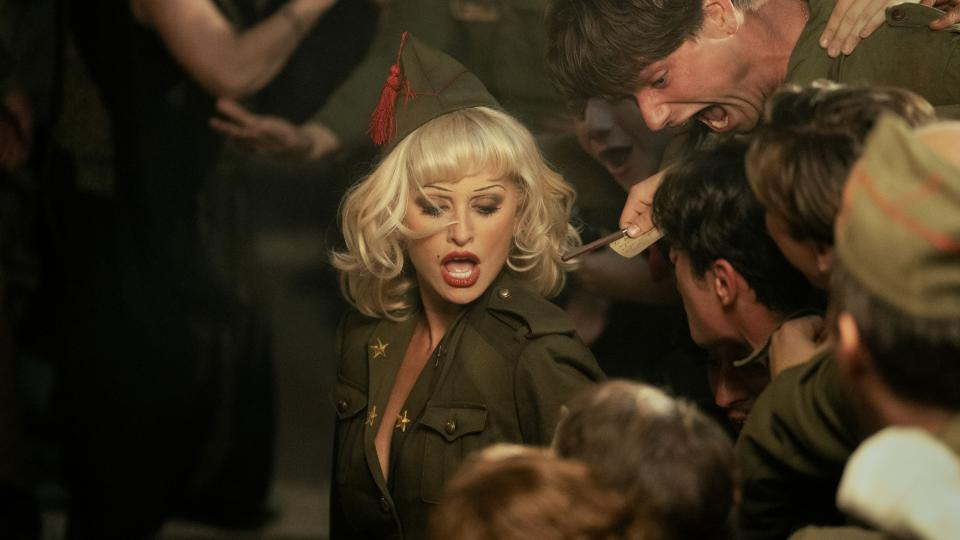
For much of La Bola Negra, the three periods feel separate. Carlos’ 1932 story is rooted in soft piano, strings, formal interiors, and orderly social rituals. Sebastián’s 1937 world is much harsher, with Raül Refree‘s brass-heavy score and the surrounding chaos of war making the film loud and unstable, while the colour palette also becomes noticeably greyer and more muted. Then Alberto arrives in 2017, and the shift into Grindr, iPhone alarms, Candy Crush, and contemporary pop music is deliberately jarring. These modern sounds become part of the musical construction of Alberto’s world, giving each period a sonic identity before the narratives slowly seep into one another.
The three-timeline structure emerged early in the process. Calvo and Ambrossi had seen La piedra oscura years earlier, but reconsidering it as cinema led them to place Sebastián and Rafael’s story alongside both an imagined Lorca narrative and a contemporary one.
As La Bola Negra progresses, the music begins to carry between periods, and transitions through light and shadow allow one historical moment to slide into another. By the final act, the score echoes across the three stories. Alberto Gutiérrez carries those connections through the edit, allowing musical and visual ideas to move between timelines while each period retains its own identity. Ambrossi has said that many of these cuts were already written into the screenplay. That planning comes through in the way scenes connect the timelines without needing dialogue to explain their relationship. Abrupt jump cuts occasionally break the flow.
The connection between the film’s different forms becomes especially interesting when Alberto discovers the surviving pages of Lorca’s La Bola Negra. As he begins reading, the film returns to Carlos’ story, but the dialogue shifts ever so slightly. The dialogue becomes less naturalistic, taking on some of the flourish of stage performance, as though we are moving closer to the play Alberto is reading rather than simply returning to another historical scene. During these moments, we get a glimpse of what might have been, had the full play ever been seen.
Carlos: Desire, Rejection, and the Passage of Time
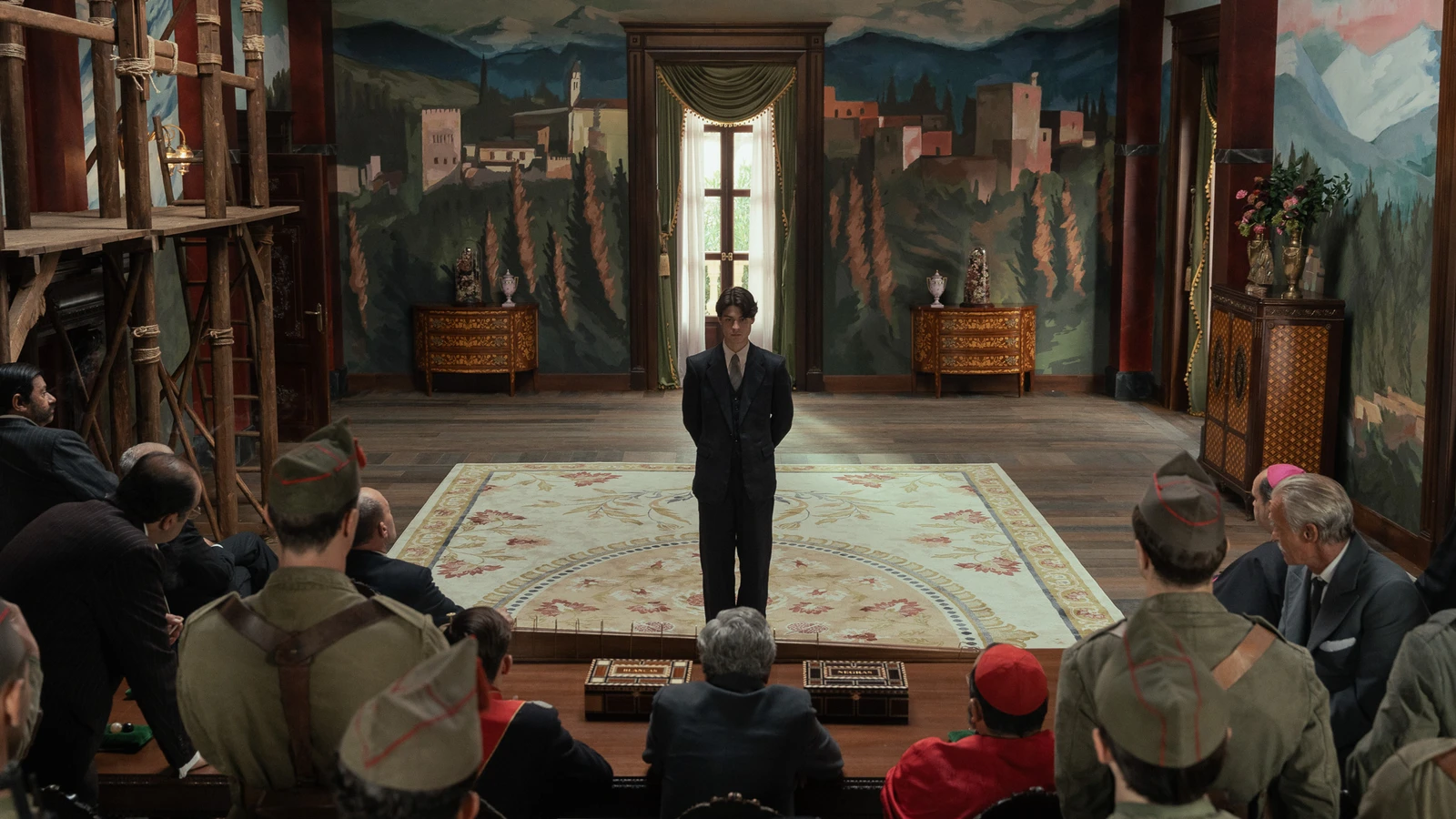
Carlos’ story is shaped by rejection. His father’s insistence that he become what he is meant to be “because you are a man” frames self-denial in supposedly masculine terms. Carlos has opportunities for connection with friends and potential lovers, but stops short of fully giving himself over to those desires. The men around him establish what kind of person they expect him to be, and over time Carlos begins limiting himself accordingly.
The film makes that imbalance visible in a literal sense as well. Carlos is often shown isolated and pushed toward the bottom of the frame, while the men judging him have considerably more space and visual authority.
Time is also key to Carlos’ story. Clocks are almost always present somewhere in this Granada section, sometimes sitting in the background and sometimes isolated in insert shots. The imagery draws in part from Lorca’s Así que pasen cinco años (When Five Years Pass), a surreal play concerned with the passing of time while its characters postpone love, desire, and the lives they might otherwise have lived.
Calvo and Ambrossi were particularly interested in the idea of postponing becoming yourself because you are afraid to face who that person might be. Carlos spends much of his story caught in that pattern. The clocks give his hesitation a steady presence: time continues as he postpones his desires.
Sebastián and Rafael: Recognition, Intimacy, and the Things Left Unsaid
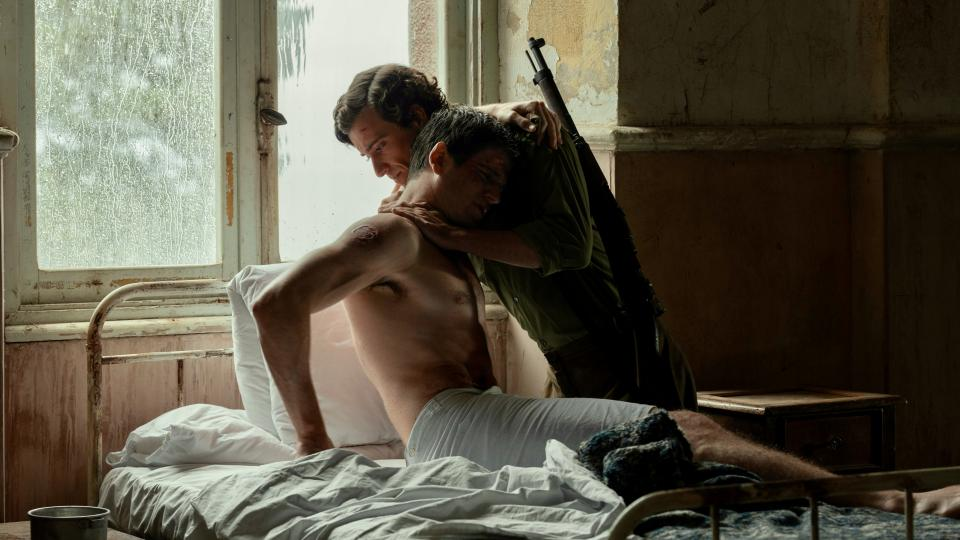
Sebastián’s relationship with Rafael develops withheld desire in a different direction. Rafael gives Sebastián something he has largely been missing: a person in whom he can recognize parts of himself without immediately needing to hide them. Rafael has lived more openly and experienced things Sebastián has kept at a distance, and their connection gives Sebastián room to acknowledge parts of himself.
The filmmaking becomes noticeably quieter around them. Sebastián’s 1937 story is otherwise surrounded by brass-heavy music, military movement, and the chaos of war, but several of his most intimate scenes with Rafael strip that away. In one of the film’s most beautiful compositions, the two men step together into a narrow sliver of light and simply hold one another. These are small moments in a section dominated by violence, and the quiet makes acceptance tangible for someone who has spent so much of his life withholding parts of himself.
When Sebastián asks whether Rafael was a footballer, Rafael replies, “I was many things.” Rodríguez Rapún was a sportsman, a mining engineer, politically active, and part of La Barraca first as an actor and later as its secretary; his relationship with Lorca is one part of a much larger life. For queer men whose sexuality could determine how they were treated, persecuted, or subsequently remembered, Rafael’s answer quietly resists reducing a person to one fact. Sebastián has spent much of his life narrowing himself in response to the world around him, while Rafael can acknowledge that a person contains more than one identity.
Sebastián’s understanding of Rafael deepens when he finds a note containing Federico García Lorca’s poem El amor duerme en el pecho del poeta (The Beloved Sleeps on the Poet’s Breast), in Paul Archer’s English translation. Within the film, Sebastián reads the note as something Lorca wrote to Rafael, turning the poem into evidence of a private emotional life that could not be stated publicly. Its opening lines, “You will never understand how much I love you / because you sleep in me and are asleep,” give language to feelings Sebastián himself has struggled to articulate.
At first, Sebastián says that he does not fully understand the poem. To understand what it expresses, he would have to recognize those same desires within himself and confront the life he has suppressed in favour of a safer, incomplete version of himself.
Alberto: Sexual Freedom and the Story He Avoids
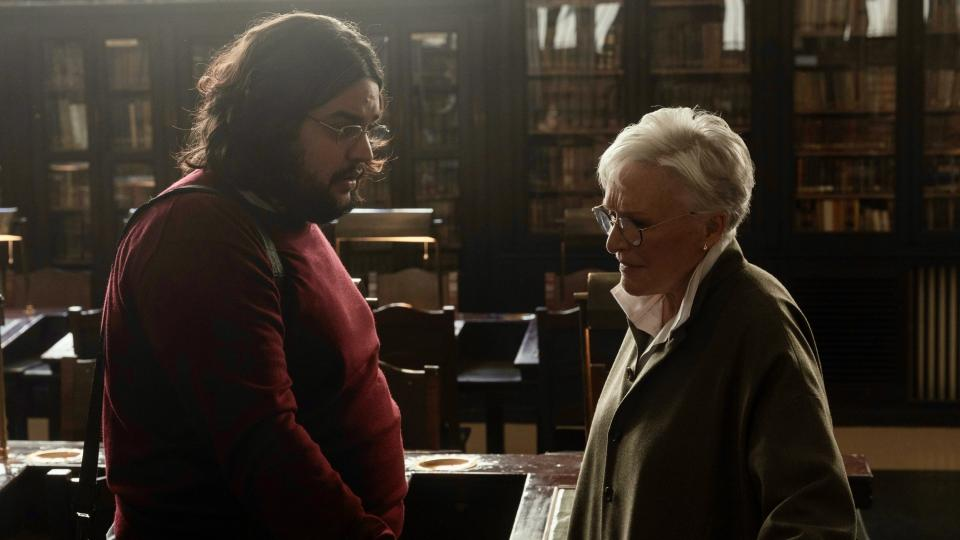
Alberto enters the film under radically different conditions. Grindr, smartphones, fleeting sexual encounters, and an open relationship with his partner establish that his sexuality carries fewer restrictions than Carlos’ or Sebastián’s. He can satisfy desire in the moment. What is much less clear is whether any of it is making him happy.
His sexual encounters feel temporary, and a broader dissatisfaction runs through his life. His relationship with his mother is fractured by addiction and years of resentment. His father abandoned the family, and Alberto grew up feeling unloved and disconnected from a history he does not fully understand. He has written plays himself but stopped, partly because he did not believe he was good enough to continue. Those freedoms have not given him a clear sense of what he wants to build with them.
Alberto spends enormous energy looking outward. He researches queer lives from before the Civil War through art, music, and the pieces of memory those people left behind. He does not yet have a clean thesis for his work beyond the desire to show that these lives existed and prevent them from disappearing completely. That desire is generous, and it also gives Alberto somewhere else to direct his attention.
Gradually, that research turns the question back onto Alberto. He approaches the past through other people’s lives while remaining reluctant to examine his own family’s history, even though his distance from his mother, his father’s abandonment, and absences further back in the family have shaped him. Alberto can acknowledge that he is gay, but he still has to reckon with his relationships and the creative voice he stopped trusting when he gave up writing plays. He can recover the voices of people history nearly erased; his own life remains harder to examine.
From the Black Ball to White Snow: Metaphor and Lorca’s Poetic Logic
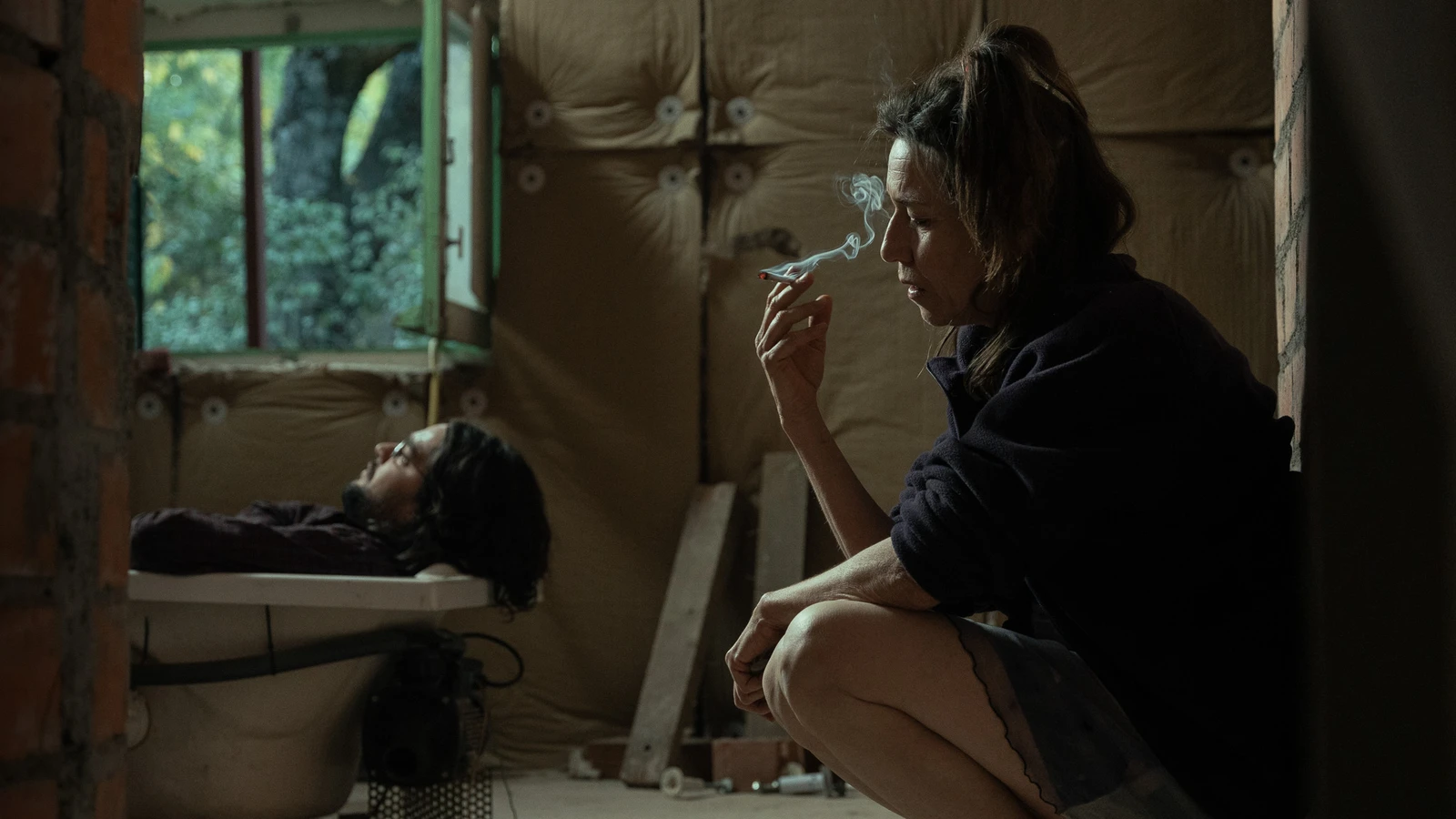
Metaphor is central to La Bola Negra because it is central to the Lorcan language the film adopts. Lorca often begins within recognizably realistic spaces before allowing stranger figures to emerge, while recurring images such as snow, the moon, and silver become closely associated with death and can assume an almost physical presence. The film follows that movement in Carlos’ story, gradually allowing metaphor and surrealism to express what its more realistic world cannot.
In particular, there is a bar sequence following Carlos’ first rejection, marking an important shift. He enters the space to drink and escape, but the floating camera and dancing bodies slowly loosen the realism that has governed much of his story. The woman he encounters there tells him about the death of her child, introducing an image of maternal grief that initially remains unresolved. Her significance lies less in who she might be within the literal narrative than in the symbolic role she gradually assumes.
That role becomes clearer when Carlos’ story reaches the Sierra Nevada, the mountain range overlooking Granada. The same performer returns as the voice of the snow, deliberately linking the woman in the bar to a landscape of peaceful death. The woman therefore moves beyond the boundaries of a conventional character: first embodied within the bar and later dispersed across the mountain landscape, she connects maternity, death, memory, and release across different spaces and moments in Carlos’ story.
Ultimately, the progression from the black ball to the white snow condenses that transformation particularly well. The black ball has a fixed social meaning: rejection. It belongs to a system that classifies Carlos and determines whether he is permitted to belong. The snow operates according to a different logic. Its meaning remains plural, carrying death and loss while also offering consolation and the possibility of release. The contrast is therefore not simply between black and white, or rejection and acceptance. Carlos moves from a world in which meaning is imposed upon him through rigid social categories toward one in which metaphor allows several meanings, and several possibilities for understanding himself, to coexist.
Through art, La Bola Negra preserves traces of lives that were never fully documented: particular desires, relationships, fears, and forms of repression.
My own relationship with Lorca provides a small example. I first encountered his work through Leonard Cohen, particularly “Take This Waltz,” Cohen’s adaptation of Lorca’s “Pequeño vals vienés.” Cohen’s engagement with the poem gave me a route back to Lorca. La Bola Negra follows another chain of artistic handoffs, from Lorca’s unfinished project to Conejero’s play and the filmmakers’ imagined story.
Final Thoughts on La Bola Negra
At 155 minutes, La Bola Negra is ambitious, but its scale rarely becomes unwieldy because its formal construction remains closely tied to its central ideas. The three periods retain distinct visual and sonic identities while editing, music, performance, and metaphor gradually weaken the boundaries between them. The film itself becomes an act of inheritance, assembled from Lorca’s unfinished writing, Conejero’s theatre, historical lives, poetry, music, and contemporary experience.
Its treatment of queer history is equally resistant to a simple progression from repression to liberation. Alberto possesses freedoms unavailable to Carlos and Sebastián, but freedom does not automatically produce complete self-knowledge. Across the three periods, the forms of constraint change while questions of identity, silence, memory, and inheritance persist. The film is interested less in repetition than in transmission: how experiences that could not be fully expressed in one generation continue to shape those that follow.
That is ultimately what gives La Bola Negra its intellectual and emotional coherence. The film cannot complete Lorca’s unfinished work. Instead, it places those pieces into a contemporary artistic form where they can continue to be interpreted. For all of its visual ambition, that is its most significant achievement: La Bola Negra understands preservation not as completion, but as continuation.


