

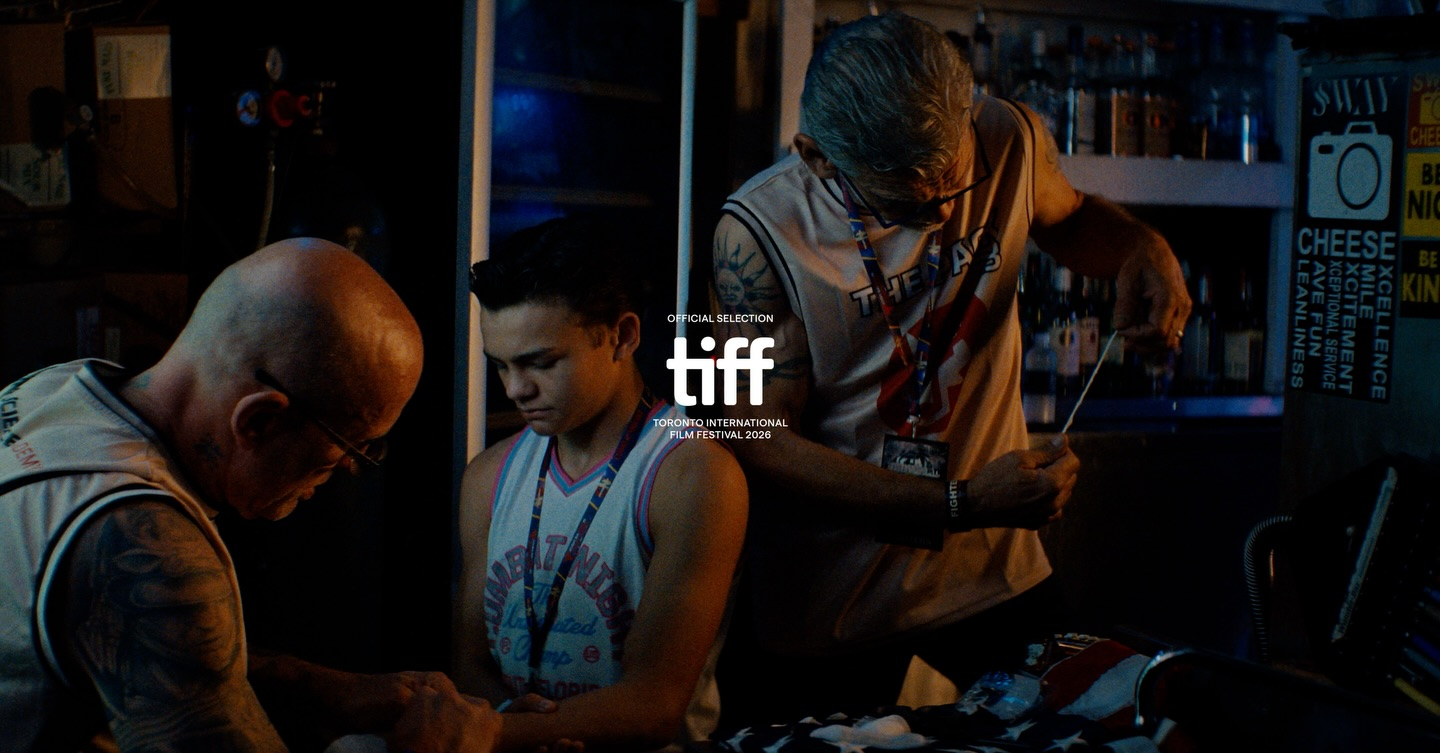

Fight Kid made its world premiere on September 12 at the 2026 Toronto International Film Festival, screening as part of the Short Cuts programme. For director Michael Del Monte (Art of Documentary), who has spent roughly fourteen years working in documentary, getting there meant learning a new form of filmmaking.
I spoke with Del Monte after the premiere about how a documentary series became a partially scripted short, the unusually natural performances from father and son Eddie and Isaiah, and the problem that occupied him most while making the film: how to tell enough of their story to make the short feel complete when he already knew there was much more he wanted to explore.
From Documentary Series to Fight Kid
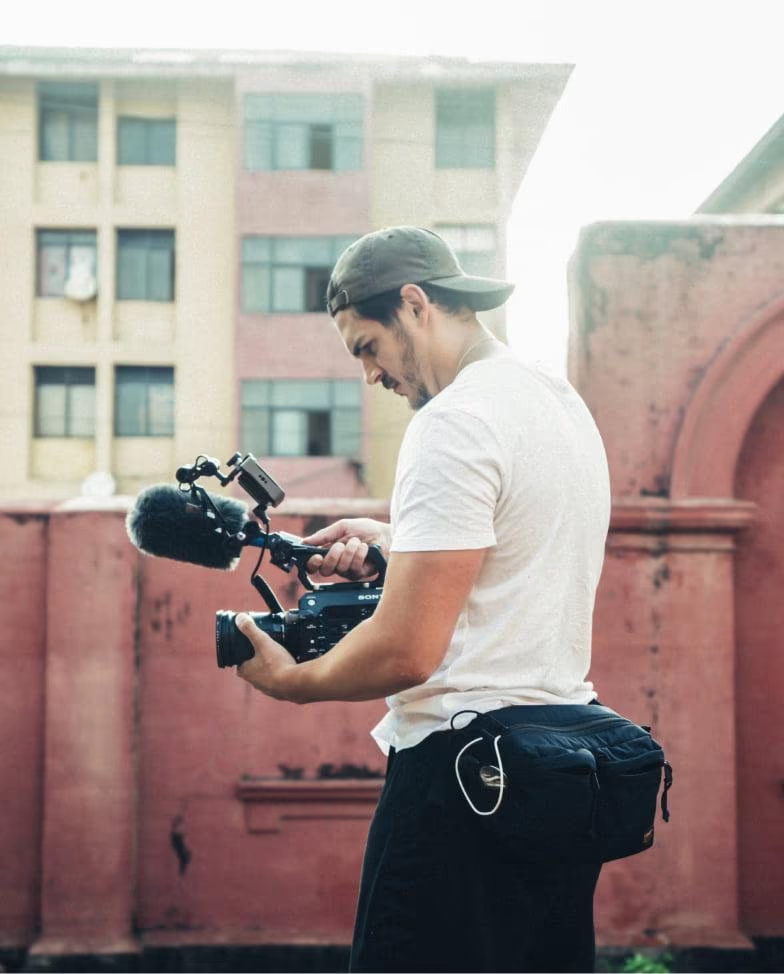
Fight Kid originally existed as a much larger documentary project. Del Monte and his team had been developing a series about families whose children compete in combat sports, including Brazilian jiu-jitsu and kickboxing, with the hope of making something in the vein of Last Chance U. For some of these families, Del Monte explained, the child’s success could become wrapped up in hopes of escaping difficult economic circumstances.
The problem was getting that version made. Streamers were not particularly enthusiastic about children fighting, and Del Monte also ran into a familiar problem with sports programming: buyers wanted recognizable names, while the kids he was interested in were unknown. After a couple of years trying to make the documentary series work, conversations with his mentor Derek Cianfrance (Blue Valentine, Sound of Metal) pushed him toward a different approach.
“And then my mentor, Derek Cianfrance, who does a lot of work kind of bringing real characters into his films, we just started playing with the thought of, like, let’s just make something,” Del Monte told me. “And we just thought about, you know, Chloé Zhao’s The Rider, you know, just where people play a version of themselves and we script elements.”
That became one reference point for the project. Del Monte had also stayed in touch with Eddie and Isaiah, the father and son who would ultimately become the focus of Fight Kid, throughout development, regularly asking what was happening in their lives, and eventually heard about an upcoming fight called Combat Night.
“What if we just script…the tension or drama, but then we allow the fight to be real?” he remembered thinking.
They shot over three days, with the material before Combat Night shaped around scenes Del Monte wanted to capture and the competition itself left alone. He knew the fight would end the film, but nobody knew whether Isaiah would win or lose, so whatever they made beforehand had to lead somewhere that could accommodate either result.
For the record, despite TIFF’s official logline describing the climax as a boxing match, Isaiah is competing in an MMA cage fight. Hey, even TIFF misses one occasionally.
Love, Violence, and Playing Within the Lines
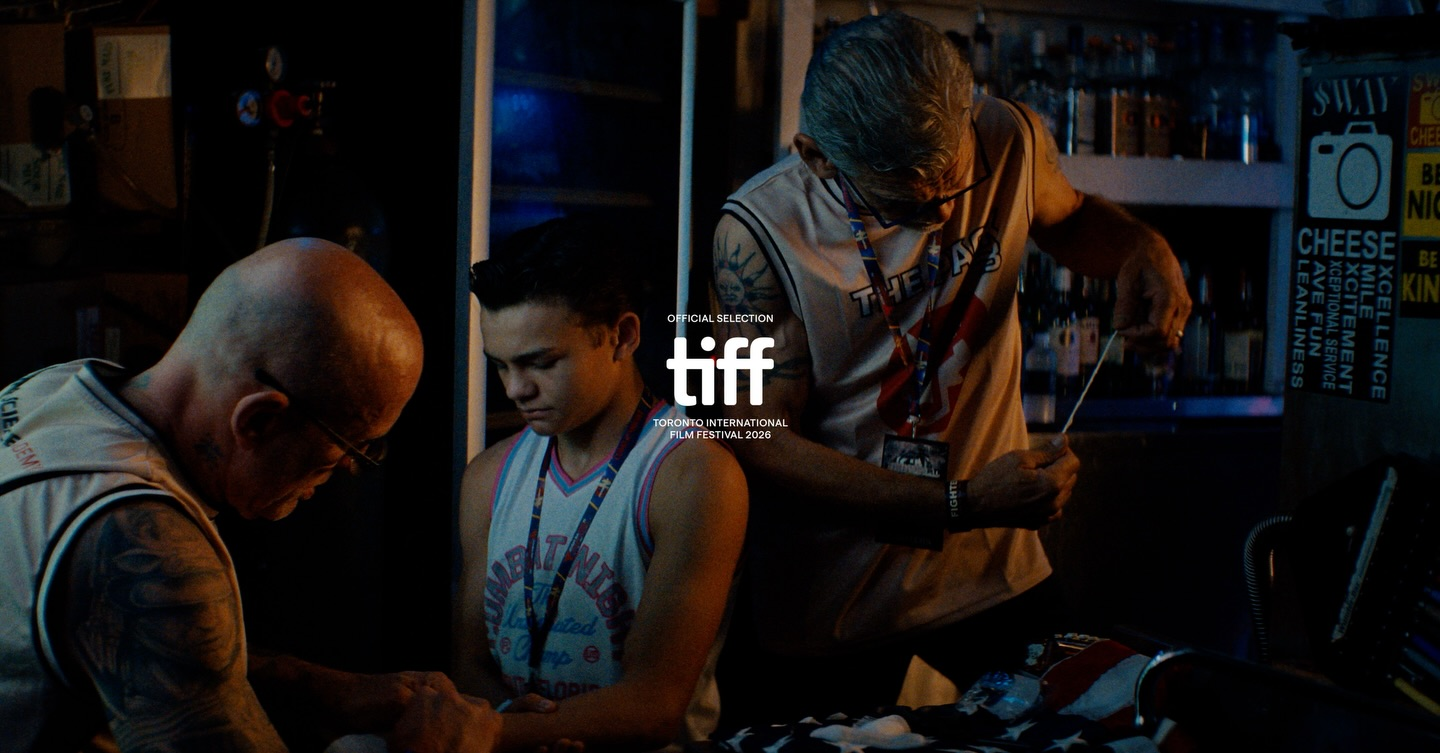
One of the first things I mentioned to Del Monte was how good Isaiah and Eddie are on screen. Without knowing the production history, it would be easy to watch Fight Kid and assume Del Monte had found two particularly natural actors.
He was much less confident going in.
“I did not know it was going to work, to be frank,” he said.
Del Monte did not give them exact dialogue. Instead, he described the process as drawing lines on a field and asking them to play inside those boundaries, while still allowing them to move toward the edges. “I’m giving you an idea I want you to explore,” he said, “and then let’s work through that and see how it goes.”
It helped that those ideas came from things that had already happened. Weight cuts were part of their lives. So was wrestling at home and Eddie talking constantly in Isaiah’s ear. A confrontation between Eddie and the coach also came from a real disagreement that had been waiting to happen.
“They wanted to have that argument for months,” Del Monte said. “I’m like, ‘Just wait till the film…don’t have it yet. We’ll have it on camera.’”
The first scene they shot was an intense sauna weight-loss scene, and Del Monte could see some performance in it at first, but it was enough to convince him the approach could work. As he put it, “You just don’t know if they’re going to be able to not act.”
What Del Monte was trying to preserve was the intensity he had already seen in the family through his documentary work. Not necessarily intensity simply as loudness, but as a complete investment in what someone is doing.
“There’s no apathy. There’s no fakeness in these guys’ life,” he said. “Their life is love and violence.”
That description is quite apt for Fight Kid. Eddie and Isaiah are deeply affectionate, but fighting also permeates their relationship. “They hug and kiss,” Del Monte said, while also wanting Isaiah to become “the best frigging fighter in the world.” The pressure in the film does not arrive separately from the love between them; it is tangled up inside it.
That knowledge of Eddie and Isaiah also meant Del Monte could be unusually specific about what he needed once the three-day shoot began. There were extensive phone calls and FaceTimes beforehand, he knew the opening shot he wanted, and he estimated that they shot roughly three scenes each day and used every one of them. That degree of planning was unusual for someone accustomed to discovering more of a documentary through the process of filming.
“In a doc, I never know that,” he said of already knowing the opening. “A doc, you’re always going to explore and you figure it out.”
Here, he had to know much more before they started. “No. Nothing,” Del Monte said when I asked how much had ended up on the cutting-room floor. “I think we had three scenes a day over three days, and we used every single scene. Like, I don’t think anything — nothing got cut. We had to use everything.”
Transformation, Revelation, and Restraint
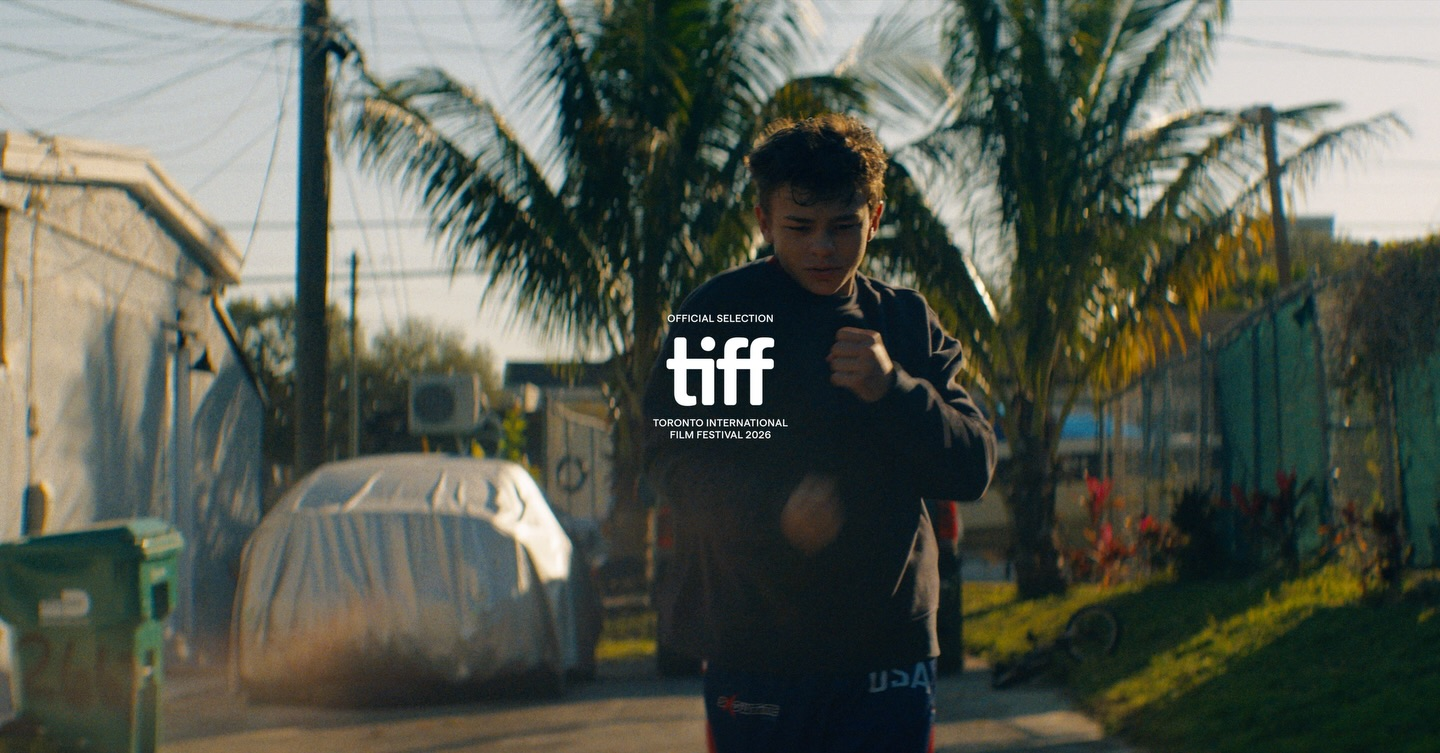
When I asked Del Monte about making his first short, I was interested in the limitations of the form. There is less runtime than a feature, obviously, but that also means less room to follow every idea that might be worthwhile. Too many directions and none of them have enough space to develop.
“Yeah. That was the hardest thing, and that’s why I thought there was a decent chance it wouldn’t get into TIFF because, you know, I come from the feature background,” Del Monte said. “Like, I’ve made feature docs my whole life, and those are always about transformation.”
In a feature documentary, you might follow someone for two years, watching where they begin, what happens to them, and how they have changed by the end. Del Monte could not simply compress that structure into a much shorter runtime, so he began watching shorts from TIFF, Vimeo, and anywhere else he could find strong examples.
“The great ones, it was never about transformation,” he said. “It was about revelation. Like, they weren’t trying to show a journey. You’re just trying to reveal something.”
That became his way into Fight Kid. There was much more he wanted to explore, but for the short he kept returning to Eddie and Isaiah, particularly the “intense relationship of father speaking on behalf of his son.” He wanted the audience to leave slightly uneasy about what they had watched rather than trying to resolve the entire family within a few minutes.
That need to stay contained sometimes ran against the instincts of people accustomed to making features. Del Monte remembered conversations with his producer about whether certain elements needed to be expanded.
“No, I don’t think we can expand anymore,” he recalled saying. “In fact, we need to condense.”
The result is a film that ends somewhat abruptly after the big fight, without the sort of traditional catharsis or extended resolution that might follow the climax of a more conventional sports story.
For me, Fight Kid finds the right point. Ultimately, it didn’t leave me disappointed by what was missing, but interested in continuing the story. He made a similar distinction when talking about the shorts he saw alongside Fight Kid at TIFF. Some felt completely enclosed, while others left him “thirsty for more.”
The challenge was making sure Fight Kid could do the latter without simply feeling unfinished.
“Short filmmaking, it’s a very disciplined craft,” he said.
“Restraint,” I replied.
“Yeah, exactly that. Exactly that.”
TIFF and What Comes Next

TIFF was not simply where the finished film happened to premiere. Del Monte had been watching successful TIFF shorts while trying to understand the form, and he admitted that he was not always convinced Fight Kid would make it there. Once it did, he finally had the chance to see how an audience would respond as the film moved from a family portrait toward the discomfort of the cage fight.
Because I had not yet arrived in Toronto for the premiere, I asked Del Monte how that first screening had felt from inside the room.
“It’s the best thing ever,” he said. “You make films so people can watch them in a theatre.”
Del Monte was surprised by some of the laughs, particularly around Eddie, whom he described as having a dark tragicomic quality. More important to him was feeling the room move from the humour and familiarity of a family portrait toward something less comfortable as Combat Night approached.
“You kind of feel the energy in the room go from this family portrait, and then it starts getting a little bit more uncomfortable, as in the cage fighting and the mom and dad are screaming,” he said. “It felt like it did what I was hoping it would do.”
When I asked what he was working on next, his answer was immediate.
“This one.”
Del Monte still talks with Eddie and Isaiah regularly and is now trying to expand the material into a feature, using what is currently happening in their lives to help shape the script. He compared the path he hopes to follow to Whiplash: make the short, then use what works there to find the feature.
There is obviously more of Eddie and Isaiah’s story available to Del Monte. The useful thing about Fight Kid is that he eventually recognized he did not have to put all of it in this film. He needed to reveal enough of the relationship to make us understand why he wanted to keep following it.
And after this premiere, perhaps many others would like to keep following it too.
Fight Kid had its world premiere on September 12, 2026, as part of the Toronto International Film Festival’s Short Cuts programme. Distribution is currently handled by The Art of Documentary / AOD Film. Thank you to Route 504 for facilitating this interview.


