


Writer Emma Donoghue on Her Latest Film, H is for Hawk: “Film is Always a True Collaboration”
My introduction to Emma Donoghue’s screenwriting was a memorable one: watching Room in a confined space – in my case, the middle seat of an aircraft – and realizing mid-flight that it would be an uphill battle to not let out an ugly cry surrounded by strangers.
As such, speaking with her recently about her latest adaptation of Helen Macdonald‘s memoir, H is for Hawk, felt like a full-circle moment for me.
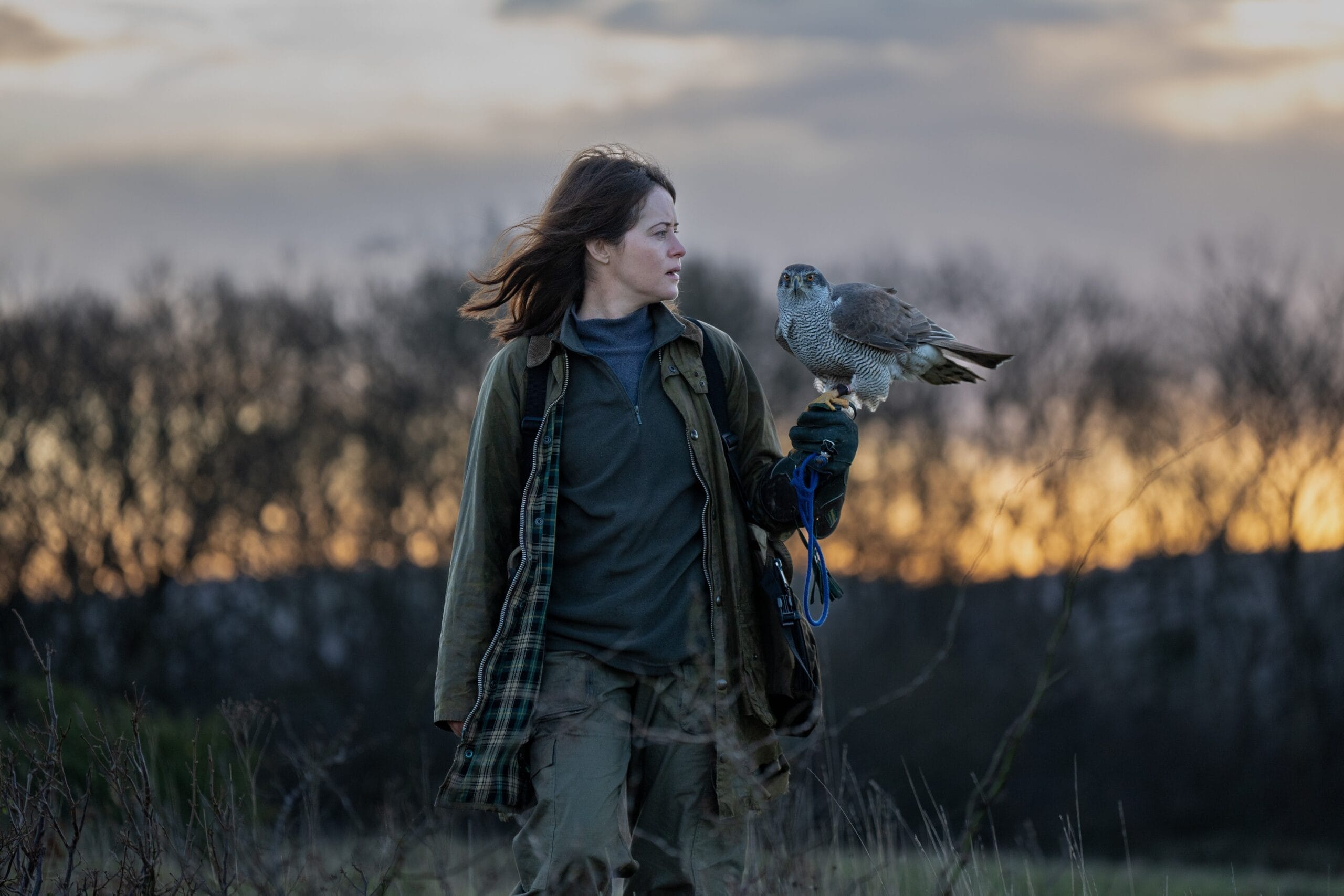
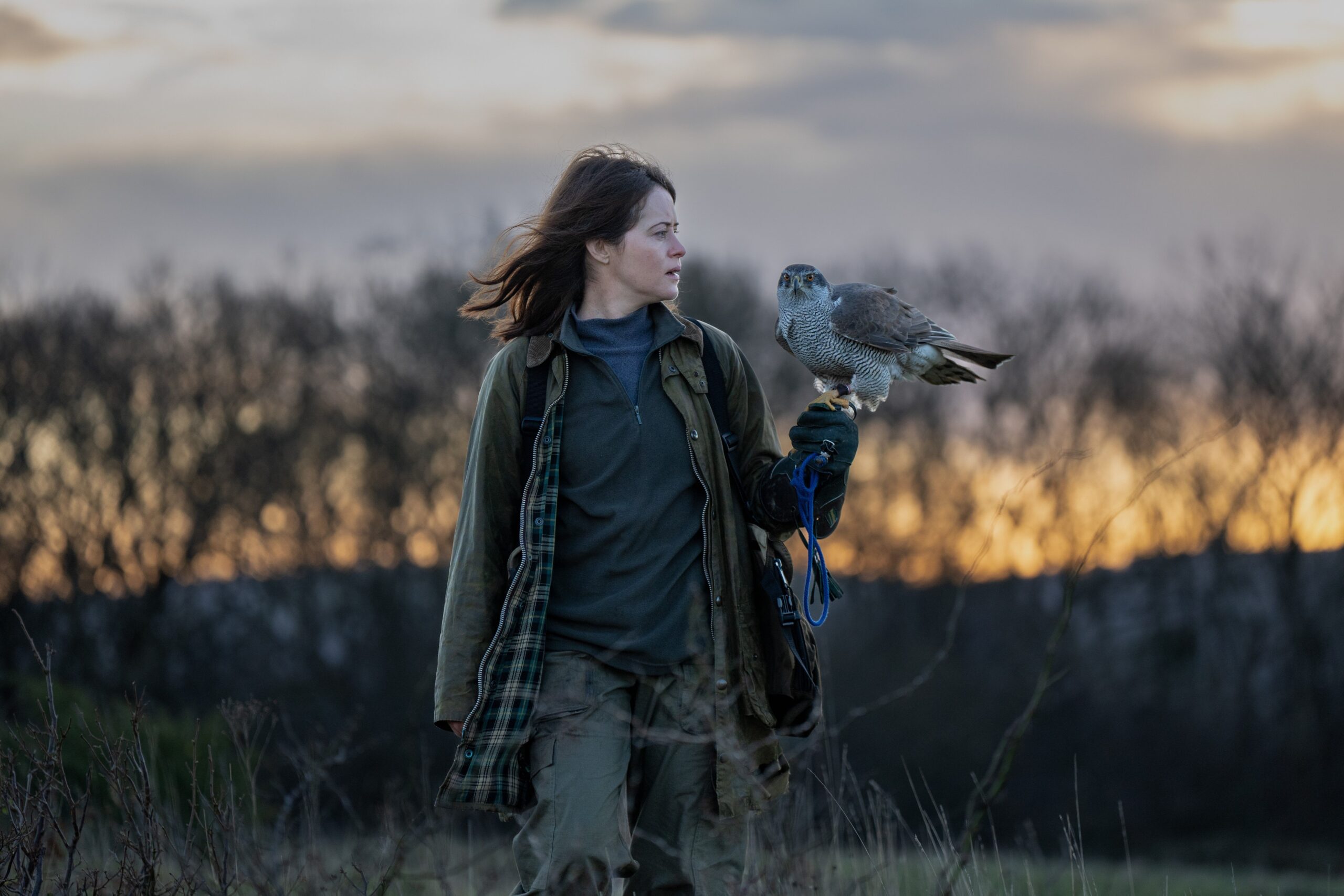
H is for Hawk follows Helen (Claire Foy), who, after the sudden death of her father (Brendan Gleeson), loses herself in the memories of their time birding and exploring the natural world together and turns to the ancient art of falconry, training a wild goshawk named Mabel to navigate her profound loss. But as she teaches Mabel to hunt and fly free, Helen discovers how deeply she has neglected her own emotions and life. What begins as an act of endurance transforms into an intimate journey of resilience and healing.
A huge thank you to Route 504 PR for facilitating this conversation.
H is for Hawk hits theatres on January 23, 2026.
(The following interview has been edited for length and clarity.)
On Emma’s Relationship to the Memoir, H is for Hawk

The original memoir is beloved by so many for its unique blend of genres. I was curious about Donoghue’s relationship to the book and how she approached adapting something so complex.
Emma Donoghue: Plan B reached out to me 10 years ago. I read the book at an airport. And I was 20 pages in, and I was like, “OK, this is going to be impossible to please the many passionate fans of this book.” Because it’s a book of many genres. You know, it’s nature writing. It’s literary criticism. There’s a lot in it.
I thought the personal story was the only one that I could see translating to the screen. So this is going to be so hard. And yet I have to do it because the book is so well written. I thought it was a lovely challenge to see whether you could really communicate much of the other stuff in the book – the thoughts on nature and so on – but try and find a way to communicate them in the story.
When you fall in love with a piece of source material, the instinct is often to protect it, yet adaptation requires a certain amount of dismantling to make it work on screen. I asked Emma about that delicate balance: identifying which elements of the book were non-negotiable DNA, and where she felt the freedom to transform the narrative
Emma Donoghue: Just one example: she’s Helen Macdonald in the book, [and she] is so smart about how falconry has all these associations with traditional white English culture. But in fact, in the book, she says all these hawks are typically from other countries. And they’re all immigrants, as it were. Falconry doesn’t have to be this throwback fantasy of “Merry England,” and so I thought that was a really interesting and political idea.
And I had to find somewhere in the script where I could put it. So I managed to find two lines of dialogue in which somebody voices sort of racist views about “Merry Old England,” and she slaps them down. It’s such a pleasure if you can find a natural way in dialogue to bring in some key ideas.
On paper, Macdonald’s memoir seems like an unlikely candidate for a feature film. It is less concerned with plot beats than it is with the author’s internalized grief. Donoghue had to find visual and dramatic substitutes to externalize Helen’s headspace without relying on a constant internal monologue.
Emma Donoghue: Well, I was lucky that the relationship between hawker and hawk is a very intense one. It struck me immediately as like a parenting story. Like, here I am with this little creature. How can I make it eat?
So it’s a dramatic relationship, and I knew I could really lean into it and follow its beats and take it seriously, rather than just some quick montage sequence of “oh, look, I’ve changed the hawk.” I wanted to make it difficult and really unpredictable. You don’t know in any given scene: is this going to be a feel-good or a feel-bad moment?
If the character was truly shut away from the world all the time – just tapping on a keyboard or something – it would have been much harder to get into her head. But the combination of the dramatic interactions with the hawk, and then the very heartfelt and open conversations [with her confidants]… it was quite easy.
On Collaboration and Working with Philipa Lowthorpe
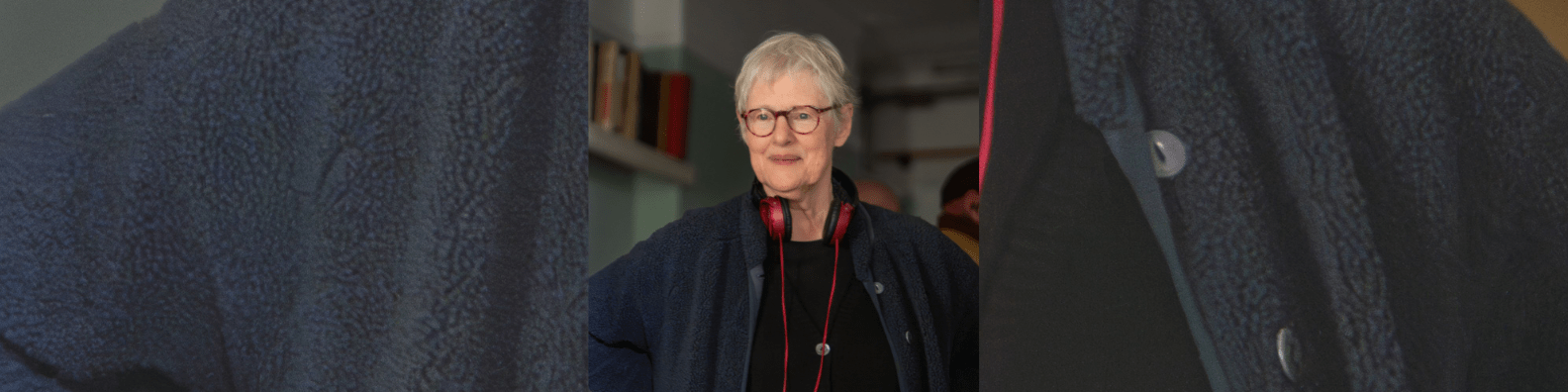
Filmmaking is never a solo act, and on this project, Donoghue shared writing duties with the film’s director, Philippa Lowthorpe. I asked about that dynamic.
Emma Donoghue: Philippa is fantastic to work with. She came to London, Ontario, and stayed nearby to work with me, which not all directors do. It’s not the typical Hollywood approach.
I think, in particular, she got more material about Alisdair Macdonald, Helen’s father. She glimpsed that, really, to make people understand why this felt like such an appalling tragedy to Helen, we had to make the father really interesting and lovable. And casting Brendan Gleeson really helped there, because I didn’t want anyone to be like, “Oh well, your dad dies, this happens.” I wanted it to feel harrowing, even though it’s a very ordinary event.
Screenwriting usually assumes a level of control, but that control evaporates when your supporting cast includes live birds of prey. Because the film utilized real hawks, the script had to remain fluid enough to accommodate the reality of working with untamable animals.
Emma Donoghue: I knew that whatever we wrote about the humans and the hawks was likely to change on the day. Because those hawks, you can’t make them do anything. So you just have to create situations for them. Like, you can’t get a hawk to fly down to one particular branch to grab one particular piece of food.
So really, all we could do was put these hawks – and I think we had six of them – in situations where they would do their hunting. And no actual killing happened, but they would do all the component pieces of the flying and the tearing and the riding along on Claire’s hand.
And Claire [Foy] had to do it for real. I mean, she had weeks of intense training, and she did actually get footed, say, for instance. She got clawed in the head. As she put it, it was, like, luckily on the last day. She’s one of these actors who will give it all for the craft – no holding back.
On Portraying Grief and Performances from Claire Foy and Brendan Gleeson

Grief in film often falls into two traps: it’s either hyperbolized for drama or sentimentalized for comfort. H is for Hawk avoids both, largely due to the nature of the hawk itself.
Emma Donoghue: I knew we had a unique opportunity because most stories about humans and animals are so… sappy, frankly. And so having an animal that is not in any way cuddly, or will not sort of come to the door with enthusiasm to greet you – that really helped keep the story edgy.
And in terms of grief, I knew it would keep things unpredictable because I did not want the classic sort of stages of grief. I wanted there to be scenes in our film where you’re simultaneously thrilled by some breakthrough with the hawking, but you’re also thinking, “Okay, Claire is looking more and more unhinged.” So the ups and downs of it are not predictable in that classic, well-made feature film way.
And also, the rich ambiguity of what the hawk is, right? Because it’s not simply like, “Oh, the hawk’s like my daddy,” or “The hawk is grief,” or “The hawk is death.” I mean, the hawk is life as much as it’s death.
Donoghue has a remarkable track record of seeing her complex female protagonists brought to life by generational talents – from Brie Larson’s Oscar-winning performance in Room to the immensely talented Florence Pugh in The Wonder. Having actors of this calibre, including Foy and Gleeson in H is for Hawk, allows a screenwriter the luxury of letting go of the text, knowing the performance will carry the subtext.
Emma Donoghue: It means it’s impossible to picture the people in the book any other way. It also means that you can trust that it doesn’t matter if the words change.
When I was writing my first screenplay for Room, I was probably very focused on, like, “This exact line has to finish the scene.” And then I remember one scene in which Lenny Abrahamson, our director, stripped away all the dialogue… and I realized that works perfectly.
So with this film in particular, I knew there’d be a lot of unpredictability. So yeah, I don’t even remember where some of the words in this film came from. It could have been Helen’s memoir, could have been me, could have been Philippa, could have been Claire. It could have just happened on the day.
Film is always a true collaboration. You can’t control it in that way. When I’m writing my novels, I get to pick every word. Film is the opposite of that. Despite all the expensive and elaborate preparations, on the day, the weather changes. The hawk poos on your foot. You just have to stay alive.
On Writing Specific Lines and Emma’s First Musical

The film has moments of sharp, dry humour that cut through the heaviness. One of my favourites is Helen at the doctor’s office, going through Beck Depression Inventory and remarking, “It could just be that these are rational responses to the reality of my life.”
Emma Donoghue: Yeah, I think that’s from the memoir. Because Helen Macdonald is this extraordinary intellectual… I love that geekishly intellectual side, where even as they’re suffering, they’re considering the situation from the outside – like a Martian would.
I also love that moment when Helen in the film says to the doctor: “Yes, I have this relationship, but it’s with a technically non-affectionate animal.”
Finally, Donoghue spoke about her latest challenge: writing her first musical, The Wind Coming Over the Sea.
Emma Donoghue: It’s a true story about Northern Irish immigrants during the famine who came to Canada. And Blyth Festival commissioned it, and it ran this summer, and they did so well with it, they brought it back in the autumn. So it’s now getting a new production – it’s going to happen in Nova Scotia at the wonderfully named Two Planks and a Passion Theatre.
I think because music is something that immigrants tend to carry with them, it’s a portable form of culture. I think using songs to tell a story of immigration is just absolutely the right decision artistically.


