


No Rest for the Wicked Film Review | Shame, Desire, and a Life Without Trees
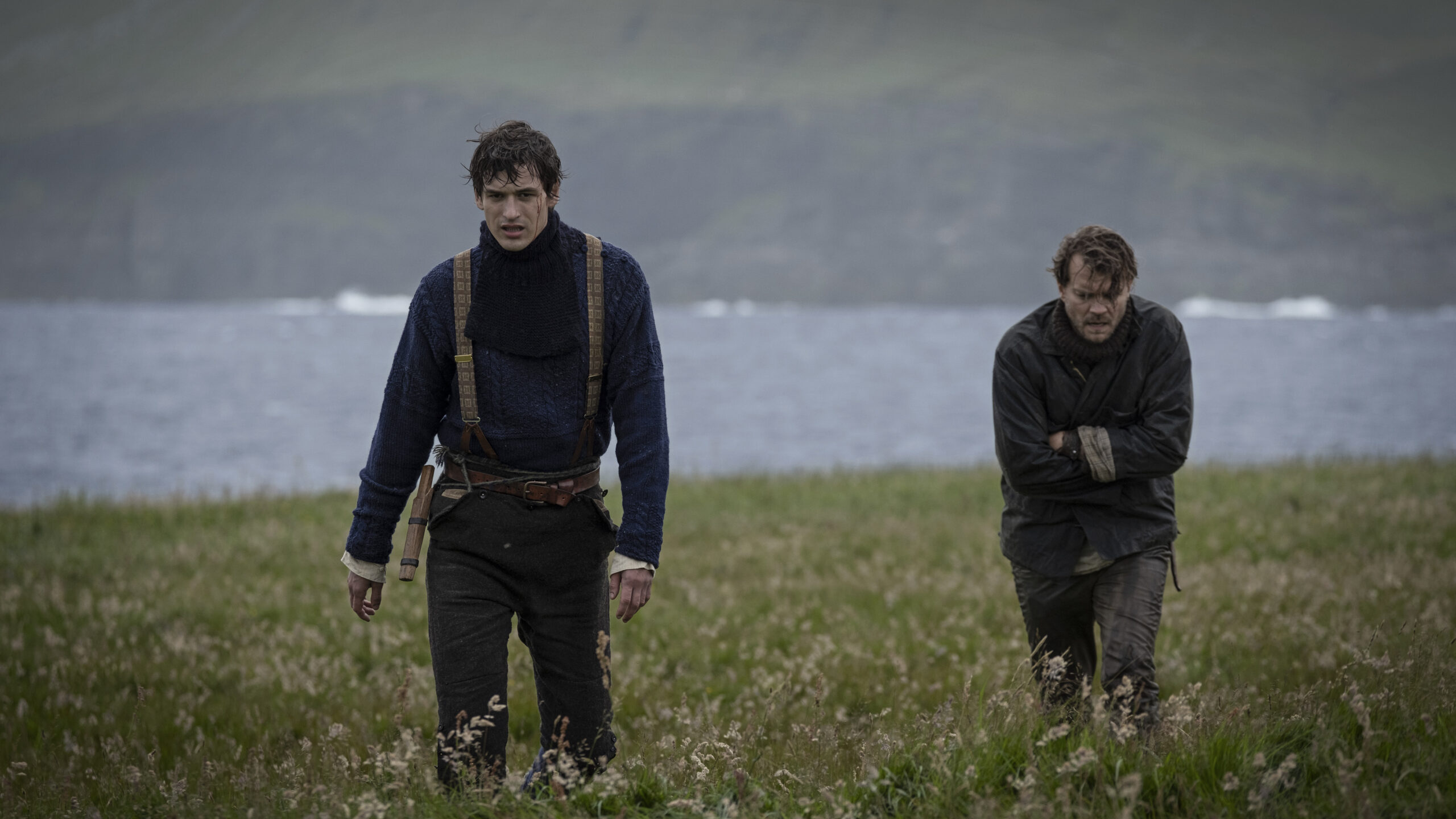
I caught No Rest for the Wicked as part of the 2026 Fantasia International Film Festival, where it had its world premiere and became one of my favourites of the festival.
Fantasia’s Cheval Noir jury shared that response. Kasper Kalle received the award for Best Director, while Pilou Asbæk earned an Outstanding Performance Award for his work as Helge.
Both awards are well deserved, although neither entirely captures what makes No Rest for the Wicked so effective. This is a beautiful queer romantic horror film that understands genre can deepen intimacy rather than diminish it. Its supernatural elements do not distract from Baldur’s shame, longing, anger, and desire. They give those emotions a physical form.
That is a delicate balance. It would have been easy for the film to become so invested in its vampire mythology, folk-horror imagery, or surreal transformations that the relationship at its centre began to feel secondary. Kalle instead uses those elements in support of the love story. The horror is not a detour from Baldur’s emotional life. It is what that life becomes when repression can no longer contain it.
What is No Rest for the Wicked About?
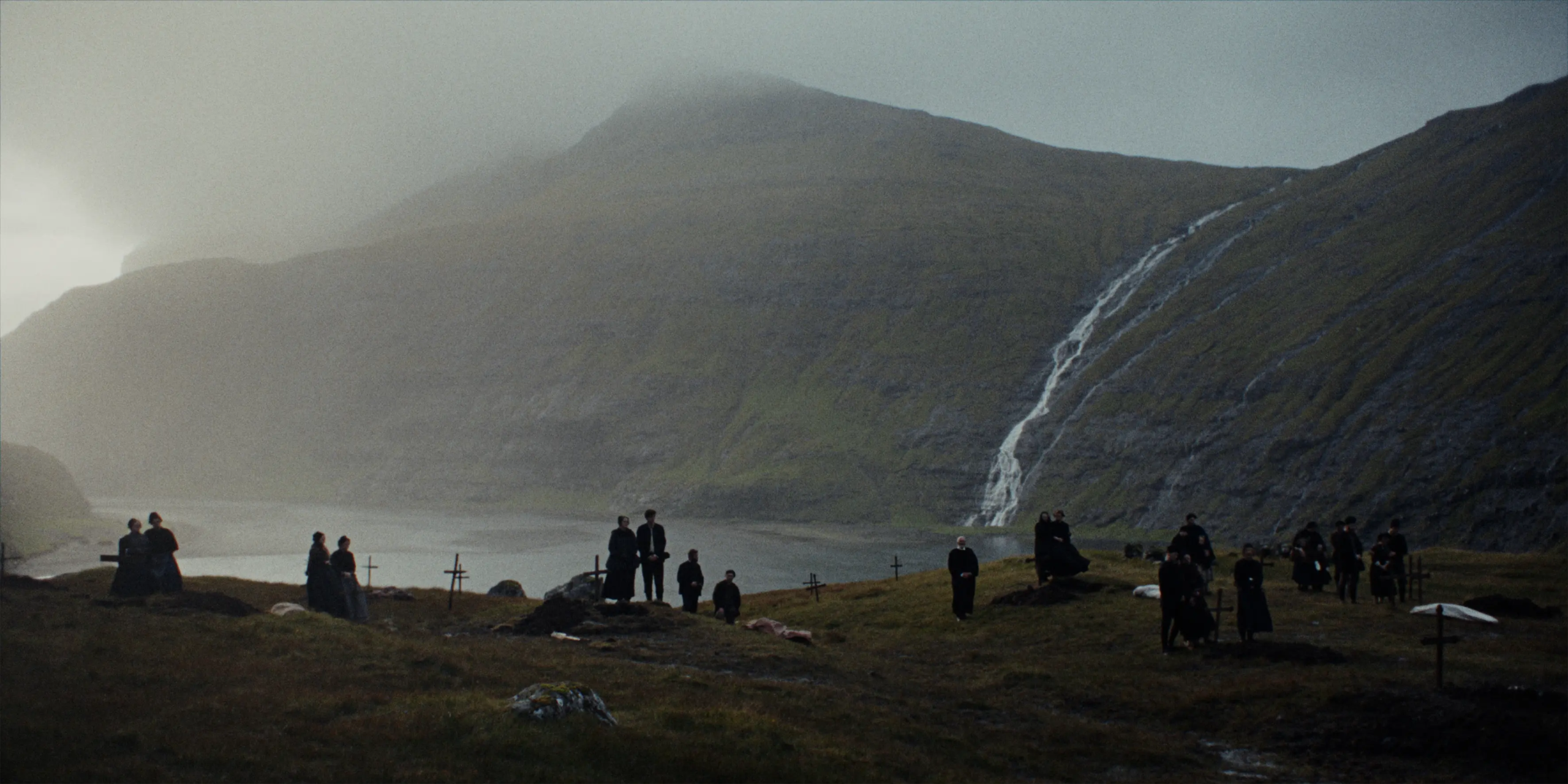
Set in the Faroe Islands in 1862, No Rest for the Wicked follows Baldur (Egor Venned), a young fisherman living within the narrow expectations of his family, church, and isolated community.
His life changes when Helge, an older whaler, arrives on the islands. Their growing attraction gives Baldur his first real sense that another kind of life may be possible, but their relationship must remain hidden within a community governed by restrictive ideas about sexuality, masculinity, and faith.
When tragedy strikes, their love begins to cross the boundaries between life and death, and the emotions Baldur has spent his life suppressing emerge through increasingly supernatural means.
The film is adapted from “Manor,” the 1884 short story by German writer Karl Heinrich Ulrichs. Kalle has described it as one of the earliest unapologetic stories about gay love, despite remaining relatively unknown outside of queer literary history.
The film carries that history forward without becoming constrained by its nineteenth-century origins. Its period setting gives the film specificity while intensifying questions that remain recognizable: what happens when a person has no language for what they feel, no one in whom they can see themselves, and no safe way to be seen by others?
Living in Darkness and Learning to Be Seen
Long before Baldur expresses what he wants, Venned allows his body to disclose it.
Baldur has a tendency to look downward. He avoids sustained eye contact and seems to make himself smaller in the presence of other people. His shame exists before the film has explained its source. It has become habitual, shaping the way he occupies a room and responds to the possibility of being noticed.
That begins to change through his interactions with Helge. Baldur gradually looks up. He holds Helge’s gaze for longer. For perhaps the first time, he is being seen by someone who recognizes the part of him that everyone else has required him to conceal.
At the same time, Baldur is also learning how to see another person clearly. Helge does not merely offer romantic attention. He gives Baldur a human reference point for feelings that had previously existed without shape.
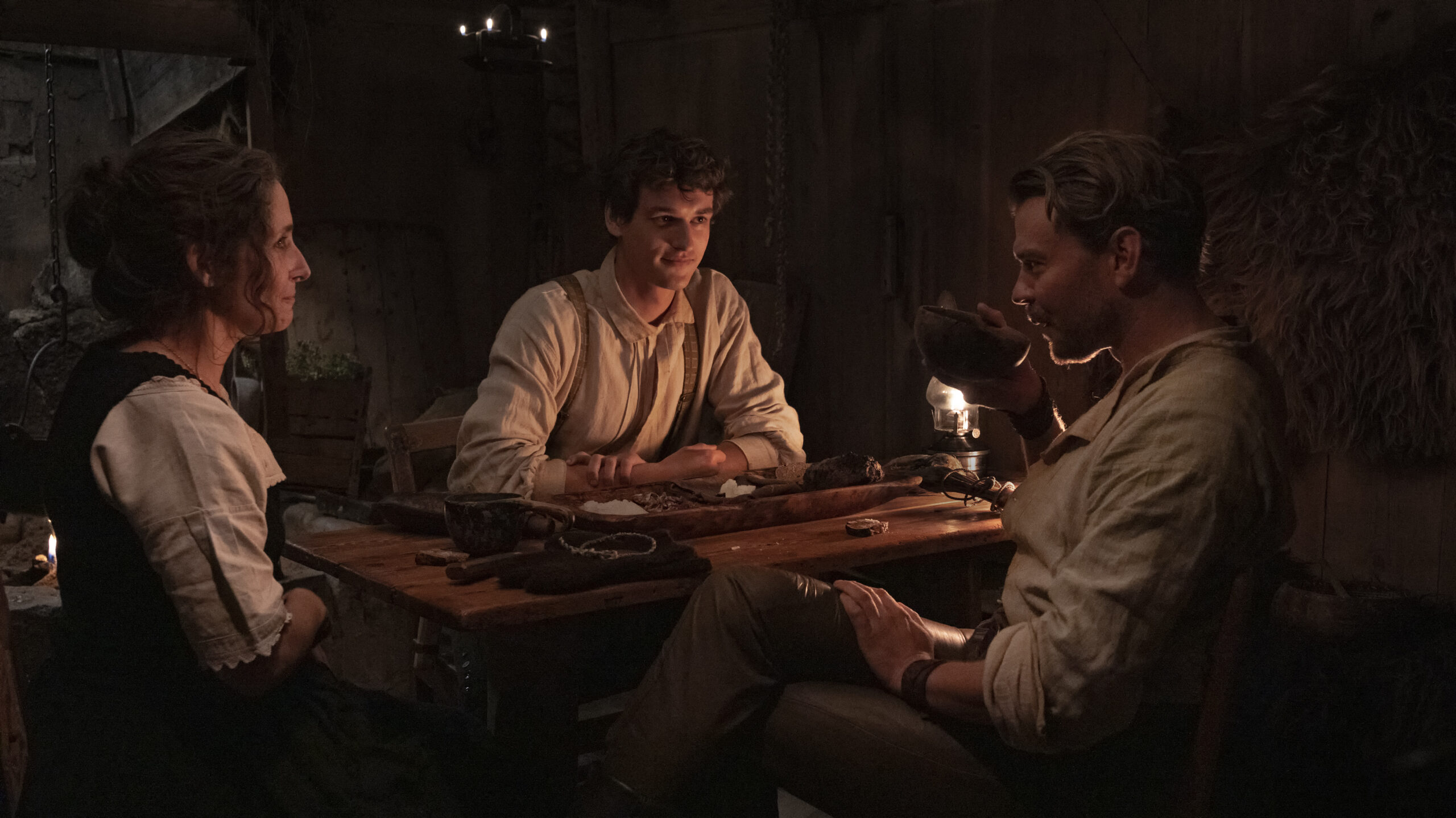
Jacob Møller’s cinematography extends this emotional condition throughout the film. Much of No Rest for the Wicked is dimly lit, with candlelight creating small spaces of visibility inside much larger areas of darkness.
The result is not visually dull or oppressively murky. The film is often extremely pretty, but its beauty remains connected to the conditions under which these characters live. Baldur carries guilt and shame through spaces in which people are only partially illuminated, as though allowing himself to be fully visible would be dangerous.
The handheld camerawork creates a similar effect. The camera is rarely so shaky that it calls attention to the operator, but the frame often carries a restrained, persistent unsteadiness. Baldur’s life does not feel secure, and the image never allows us to forget that instability.
It is the appropriate amount of movement: enough to prevent the world from feeling settled, but not so much that the technique overwhelms the performances.
Egor Venned, Pilou Asbæk, and Two Sides of Desire
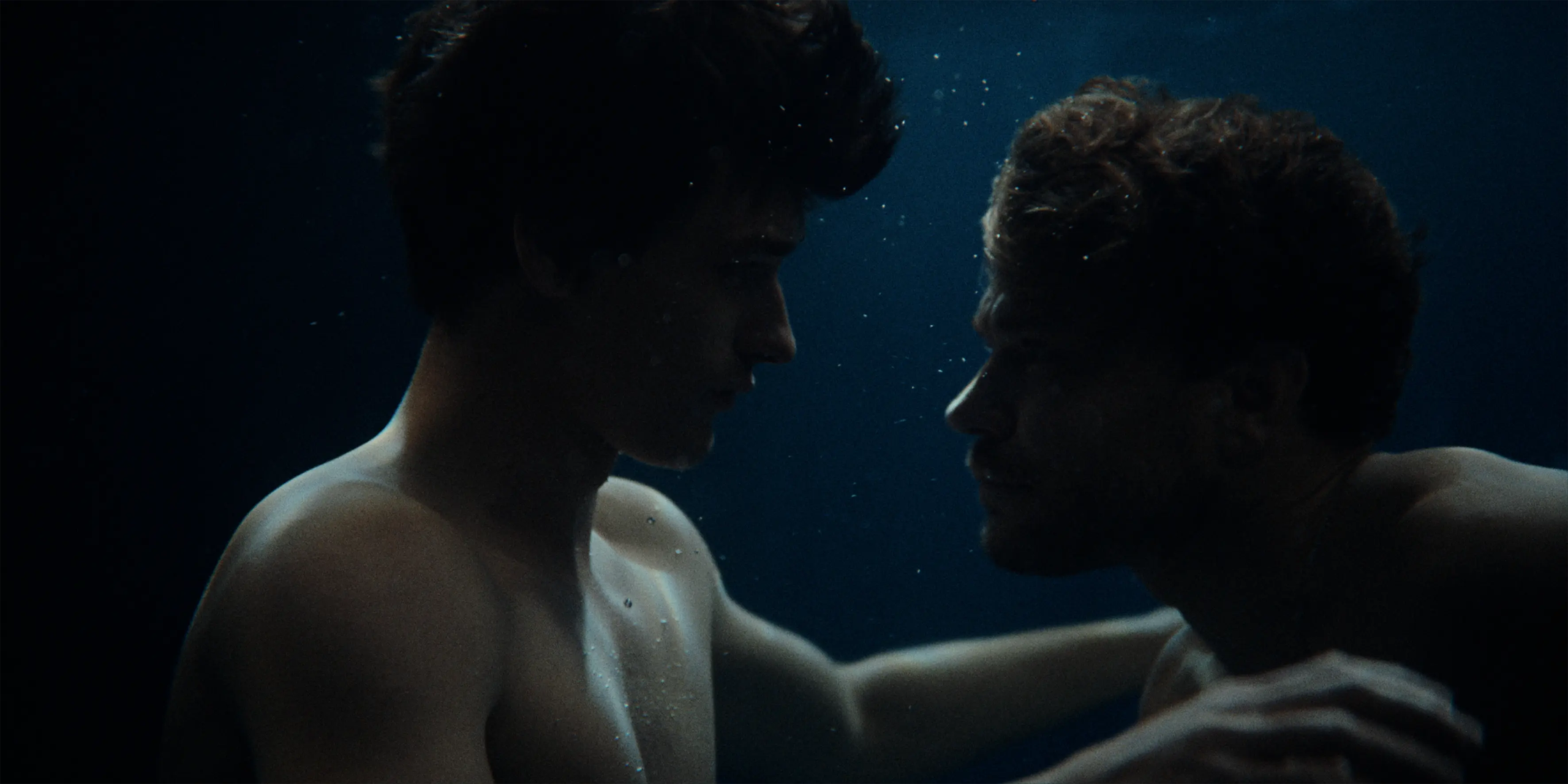
No Rest for the Wicked marks Venned’s acting debut after an international modelling career, and some of that background is visible in his performance. He has a clear awareness of how his face and body communicate within the frame.
That does not make the performance feel posed. It gives Venned another way to express a character who cannot always say what he feels.
Baldur’s longing is carried through glances, posture, hesitation, and changes in his willingness to meet Helge’s eyes. Venned allows desire and shame to exist within the same expression. We can feel how badly Baldur wants to move closer while also understanding how thoroughly he has been taught to fear that impulse.
Asbæk brings a contrasting energy to Helge. He is older, more confident, and more comfortable occupying space. There is an openness to him that Baldur has never been permitted to develop.
However, the two characters should not be understood as simple opposites. Their relationship is more interesting as a kind of duality: two sides of man, two expressions of desire, and two possible ways of moving through life.
Confidence and timidity are not mutually exclusive states assigned permanently to separate people. Helge represents a freedom Baldur has not yet learned to inhabit, while Baldur exposes the vulnerability that can exist beneath even a more confident expression of desire.
One is more accustomed to being seen. The other has spent his life trying to disappear. Together, they reveal different parts of the same need.
Asbæk’s performance is central to maintaining that balance. Helge must be forceful enough to disrupt Baldur’s life without becoming a blunt symbol of liberation. Asbæk gives him presence, but not invulnerability. He feels like a man who has experienced more of the world, not someone who has escaped its loneliness.
The connection between the actors allows the romance to remain convincing even when much of it is communicated without explicit dialogue. Their silence is not empty. It is filled with recognition.
Trees, Driftwood, and an Incomplete Life
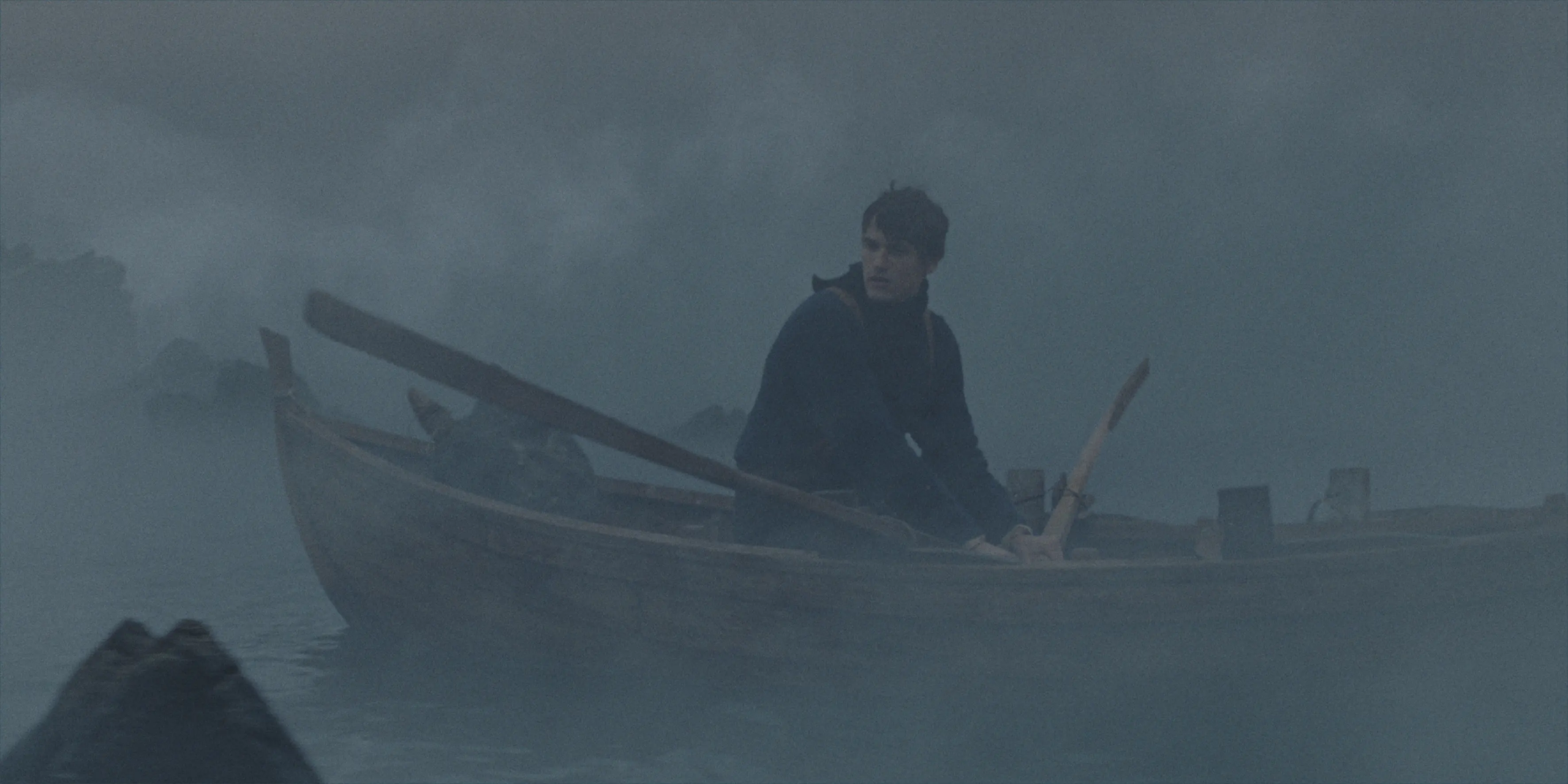
One of the film’s most powerful metaphors grows from the absence of trees on the Faroe Islands.
Baldur has lived his entire life without touching one. When he asks Helge what a tree feels like, Helge struggles to provide a single answer. Every tree is different. He eventually compares touching one to touching a man’s face.
The metaphor is obvious, but no less effective for being legible.
Baldur has grown up in a place of extraordinary natural beauty, yet his experience of the world remains fundamentally incomplete. He cannot fully imagine what lies beyond the islands because he has never been allowed to touch it. He lacks not only experience, but also the physical and emotional vocabulary required to describe what he wants.
The islands are therefore both beautiful and restrictive. Those qualities are not contradictions. Their beauty does not cancel Baldur’s isolation, and his isolation does not make the landscape any less beautiful.
This idea carries into the film’s use of driftwood. On an island without trees, wood arrives from somewhere else. It is not native to the landscape, but it can be gathered and used to create structure.
Helge can be understood as a human piece of driftwood. He drifts into Baldur’s life from beyond the limits of the island, carrying evidence of a world Baldur has never experienced. He gives Baldur’s desire a shape and provides a form of emotional structure where none previously existed.
Helge does not simply complete Baldur or rescue him from an empty life. The film is more complicated than that. His arrival allows Baldur to recognize the incompleteness that was already there.
Once Baldur has touched something outside the world prescribed for him, returning to ignorance is no longer possible.
When Queer Romance Meets Folk Horror
The first third of No Rest for the Wicked is deliberately patient. The film does not immediately announce the full extent of its genre ambitions, nor does it rush Baldur toward an emotional breakthrough.
That restraint parallels Baldur’s initial timidity. The film remains guarded because Baldur is guarded. It watches, waits, and allows desire to develop through small exchanges before either the character or the narrative is prepared to release it.
When the release comes, Kalle jolts us out of that calm.
Dreams begin to mix with reality. The real and surreal move closer together. Quiet scenes give way to sudden intensity, and the film’s controlled stillness is interrupted by images and emotions that feel deliberately jarring.
The transition works because the genre elements have been growing from the same emotional foundation. They do not arrive from outside the love story. They emerge from within it.
Kalle has spoken about his attraction to pairing queer love with horror, particularly the way horror can express the loneliness, shame, and fear of discovery experienced by people who grow up hiding themselves. In No Rest for the Wicked, forbidden desire carries dread because Baldur has been taught that recognition will lead to rejection and punishment.
The supernatural becomes an emotional language for something he cannot safely articulate.
The pacing then moves effectively between silence and anger, calm and eruption. These states do not feel like competing tones. The silence contains the anger, just as Baldur’s outward timidity contains emotions that are far less passive.
When the film moves more openly into vampiric and folk-horror territory, it does not abandon the romance. The horror reveals what the romance has contained all along: hunger, transformation, fear, and a desire that refuses to remain buried.
No Rest for the Wicked and Love Beyond the Physical Body
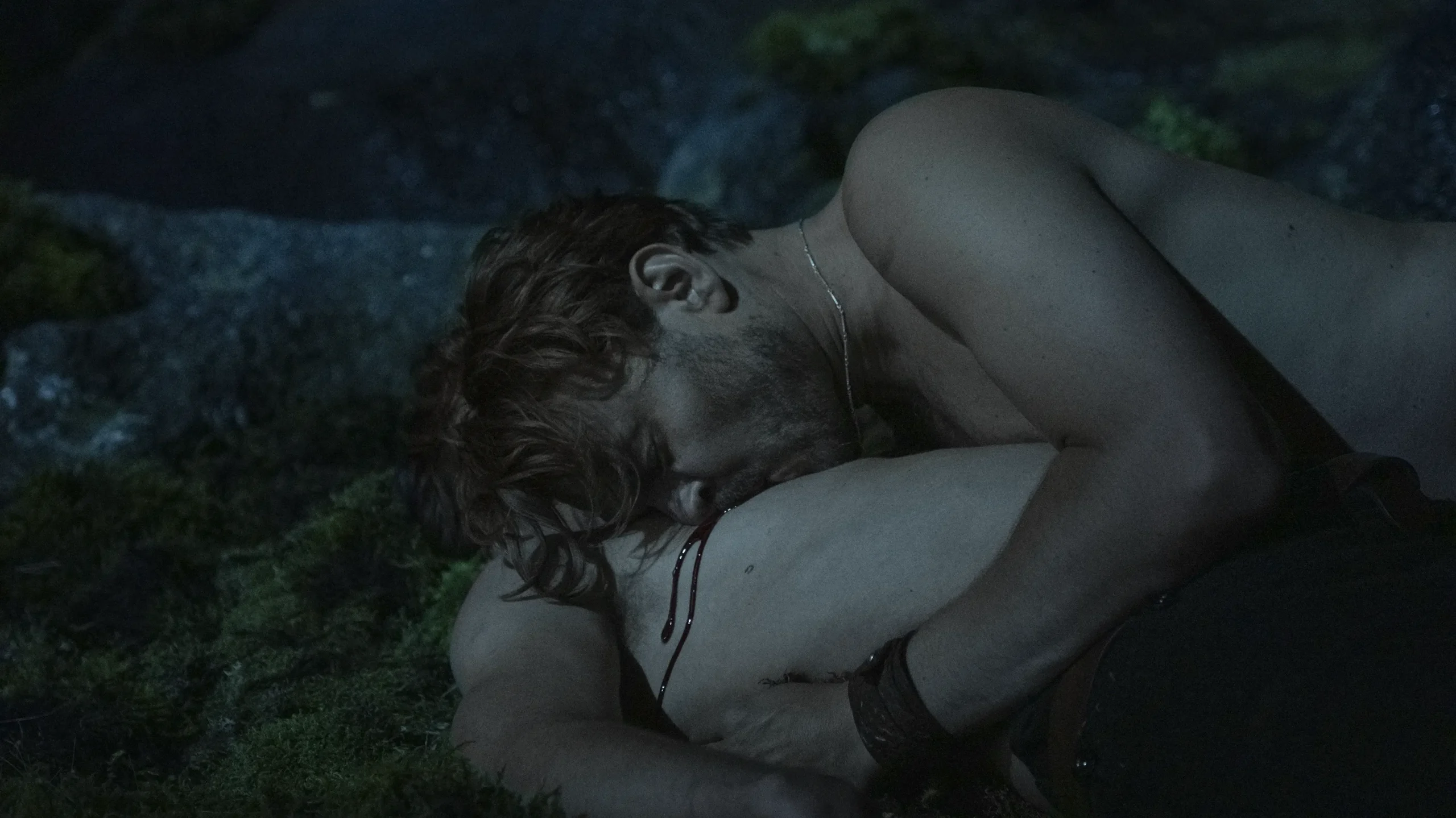
Without detailing the film’s later transformations, Kalle makes an interesting decision not to rely exclusively on Baldur and Helge’s familiar physical bodies to represent their continuing presence.
Their identities and emotions can be carried through forms that do not correspond neatly to the bodies in which we first encountered them. In another film, this might feel like an arbitrary surreal flourish. Here, it develops naturally from the idea that desire cannot be contained by the social, religious, or even physical boundaries imposed upon it.
The characters’ bodies remain important, but they are no longer the absolute limit of who these men are or what their relationship can become.
Their essence, passion, and longing are translated through the body rather than imprisoned within one fixed form. Love becomes almost transcendental without becoming emotionally abstract.
This is where the genre elements most clearly strengthen the film’s central ideas. The supernatural does not make the relationship less human. It allows the film to imagine desire as something elemental: capable of moving through darkness, crossing boundaries, and surviving attempts to suppress it.
Is No Rest for the Wicked Worth a Watch?
Yes, No Rest for the Wicked is absolutely worth a watch. It became one of my favourite films at the 2026 Fantasia International Film Festival because of how confidently it balances a delicate romance with folk horror imagery.
Venned gives an impressively controlled debut performance, communicating longing and shame through the smallest changes in expression. Asbæk provides Helge with the confidence required to awaken something in Baldur without reducing him to a simple symbol of freedom. Together, they embody different sides of desire rather than opposing ideas about it.
Kalle recognizes that beauty and darkness, confidence and timidity, silence and anger, shame and desire do not exist as clean opposites. They can occupy the same person, the same landscape, and sometimes the same moment.
No Rest for the Wicked finds horror in the attempt to separate those parts of the self and tenderness in allowing them to be seen together.


