


Die My Love: How Lynne Ramsay Uses the Camera to Explore Motherhood and the Death of a Dream
Lynne Ramsay has long been a major figure in contemporary cinema, and with her latest film, Die My Love, she constructs an intensely subjective portrait of creative and maternal collapse, rendered through a fiercely controlled visual language. Nearly three decades have passed since she first won an award at Cannes while still in film school, and in the intervening years she has directed films such as You Were Never Really Here and We Need to Talk About Kevin, solidifying a reputation for visually driven, psychologically probing work.
What is Die My Love About?

Die My Love centres on a couple, played by Jennifer Lawrence and Robert Pattinson, who retreat to the countryside in pursuit of a romanticized vision of artistic freedom and a simpler life. The narrative, however, is firmly anchored in Lawrence’s character, and what initially appears to be an idyllic escape quickly hardens into a space of confinement. New motherhood, creative paralysis, and intrusive thoughts pull her into recurring cycles of hope and collapse.
The film adapts a novel of the same name (at least in its English translation) and follows an unusually direct path to the screen: Martin Scorsese encountered the book through his book club, immediately recognized its cinematic potential, and reached out to Lawrence with her in mind for the lead role. She then approached Ramsay — her artistic idol — making this collaboration especially charged on a personal and creative level. The production was mounted around Calgary, where I live, and seeing those rural, unmistakably Albertan highways on screen lends certain sequences a striking sense of familiarity and intimacy.
Shooting on Ektachrome and 1.33:1 Aspect Ratio
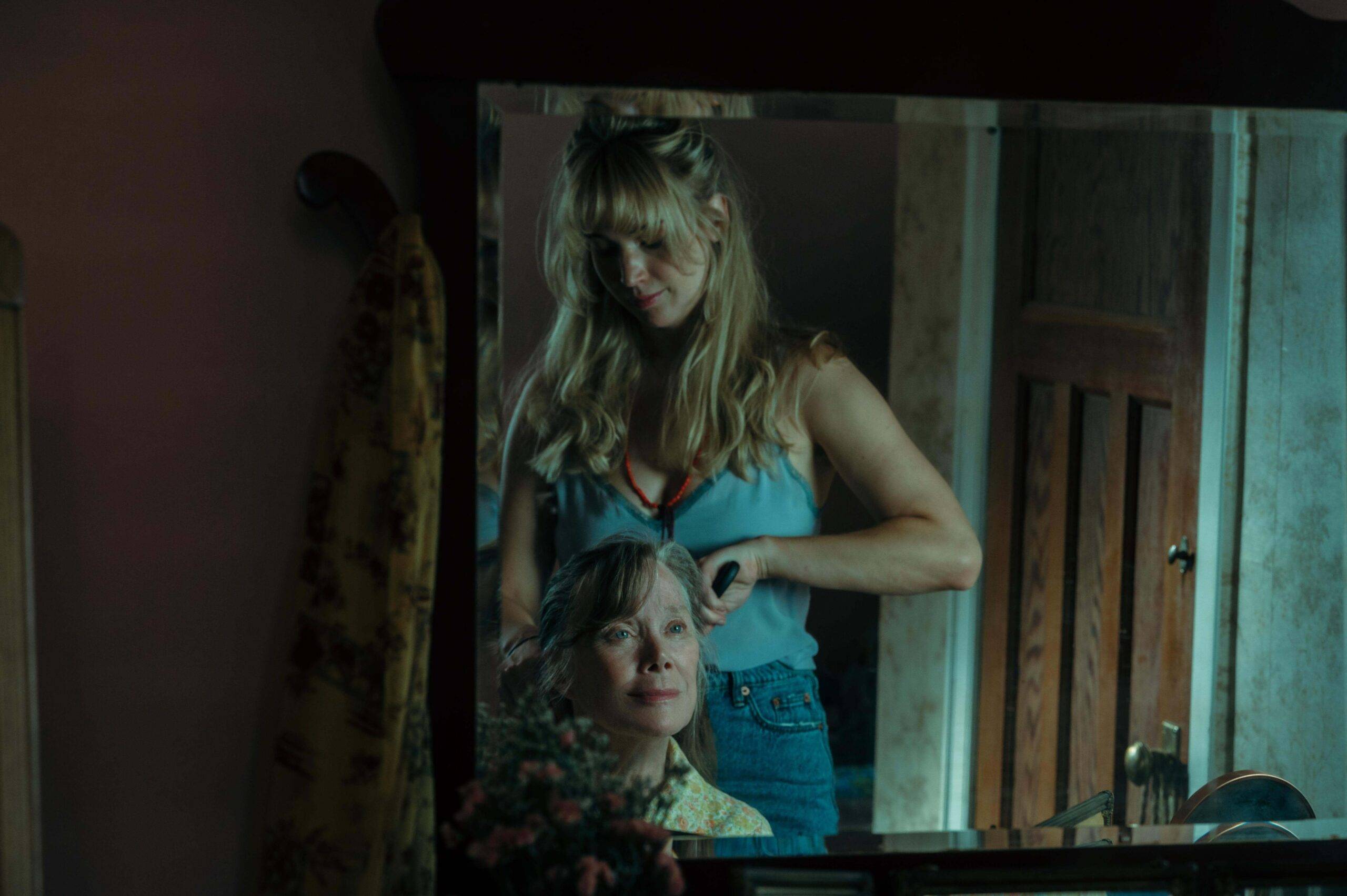
The film was shot on 35mm, specifically on Ektachrome, a stock whose distinctive colour palette and contrast profile give the images a heightened, almost unreal quality. It is not the kind of emulsion one would typically associate with grounded realism; instead, it functions as an extension of Lawrence’s internal state. To work with Ektachrome, the production had to drive an enormous amount of light into the house, and even then, many of the windows blow out, leaving highlights stripped of detail. That visual “damage” becomes expressive: the clipped whites and hazy edges feed directly into the protagonist’s unsettled, imperfect state of mind.
Formally, the film is framed in a 1.33:1 aspect ratio, a boxy composition that suggests the outline of a simple house — the kind a child might draw before adding a roof — and echoes the sense of domestic enclosure. What was supposed to be an escape, a space of freedom and possibility, gradually reveals itself as another architecture of constraint. The production shot in a real house not far from Calgary; while the art and production design teams modified it, the underlying space remains recognizably Albertan.
How Die My Love Balances Freneticism and Stillness
Ramsay leans heavily on handheld work, which feels appropriate for a film so steeped in unease. The camera is frequently shaky, off-balance, and restless, mirroring the instability of Lawrence’s inner world in a way that still feels rooted in physical reality. At the same time, Ramsay is unafraid of stillness. There are moments of sustained quiet and compositional clarity, with locked-off shots that simply allow the bodies, gestures, and silences to play out in real time. More filmmakers could benefit from this willingness to trust a tripod and let performance carry a scene rather than imposing unnecessary camera movement. Die My Love moves fluidly between these modes: at times the camera channels frenetic energy; at others it embodies calm, letting the image breathe.
The Use of Petzval Lenses in Die My Love
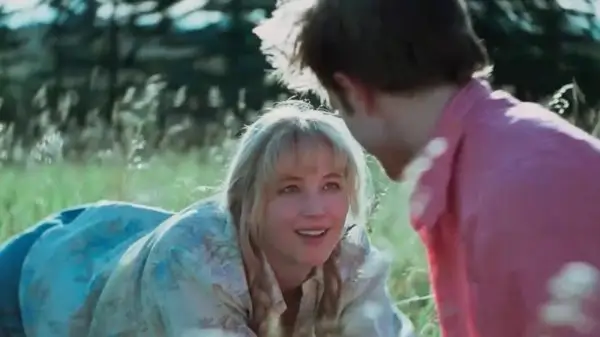
Lens choice is a crucial part of this aesthetic. For most of the shoot, the team used P Vintage primes as their primary glass, but interestingly, they also incorporated Petzval lenses, whose signature optical aberrations create a swirling bokeh at the periphery of the frame, like a whirlpool of light and colour. Ramsay deploys this effect sparingly, often in sequences when Lawrence’s character is consumed by her own thoughts, so that the image itself appears to spiral around her subjectivity.
The Simple Beauty of The Opening Scene
Ramsay has always privileged visual storytelling over dialogue, and Die My Love is no exception. The dialogue is functional and occasionally piercing, but the images carry the bulk of the emotional weight, articulating the characters’ psyches in ways that language cannot. All of this crystallizes in the opening shot, which I find genuinely extraordinary in its simplicity. The film begins with a wide, locked-off shot of the couple entering their new rural house for the first time and drifting in and out of frame. The front door in the background creates a frame within the frame, and we register off-screen sounds, hesitant gestures, and fleeting expressions of trepidation, passion, and affection. It is a remarkably economical way to invite the viewer into an intimate, transitional moment. Later, Ramsay counterpoints this quiet formalism with more overtly spectacular imagery: in the final act, for instance, she stages sequences of fire that nearly engulf the frame, and there are lush shots of the couple moving through tall grass, the colours saturated and the Petzval swirl subtly distorting the edges.
Lynne Ramsay’s Portrayal of the Human Body
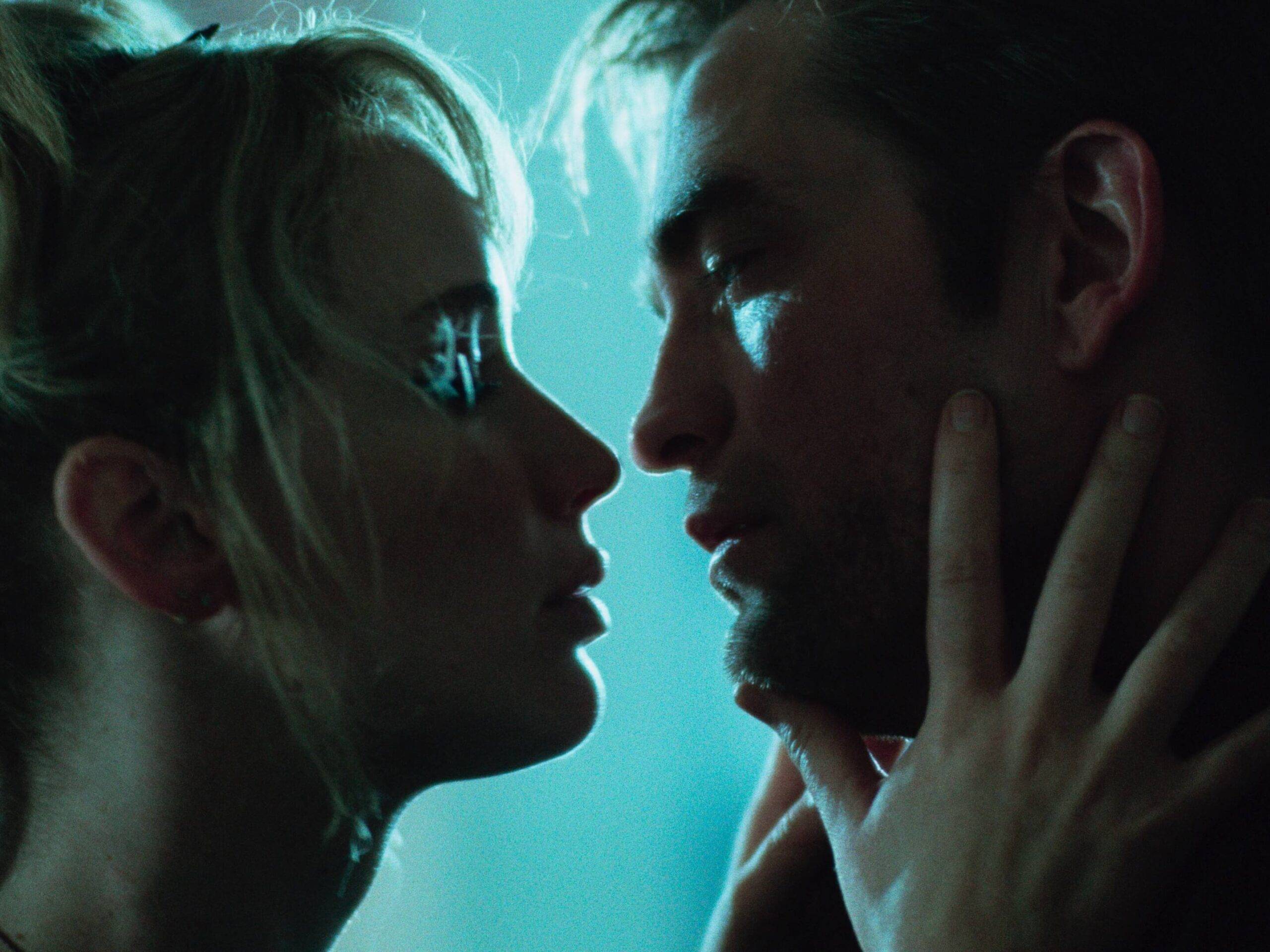
Another crucial dimension of Ramsay’s authorship is her depiction of the human body. Her approach stands in stark contrast to the stylized, objectifying conventions often associated with a traditional male gaze. Bodies in Die My Love are presented as lived-in, complex, and multipurpose: they can be sites of desire, but they are also marked by exhaustion, labour, and ambivalence. Desire is present, but it is inconsistent, sometimes receding to the background or turning into something more fraught. That ebb and flow of attraction, and the way it interacts with parenting, mental health, and creative frustration, becomes central to the film as we progress.
Because the narrative is so closely aligned with Lawrence’s consciousness, the film adopts a cyclical structure. We repeatedly move through phases of breakdown followed by tentative renewal, only to be pulled back into crisis. Nowhere is this more pronounced than in the final act, where the film seems to approach a conclusion several times before initiating yet another turn of the cycle. The structure itself becomes a formal analogue for the protagonist’s difficulty in achieving lasting change or resolution.
Sound Design and Music in Die My Love
Sound and music play an equally significant role in expressing that interiority. The soundtrack moves between extremes: passages of loud, thrashing metal and near-overwhelming anger give way to stretches of silence, ambient nature, and quiet reflection. The cut from one sonic world to another is often abrupt, producing jarring transitions that mirror the volatility of intrusive thoughts. This is clearly a collaborative achievement, reflecting Ramsay’s direction as well as the contributions of sound designer Paul Davies and composer Jonny Greenwood. Their work effectively externalizes the protagonist’s mental state, using sound to capture how quickly and unpredictably her mind shifts.
As far as the actual soundtrack goes, one needle drop in particular stands out: John Prine’s “In Spite of Ourselves.” It is a song I have loved for a long time, and hearing it here, after having just discussed it with my partner a few weeks before seeing the film, felt uncannily apt. Within the film, the track deepens the portrait of this relationship as stubbornly imperfect yet still bound by a complicated, sometimes darkly comic affection.
Die My Love on Motherhood and the Death of a Dream
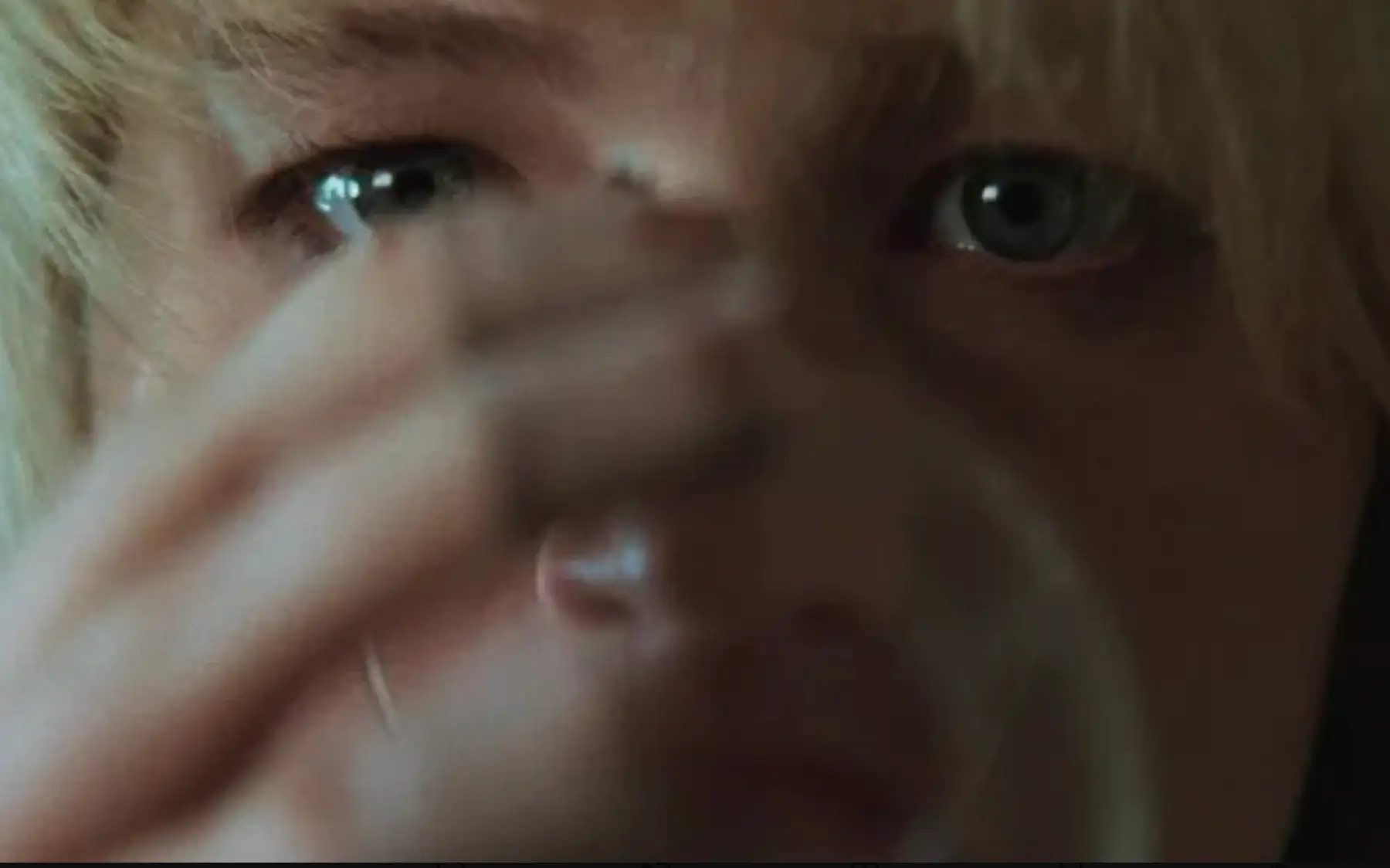
Thematically, Die My Love engages with several intimate and difficult subjects. Ramsay examines the lived experience of motherhood and the profound emotional, physical, and psychological toll it can take. The film includes what can be read as a literal depiction of postpartum psychosis, yet Ramsay resists diagnostic clarity or didactic explanation. In keeping with her broader body of work, she leaves space for ambiguity, inviting multiple interpretations rather than closing them down.
One strand that resonates with me in particular is the film’s meditation on the “death of the artist,” or perhaps the death of a creative self-concept. The couple relocates with the romantic conviction that they will finally make their art; in practice, neither accomplishes what they imagined. Because they have invested so much of their identity in the idea of making work, the failure to create becomes a form of existential crisis. The “death of creation” here suggests a parallel death of self.
Jennifer Lawrence and Robert Pattinson in Die My Love
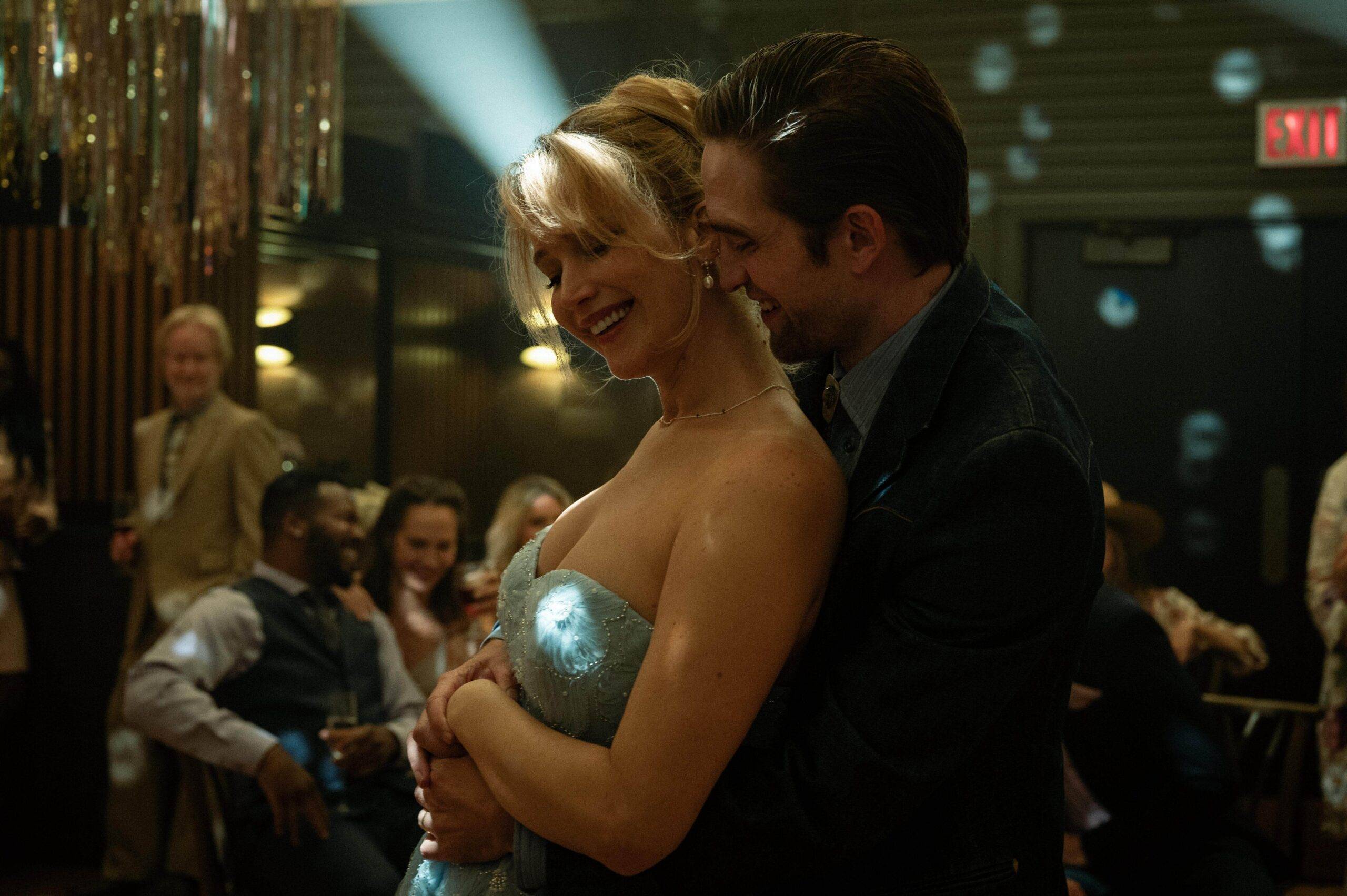
The performances anchor all of this. Lawrence leans heavily on physical acting, placing herself in emotionally and physically demanding situations that convey exhaustion, volatility, and vulnerability without over-verbalizing them. Pattinson, by contrast, offers a more grounded presence. His American accent, which has improved considerably over the years, is convincing, and he modulates between empathy, frustration, concern, and a quieter, more evasive disregard. Together, their performances capture the sense of a relationship straining under the weight of unmet expectations and unarticulated pain.
Is Die My Love Worth a Watch?
Die My Love is, in many ways, a strange film, and it will not appeal to everyone. Viewers seeking tidy explanations or neatly resolved arcs are likely to find it opaque or even alienating. Yet for those willing to sit with its discomfort, its portrait of creative and maternal collapse becomes deeply affecting. Ramsay’s integration of image, sound, and performance yields a work that feels both formally rigorous and emotionally volatile, and that combination makes Die My Love a profoundly worthwhile experience.


