


Hearse Chasing: Cassidy Waring and Teresa Alfeld Face Trauma Head-On
Screening at CUFF.Docs in Calgary this week, Hearse Chasing follows singer-songwriter Cassidy Waring as she comes back to the city she grew up in to unpack a childhood marked by addiction, loss, and unanswered questions.
Instead of staying abstract, the film grounds her story in specific places, people, and memories that still hang over her adult life. I had the chance to sit down with both Cassidy and director Teresa Alfeld to talk through their process and how they chose to tell this story. Shot here in Calgary, the film weaves together present-day interviews with family and friends and old home videos, creating a dialogue between who Cassidy was and who she is now. It is a short documentary, but it carries a real emotional weight, particularly for anyone who has navigated grief or done the slow, uncomfortable work of facing their own trauma.
Teresa Alfeld and Cassidy Waring on Their Relationship and the Origins of Hearse Chasing
The origin story of a documentary like this says a lot about the trust and intention behind it, so I wanted to start there. I asked Teresa and Cassidy to walk us through their history and the steps that turned a very personal story into the film that audiences are now seeing as Hearse Chasing.
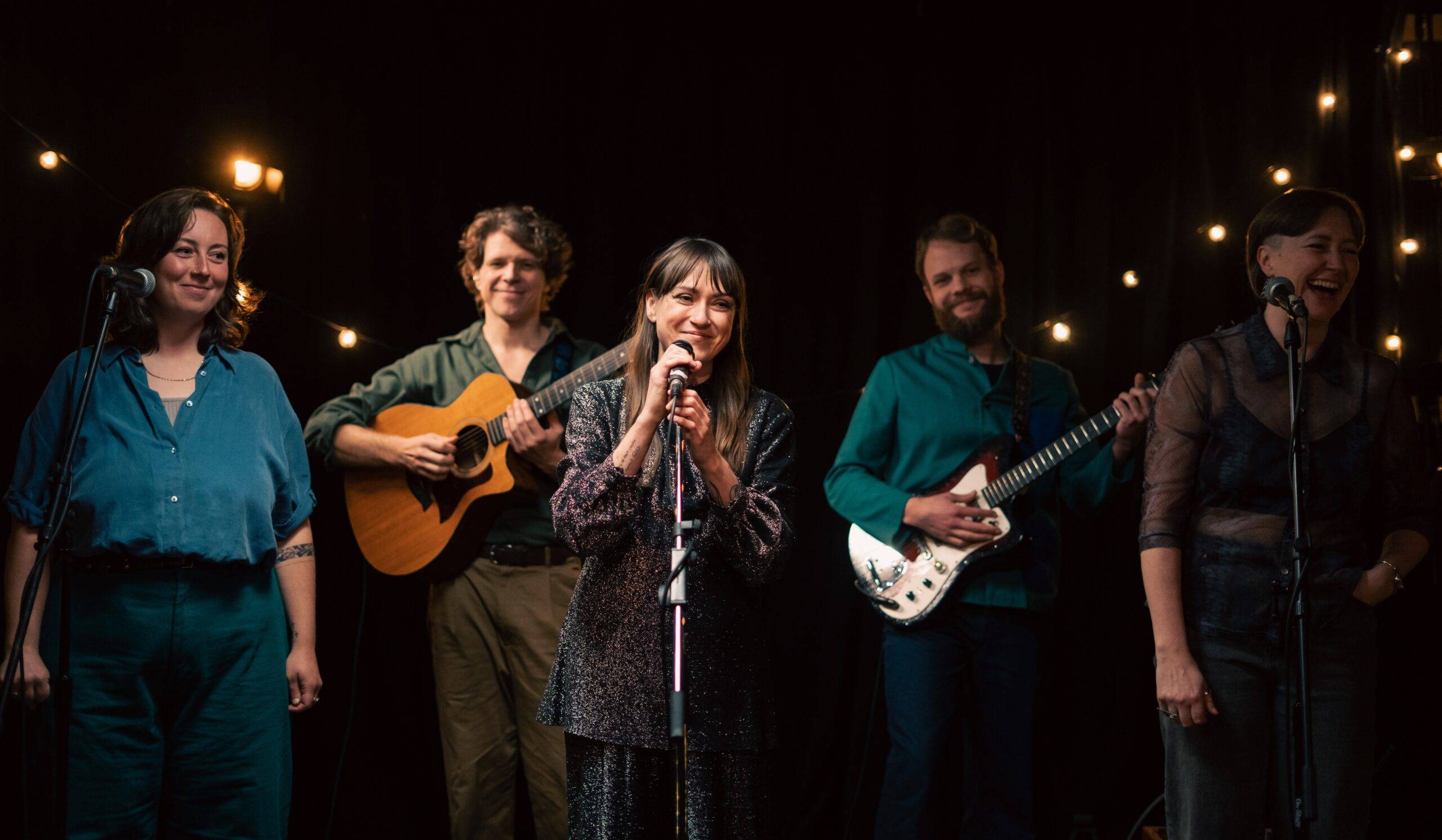
Adam Manery: Can the two of you walk us through your history and how this project came to be?
Teresa Alfeld: My involvement started back in 2021. I had the pleasure of meeting Cassidy casually. We instantly connected because we both have type 1 diabetes, and that often connects people who live with this condition. But beyond that, she started sharing a little bit more about herself and her story, and I was deeply moved to hear about Cassidy’s experience with her family and inspired by the present-day work she was doing. She was undergoing various therapies and therapeutic approaches, and also collecting information about what had happened.
On top of that, many of the pieces she collected were visual: the home movies, certain documents, which made it immediately apparent that this wasn’t just a personal project; this was a film. And if she would trust me to be part of that process, then I thought we’d have something pretty cool.
Cassidy Waring: I had quite a bit of time during the pandemic to sit with my thoughts and sit with my body and recognize that what I was experiencing was Complex PTSD. So, for me, along with the different types of therapy, looking back into my past and my experience with my family and trying to understand where the behaviours and ways of thinking that I was struggling with were coming from was helpful. So that’s why I started collecting so many things. When Teresa brought up the idea of a film, it immediately seemed to fit, and that was the spark.
Facing Trauma and Showing Therapy on Screen
For me, one of the most striking parts of Hearse Chasing is how frankly Cassidy engages with her mental health on camera. In a moment where therapy is thankfully becoming more normalized but still carries a lot of stigma, especially around something like complex PTSD, it felt important to pause and ask her to unpack what that diagnosis means and how her time in therapy connects to the film.
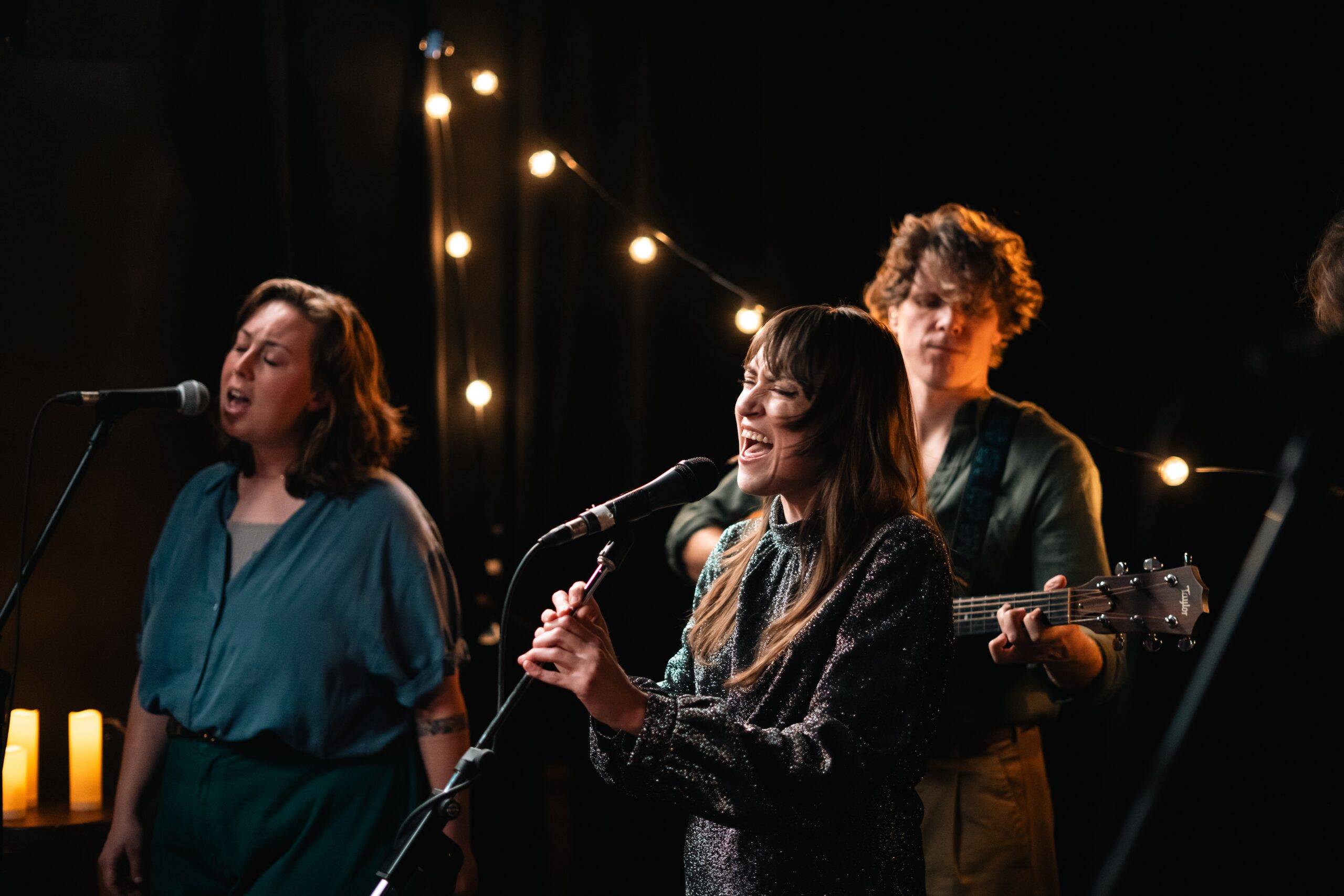
You mentioned the diagnosis of complex PTSD, and not everyone will be familiar with that. Could you give us a little bit more context and highlight how your work in therapy led you to this point?
CW: I’m not a mental health professional, but my understanding of complex PTSD is that it is something that someone can experience after ongoing trauma over a prolonged period of time, often in close relationships. And for me, it was during very developmental years, so I found that it affected my sense of identity.
It can manifest in different ways for different people, but for me, it was a lot of anxiety that I was experiencing. Anxiety in my body as well, which is where I started to realize I couldn’t ignore it. Having panic attacks, emotional flashbacks, different symptoms of anxiety, a lot of hypervigilance and scanning people’s emotions that affected my relationships and how I trusted people.
I’ve done quite a bit of talk therapy, but also different somatic therapies that helped me get back into my body, which is where I found a lot of understanding and relief.
And you actually showed a little bit of therapy on screen. How did that come to be?
TA: As Cassidy mentioned, she has had a lot of different, wonderful mental health professionals who have been part of her team. We found out through the process of making the film that depicting an actual therapeutic session comes with so many ethical and professional considerations.
Roma Palmer, who has the therapeutic conversation with Cassidy in the film, is a personal friend of mine and someone interested in Cassidy’s story. We wanted to show what might happen in a therapy session without putting someone in an ethical and professional bind. And Rome has remained part of Cassidy’s life. She was really gung-ho in working with us to figure out what we can show that is helpful to the viewer and reflects the type of work that Cassidy is doing.
Bridging Past and Present in Hearse Chasing
A significant amount of the film’s power comes from the way it lets us see Cassidy as both a child and an adult simultaneously. The archival material – the home movies and Cooper’s “Life Book” – becomes a bridge between those two timelines, making the past feel uncomfortably close to the present. I was curious how those elements surfaced and how they were folded into the storytelling.
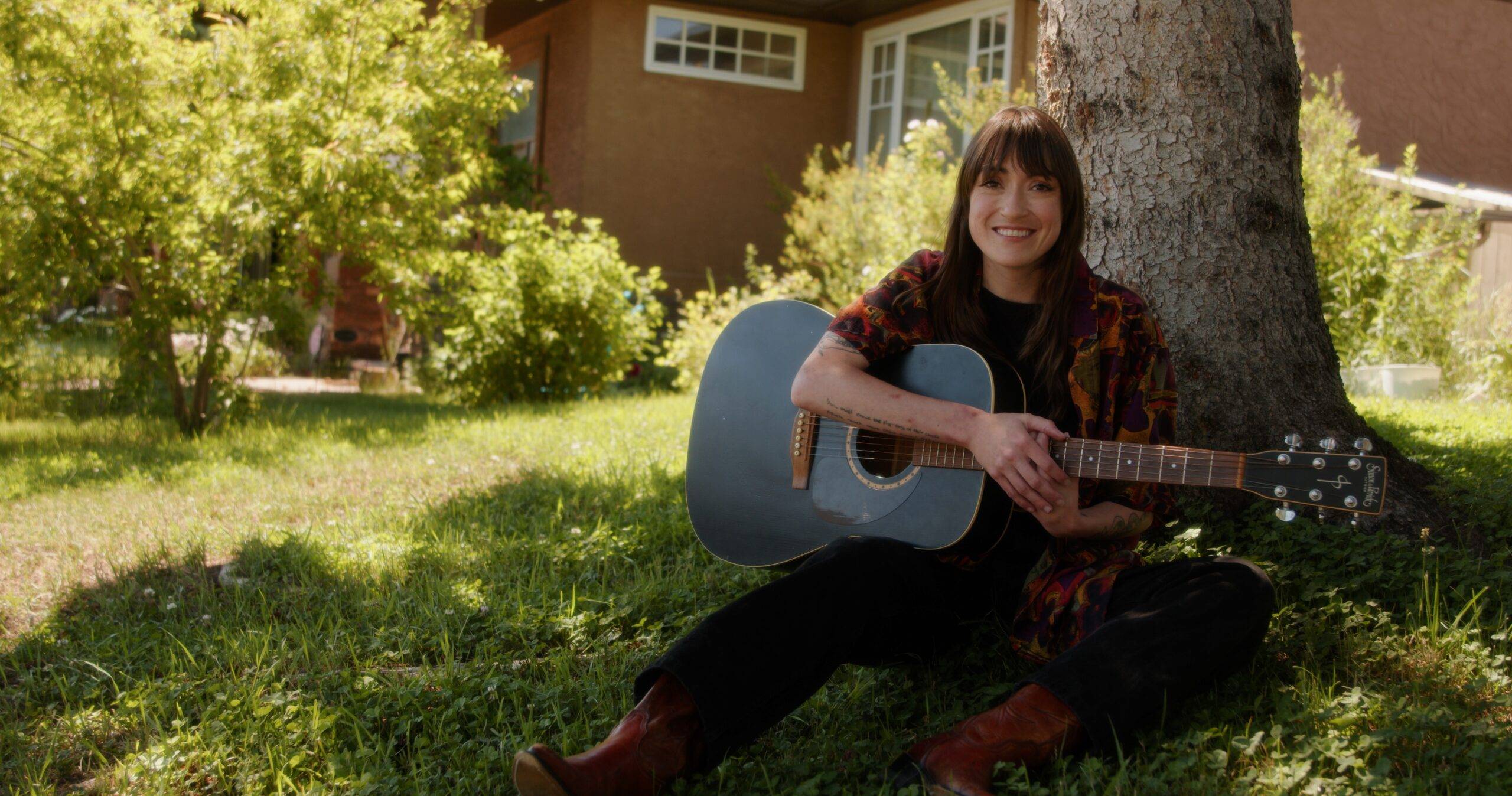
Something else you alluded to earlier that became central to the film was your home videos. Did you have those videos for a while, or were they something you explicitly sought out in the creation of this film?
CW: It was a mix. My grandfather on my mom’s side was behind the camera for a lot of these videos, and somewhere along the line, I ended up with most of these VHS tapes, but not all.
Then, during the pandemic, an old roommate reached out to me and said they found a VHS tape of yours in the closet, and asked if I wanted them to send it to me. At that point, I had revisited some of the ones that I had in my possession, but not for a while. And then watching the newest one I received from her, it felt like watching it for the first time, through a very different lens.
Those moments were quite powerful, particularly when we open the film, and we see the past and present intertwined. Something else that ended up being central to the storytelling and also carried a heavy emotional weight was Cooper’s “Life Book.” How did that come into play?
CW: I can’t remember if I knew whether it existed before. I’ve maintained a really close relationship with my brother, but during that time when I was doing my own therapy and research, I was talking to him more about our family, and he was going through his keepsakes and said, “Hey, have you ever seen this?”
And I don’t believe I had ever seen it before, so he sent it to me. I found it fascinating that this document exists, so I shared it with Teresa.
TA: I’ve worked with different archival assets in my documentary career, and this is the first time I received almost what felt like a piece of narration that really grounded the story. It’s an extremely interesting document because it’s written in a language that a young person is meant to understand.
It not only helped tell the story, but it also helped me as a director to remind myself that Cassidy and her brother were living this as children. And the language really brings that to the forefront, while also remembering that what Cassidy’s finding out now as an adult is so much more complex than what’s captured in that document. It was a once-in-a-professional-lifetime discovery.
Director Teresa Alfeld on the Structure of Hearse Chasing
So much contemporary documentary work is driven by a strong, sometimes overbearing aesthetic, but Hearse Chasing feels different: the look, the pacing, and the way scenes transition all seem to emerge organically from Cassidy’s journey. That sense of “flow” doesn’t happen by accident, so I asked about the overall approach to structuring a film like this and how Teresa balanced having a plan while also leaving room for real life to unfold.

It beautifully tied everything together and allowed you to move from beat to beat. In general, what was your approach to structuring a documentary like this? Most of the conversations have a very naturalistic feel, and everything seems to “flow.” Did you go into it with a fairly open structure?
TA: From the early days of planning the doc, I recognized that the documentary was meeting Cassidy where she was, which was in the process of making sense of her past. She had done so much work that she could only do solo, so it seemed abundantly clear that the next step for her, documentary aside, was to go home to Calgary and now have these conversations.
As a documentary filmmaker, I knew the film would follow Cassidy on her journey home to Calgary as she attempts to have conversations with people who were around her family throughout the breakdown. That was as much as we could guarantee would happen. Beyond that, we just cross our fingers and see what happens.
Our fantastic producer, Melissa James from Sigil Films, worked collaboratively and helped figure out who Cassidy could talk to and who was willing to speak with her. There was a version of this film where everyone said no, and Cassidy is trying to make sense of what happened by herself. However, we were lucky that certain members of her family, extended family, and friends were generous and brave to come on board and have these conversations.
From a filmmaking perspective, this is such a heavy story with an incredibly lasting impact, for obvious reasons, on everyone involved. I was working with Claire Sanford, an incredible cinematographer based in Montreal. Right off the bat, we wanted to be as much of a “fly on the wall” as we could.. We gently pre-light and set the stage for Cassidy and Cooper to engage with these folks. We tried to stay as far away as possible, so we’re on longer lenses on little mini rigs that allow for a really fluid approach. We aimed to stay out of the way and let this unfold in real time.
Cassidy Waring’s Songwriting and Why We Shouldn’t Hide from Difficult Conversations
Heading into the final part of our conversation, I wanted to acknowledge how much of this film overlaps with my own preoccupation with grief and difficult conversations. Since my father’s death, I’ve been struck by how often people avoid naming what’s really going on, and Hearse Chasing feels like a quiet argument against that instinct. Cassidy’s songwriting sits at the heart of that – music as a way of processing what can’t quite be spoken – and it’s something Teresa is clearly eager for audiences to carry with them. It felt fitting to end by talking about what the work has revealed, and why people should seek out Cassidy’s music beyond the film.

It’s a clear example of form matching the purpose. It’s what the film needed. Something else that resonated with me, as a writer, is this idea of songwriting revealing things you didn’t know were there. I’ve had similar experiences while writing, so I’m curious if you’re able to share any examples of what has revealed itself to you through songwriting.
CW: I find it hard to explain sometimes – that feeling of having something revealed to you through songwriting. This happens to me all the time, though. It’s been a way that I process and understand my emotions. I might start by playing a bit and improvising something to get me started about whatever I’m processing, and then… I don’t even know how it happens.
Thoughts and feelings come out, and they’re out in front of me. I can look at them and start to understand them better. Sometimes this leaves me with a lesson, and sometimes it leaves me with a feeling or a belief about myself that I don’t want to hold on to anymore. It’s a very healing process for me.
Before I let you go, is there anything else that you would like folks to know about Hearse Chasing?
TA: This film was a big leap for Cassidy, my producer, Melissa, and even our studio, Telus Originals, taking a chance on this film when we didn’t know what was going to happen.
So, I’m incredibly proud of this film and the bravery of everyone who chose to appear, and even the folks who didn’t want to appear on camera but were behind the scenes supporting Cassidy’s journey. I was inspired by the depth of these conversations and the willingness to engage after so many years. It got me thinking about certain events in my own life and spurred some conversations with my own family.
I think the real lesson or takeaway for me in making this film is that there’s little to be gained by keeping the book closed and pretending things didn’t happen. Even though it’s challenging, in the right circumstances and with the right supports, confronting these events respectfully and collaboratively only leads to healing.
Maybe audience members are not ready to call people up and have challenging conversations, but even thinking about opening the door to no longer pretending something didn’t happen is hopefully a takeaway.
CW: I can struggle with jumping into the unknown. I like to know how things are going to work out. The level of vulnerability required here was a lot.
I cannot thank everyone enough who participated. The team was amazing at ensuring that all of these people felt safe and comfortable. We had a mental health coordinator on board for this project, which felt really important to us.
I hope people feel seen. I hope it can help people feel less alone in navigating these topics of grief and trauma in their own lives.
I completely agree. I’ve been working on this piece for a long time, after a conversation I had with the director of Other Side, Carter Oakley. He followed a woman through the MAiD process, and we see her pass away on screen. My father went through that process a couple of years ago, and I’ve been writing about “tiptoeing around tragedy” and how we tend to avoid difficult conversations, when in reality, it is so important to face these topics head-on.
TA: In some ways, there seems to be a generational divide. I think about how members of my family handle difficult conversations or topics, or rather, don’t deal. The previous approach has been to let sleeping dogs lie – don’t go back there, don’t ask difficult questions, don’t open it up.
Cassidy, Cooper, and everyone involved in this film are paving a way forward by saying, “This is scary, this is a risk, but if we approach this again with integrity and in a collaborative spirit and with support, there’s potential healing that outweighs the risk”.
And if I can add a second takeaway… It is to listen to Cassidy’s music. When I first met her, not only did she share the work she was doing, but she also shared the music. And that was what showed me how she’s processing this in an extremely complex and artful way. And I told her, “If your music sucks, I don’t know…” But thank God, it’s incredibly moving and beautiful to see her perform, so I hope that more people listen to Cassidy’s music for her sake and their own sake.


