

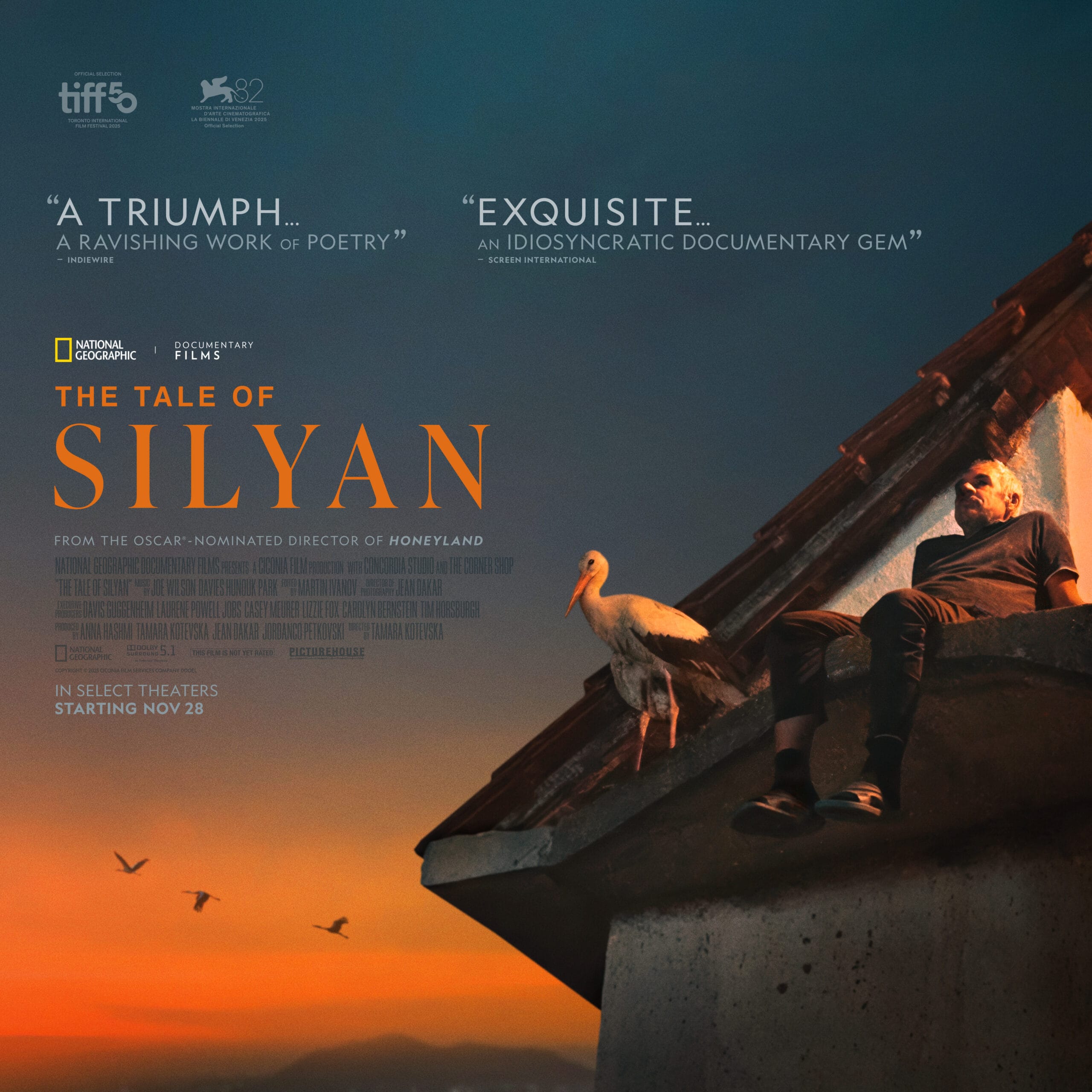

The Life of Silyan Trailer | Courtesy of National Geographic and The Walt Disney Company
Tamara Kotevska on The Tale of Silyan: Storks, Migration, and Life in Macedonia
The Tale of Silyan is the latest feature from Tamara Kotevska, whose breakout with Honeyland announced a filmmaker with a rare eye for intimate, lived-in portraits. Her new film returns to rural Macedonia, tracing white storks drawn to landfills, a farmer’s family navigating change, and a centuries-old fable that refracts the present. The result is a documentary that marries ecological urgency with tender observation — a story about people, animals, and belonging, rendered with a level of access and vulnerability rare in traditional documentary filmmaking. I had the chance to sit down and chat with her ahead of The Tale of Silyan’s Alberta premiere at the Calgary Underground Film Festival.
Shining a Light on Macedonia
Macedonia’s history is long and complicated — politically, socioeconomically, and even in its name. Outside the region, most people only know fragments of that story. With Honeyland, Tamara Kotevska showed how a film can illuminate a place through everyday life instead of a lecture. I asked her to share a few essentials to ground us.
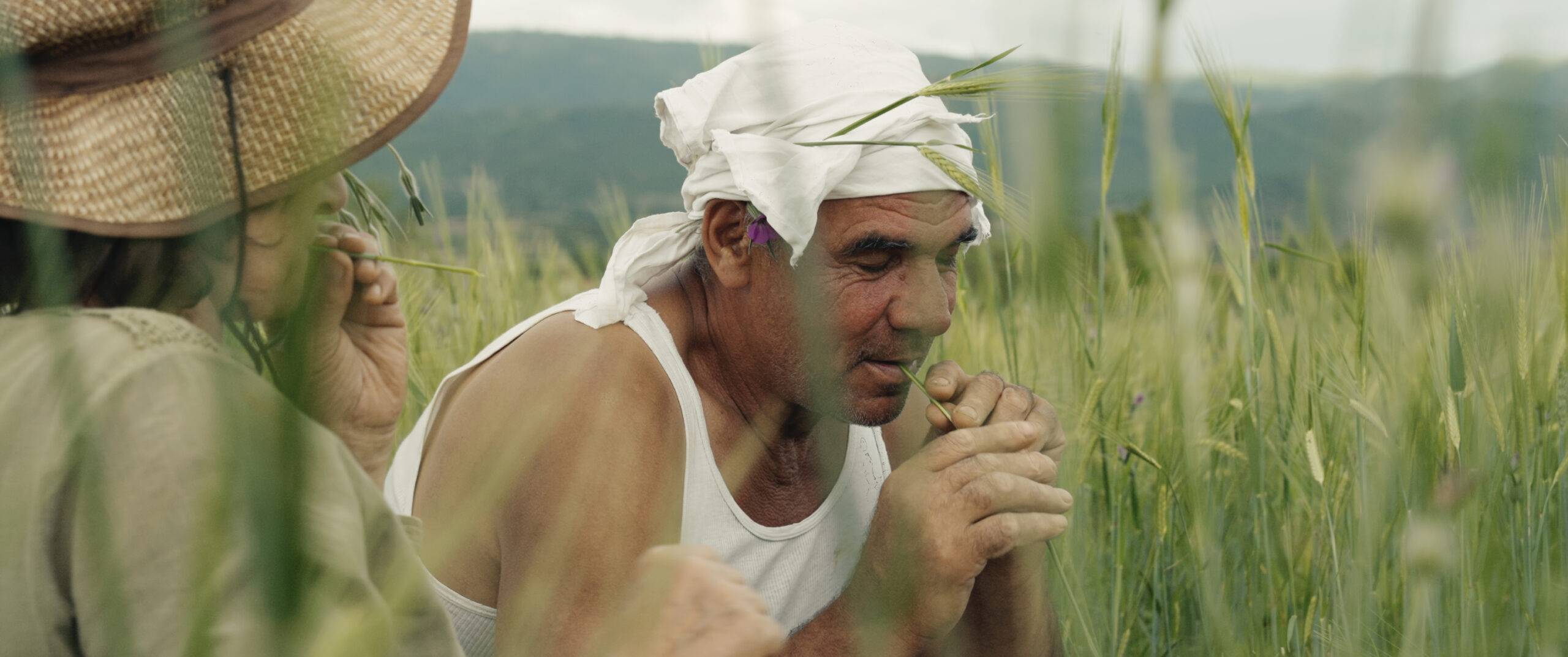
A lot of people have an “idea” of Macedonia without really knowing much about it. Of course, this could fill several documentaries in itself, but what should people know about Macedonia?
Tamara Kotevska: Oh, that’s a tough question. People should know that Macedonia is geographically part of Europe, but it’s not part of the European Union. It’s a point where a lot of cultures, religions, and different types of people are mixed and living in peace. But there are a lot of — especially ecological — problems, problems with pollution. Majorly, it’s happening due to loose and corrupt governmental systems that can’t sort out these problems and are closing their eyes to them. Therefore, environmental topics have been my main point of intrigue and curiosity throughout my entire life living there. I’m still living there at this moment. So this film is also pointing out these kinds of holes in the system — corruption in the system — that eventually leads to not only a disaster among the people and the social aspects, like farming, but also the environmental aspects and destruction of nature and animal species, such as the white storks.
Bringing in the Fable of The Tale of Silyan
Documentary stories often take shape in the edit and in the field, and this was no exception. The fable of “The Tale of Silyan” wasn’t the initial target, but it kept asserting itself until it became difficult to ignore, most notably when Nikola decided to bring an injured stork into his home. I was interested to know how exactly this version of the film came to life.
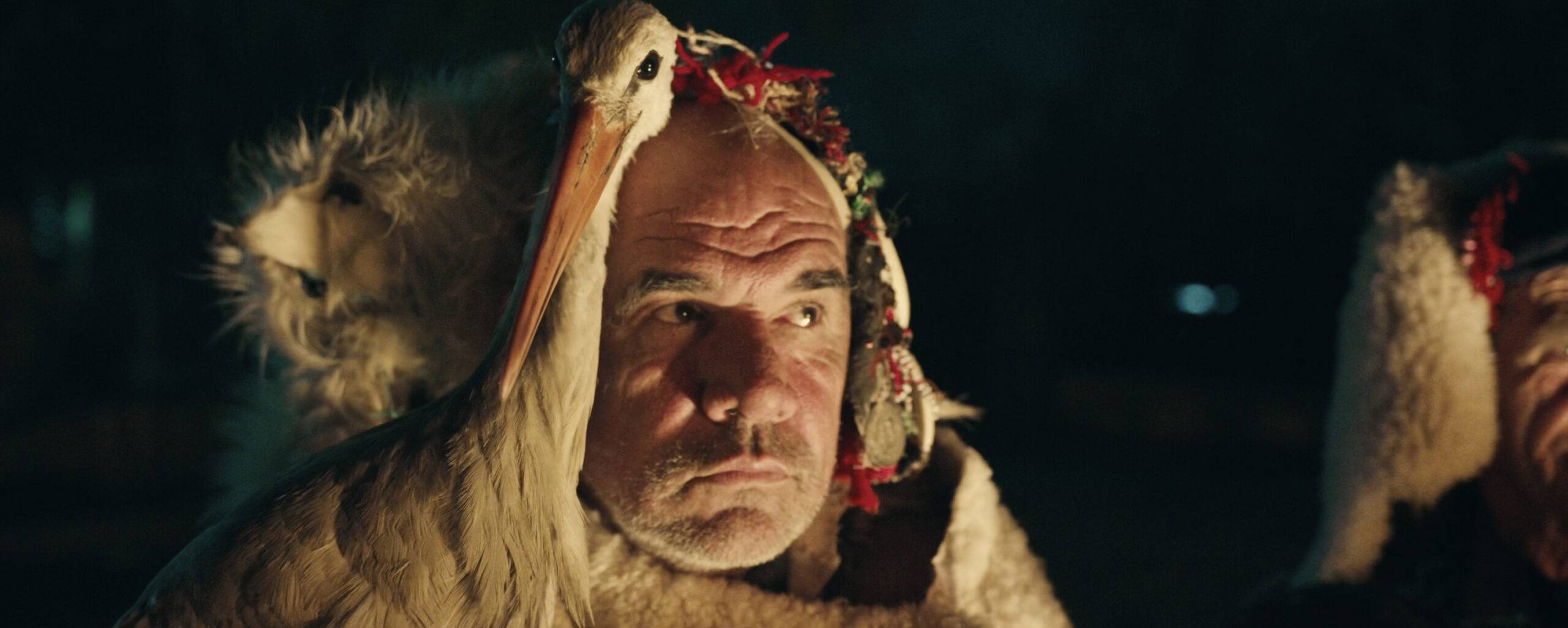
That’s what drew you in at first — environmental impacts and disrupted farming lives. It wasn’t until later that the Tale of Silyan mapped so clearly onto your original ideas. At what point did it click that this fable had such a strong connection?
The story was developing simultaneously with the shooting and the editing. It wasn’t clear from the beginning where it was going. It started in a very similar way to Honeyland, where we embarked on a journey to make a short film about the storks feeding on the landfill and the dying out of these storks. Slowly, the story spread and progressed, and different aspects unravelled.
It’s my one rule that I need to live with my protagonists every time I make a documentary – Director Tamara Kotevska on her approach to filmmaking
The second part, after we’d seen what’s happening on the landfill, was discovering how the storks were previously eating — what’s their natural habitat? We researched how they have lived in symbiosis with farmers since the 17th century, even earlier, since humans started digging the land and digging out small animals, which fed the storks. That’s why the storks make nests in human villages — agricultural villages primarily.
Then it took us both ways: the world of the farmers, the protests, and how it connects to the storks. The third aspect — the reunion with the man and the stork and the salvation of one another — was actually lost, as you see in the film. I thought it would end sadly, with both humans and storks being thrown out on the landfill — a mirror to consumerism. But I was shocked when Nikola decided to save this one hurt stork and take care of it. That was when the fable of Silyan came to life, and I decided to use it as an overall storytelling tool.
Tamara Kotevska and Jean Dakar Capturing Intimate Moments
It’s one thing to find striking images; it’s another to be present for the life between them. The film sits with people in private spaces, which suggests a careful, almost invisible approach. I asked about the practical decisions that allowed for this level of intimacy to be captured.
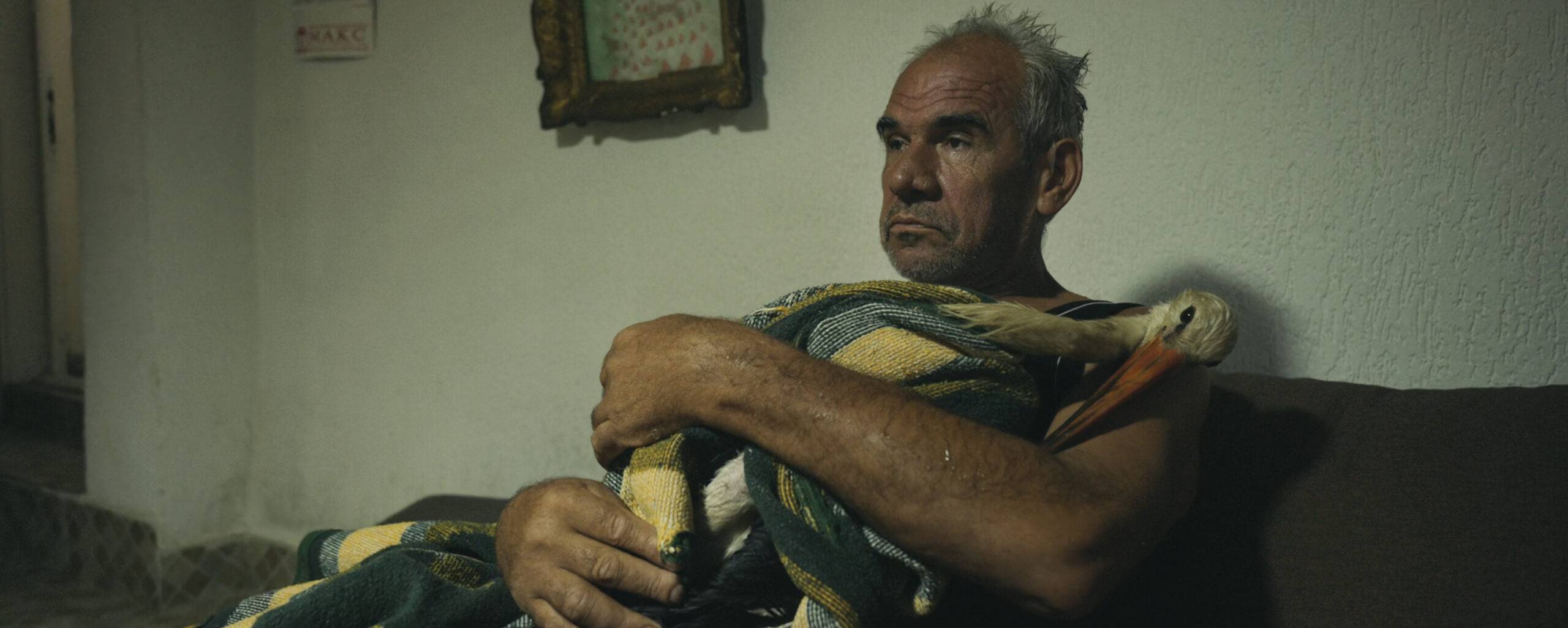
One of my favourite shots this year is Nikola and the stork on the sofa, huddled together. You can see the detail in the eyes — the intimacy is remarkable. How did you — and Jean — approach capturing moments like that?
It takes a lot of commitment. It’s my one rule that I need to live with my protagonists every time I make a documentary. I don’t want to arrive and then go back, because I know how this breaks intimacy. I prefer to settle wherever I’m shooting and really immerse myself in these people’s reality, to the point where, as a crew, we become almost invisible. Then, anytime we see something throughout the day, we just turn on the camera and capture the moment. That’s how we achieved this with Nikola and the stork.
And I imagine you would’ve had to work with quite a small crew?
Jean and I were there the whole time — mostly just the two of us. Sound recordists jumped in and out; occasionally, there were assistants to help organise something or secure a licence. But mostly it was just me and Jean. Our time was divided between living in the family’s house — they gave us the children’s room — and a custom-made travelling van with a bed and shelves when we went searching for storks in ponds and other feeding places.
Choosing Nikola as the Subject in The Tale of Silyan
Many strong non-fiction films pivot once the team recognises where the story really lives. Here, that meant shifting from an ecology-first approach to a person-centred one. With Kotevska shooting for months before settling on Nikola, I was curious how she knew he was the “right” subject to follow.
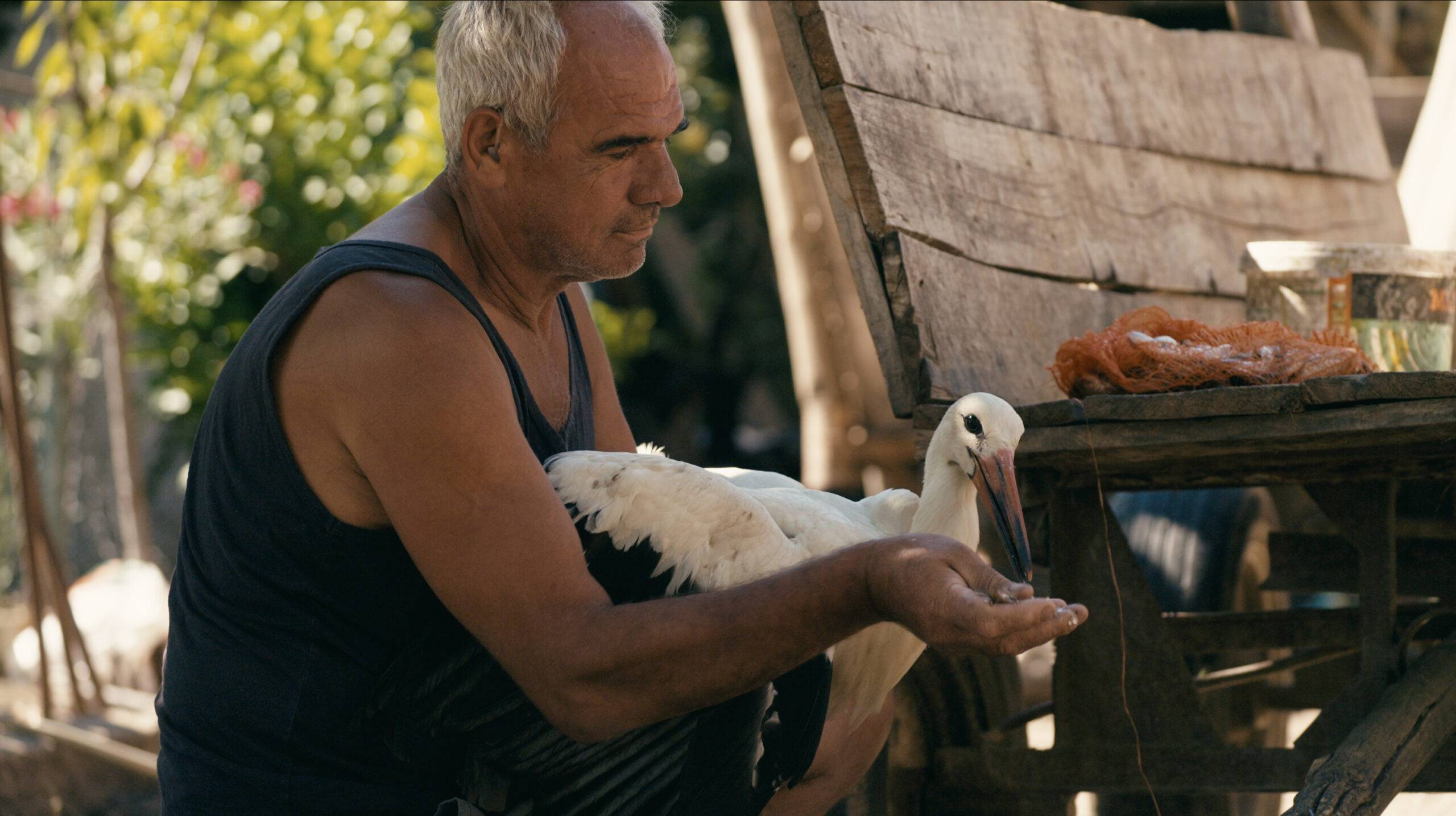
Before you found Nikola, you were already researching and filming storks. What made him the subject to follow, and how do you decide when someone is “the one”?
We were shooting for maybe six months — less than a year — when we decided to follow Nikola. Before that, we focused on the storks and met many families while capturing them on the land. We’d ask permission: “Can we go on your land? You work; we’ll be occupied with the storks.” Farmers were constantly in and out of our shots. At first, we tried to avoid it, then realised it was a benefit — especially for me, seeing the resemblance between the families of the storks and the families of the humans.
Modern societies twist definitions of rich and poor and distract people from the original ways of life – Director Tamara Kotevska on redefining ideas of “poverty” and “wealth”
So we started playing with mirroring. I did a casting of the farming families we were interacting with, asking about family structure and plans. Nikola’s family was most suitable because they were planning to migrate — a key moment for my decision. That parallel mattered to the film.
Storks as a Metaphor for Human Migration in The Tale of Silyan
Many of us view patterns of migration as simple statistics. For others, though, it is a deeply human dynamic that has the power to break families and communities apart. I was interested in what it evokes for Kotevska — personally and within the context of Macedonia.
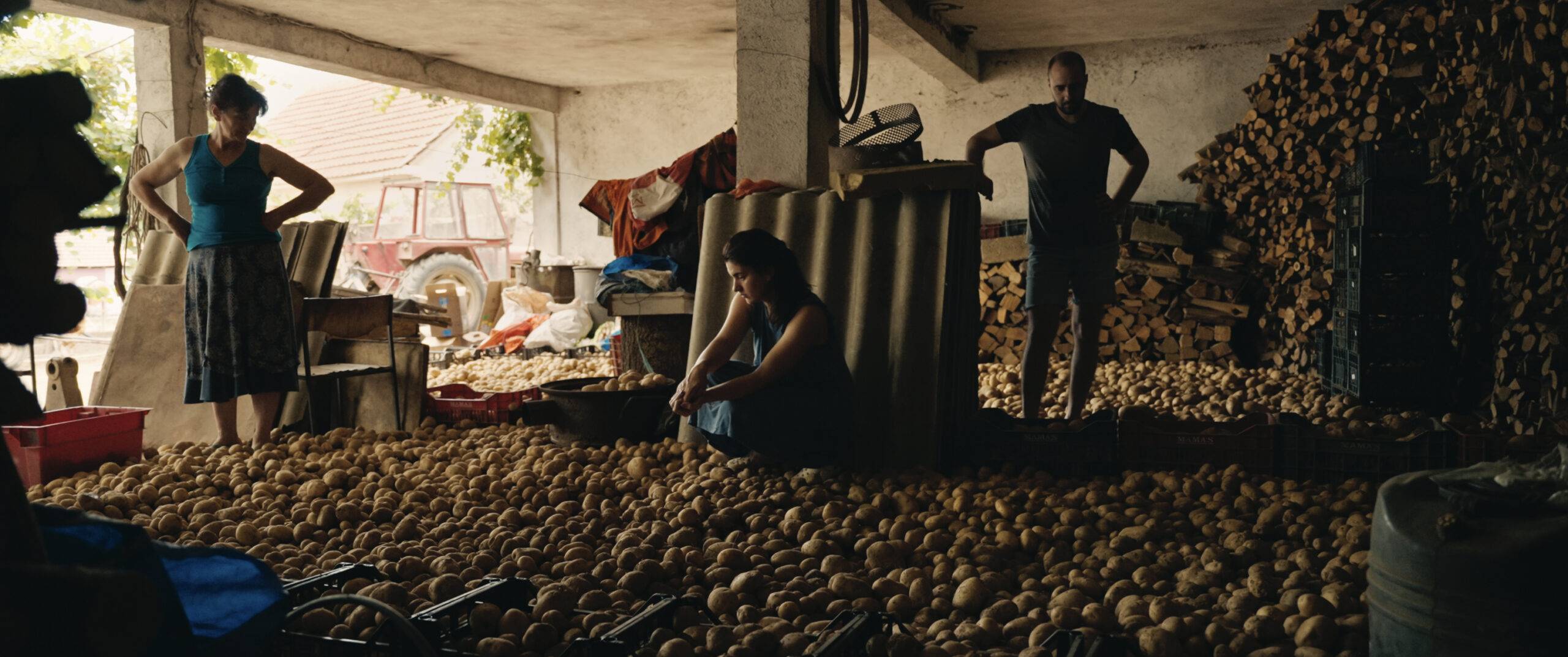
One of the resonances here is migration. What’s the connective tissue between the storks’ patterns and the human patterns we see?
Since I was little, this was the tale that shaped my life — the Tale of Silyan. I heard it from my farming grandparents. Economic migration of this kind is the key pain in my country and has seriously affected my own family — a big, unanimous family that eventually scattered around the world because of the economic situation in Macedonia. I’m intrigued by why human migrations happen and how they affect what should be a simple, happy life.
Tamara Kotevska on Redefining Poverty and Wealth
While preparing for this interview, I saw a Venice interview where Kotevska was asked about filming “poverty.” Her reply flipped the premise and challenged the language we use. Her response struck me deeply, and so I needed to have her expand upon these notions of poverty and wealth.
Watch the interview clip with Tamara Kotevska on YouTube:
https://www.youtube.com/watch?v=3F4ExzyqGhM
In a festival interview, you were asked about filming people living in poverty. You flipped it: you said you don’t see these people as poor. What did you mean by that?
I was happy they raised it because it shows the double standards around what’s rich and poor. The question was whether I have ethical problems exposing “poor” families and communities. I was offended because these are not poor families. A community that is self-sustainable — a family that depends on its own production and food — is free from many social norms and, at the same time, very rich because they live a happy, fulfilled life.
Modern societies twist definitions of rich and poor and distract people from the original ways of life that sustained them through wars and hard times. Today, we’re pushed toward big cities. But with food prices rising every day, we are not becoming richer; actually, we’re becoming poorer.
What Is Next for Tamara Kotevska and Jean Dakar?
After Honeyland and now The Tale of Silyan, it’s natural to ask what’s next — and whether this partnership with cinematographer Jean Dakar continues. At 32, Kotevska has already established herself as a leading voice in international documentary filmmaking, so I know that I’ll be first in line for whatever is coming up.
Are you working on something else at the moment? More collaborations with Jean?
This is our second project in collaboration with Jean Dakar. We have two more coming. One is a fiction film we’re waiting to come out next year — again based in Macedonia and targeting a major social issue, but in a different, fiction style. We’re also developing a documentary in Siberia, in the most northern part of the world, where there are still people — and tribes — living.
Statement from Director Tamara Kotevska

The white stork is a mythical creature in my home country of North Macedonia and my childhood was filled with ancient folktales about these majestic birds. Now in my adult life, what was once my fantasy world as a Macedonian child, is my inspiration for this film.
I have devoted my life as a filmmaker to two topics: migration and nature conservation. The lived experience of the white storks not only embodies these passions, but has led me to a cinematic approach that captures the magical lore of my homeland. The white stork has captivated human imagination for centuries, and they have coexisted with farmers across Europe even longer. Until recently, the North Macedonian landscape was one of the storks’ main feeding grounds. But modern economic forces have made family farming businesses unsustainable and agricultural communities have abandoned their lands to seek work in urban centers. In turn, fertile farmlands have become landfill sites and the white storks have lost their natural food supply. Just as humans have turned to fast food and instant gratification, storks have fallen into the trap of “easy” food scraps and trash, imperilling their lives.
With the tone of a real-life fairytale, the story we have captured shows the white storks as a perfect mirror of humanity. And the changes in their behavior offer a stark warning about the direction we are heading.


