

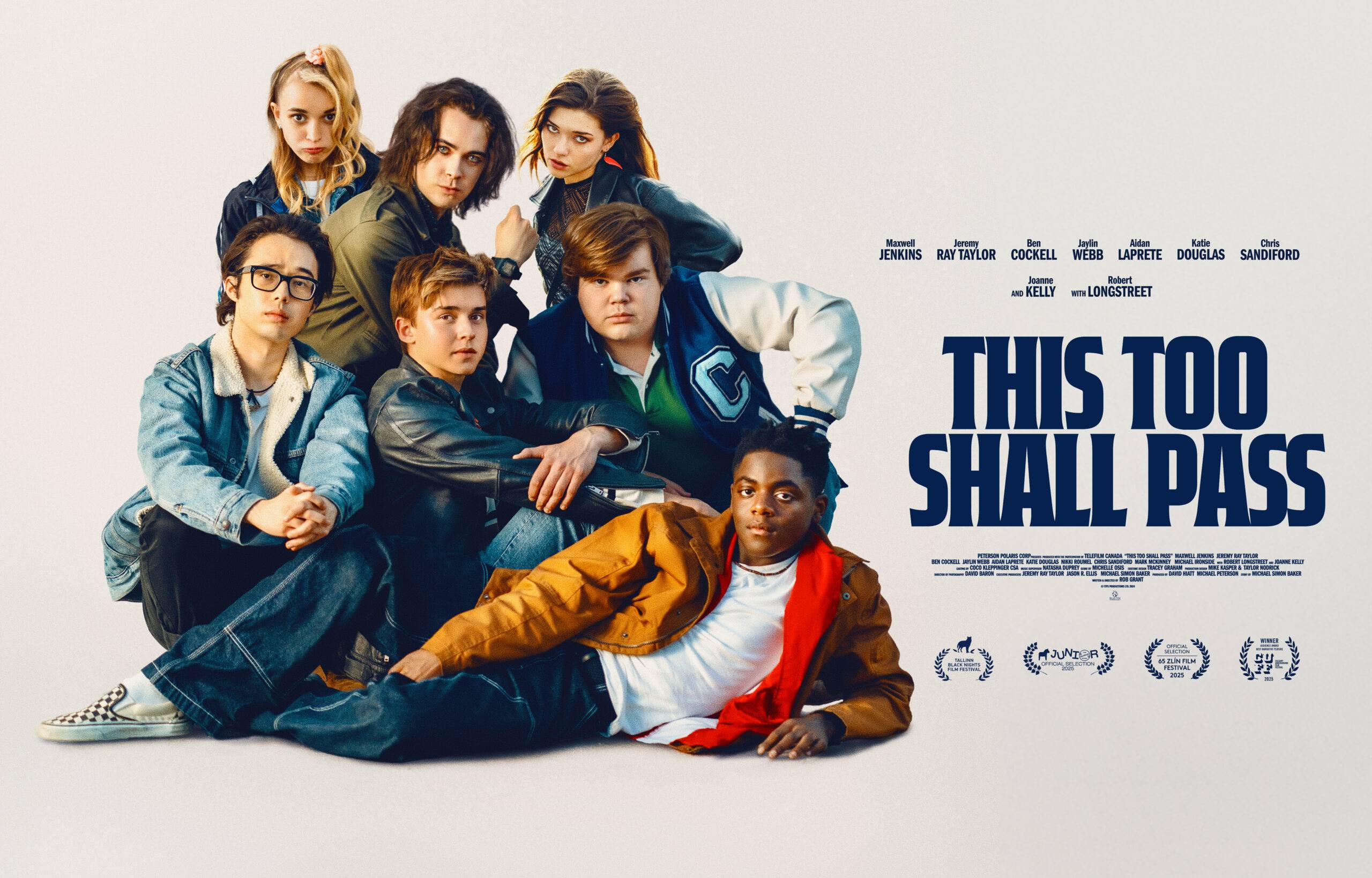

Rob Grant on This Too Shall Pass: ’80s Vibes, Narration, and Film Influences
I sat down with Rob Grant to discuss his latest film, This Too Shall Pass. We chatted about the project’s genesis, working with young actors, and shifting the ’80s setting away from the “neon-drenched” scenes found in some other ’80s period pieces.
This Too Shall Pass is a hidden gem of a coming-of-age drama set in the ’80s. It blends sharp humour, a Calgary backdrop, and a needle-drop-driven soundtrack to explore youthful status games, faith, and identity.
The film has had a lengthy festival journey, playing around the globe last year at festivals like Estonia’s Tallinn Black Nights Film Festival, and continued on the circuit this year at more festivals, including the Calgary Underground Film Festival, where it won the Audience Award for Best Narrative Feature, before finally getting a proper theatrical run.
This Too Shall Pass opened on in select theatres across North America and on Video on Demand.
The Background and Genesis of This Too Shall Pass
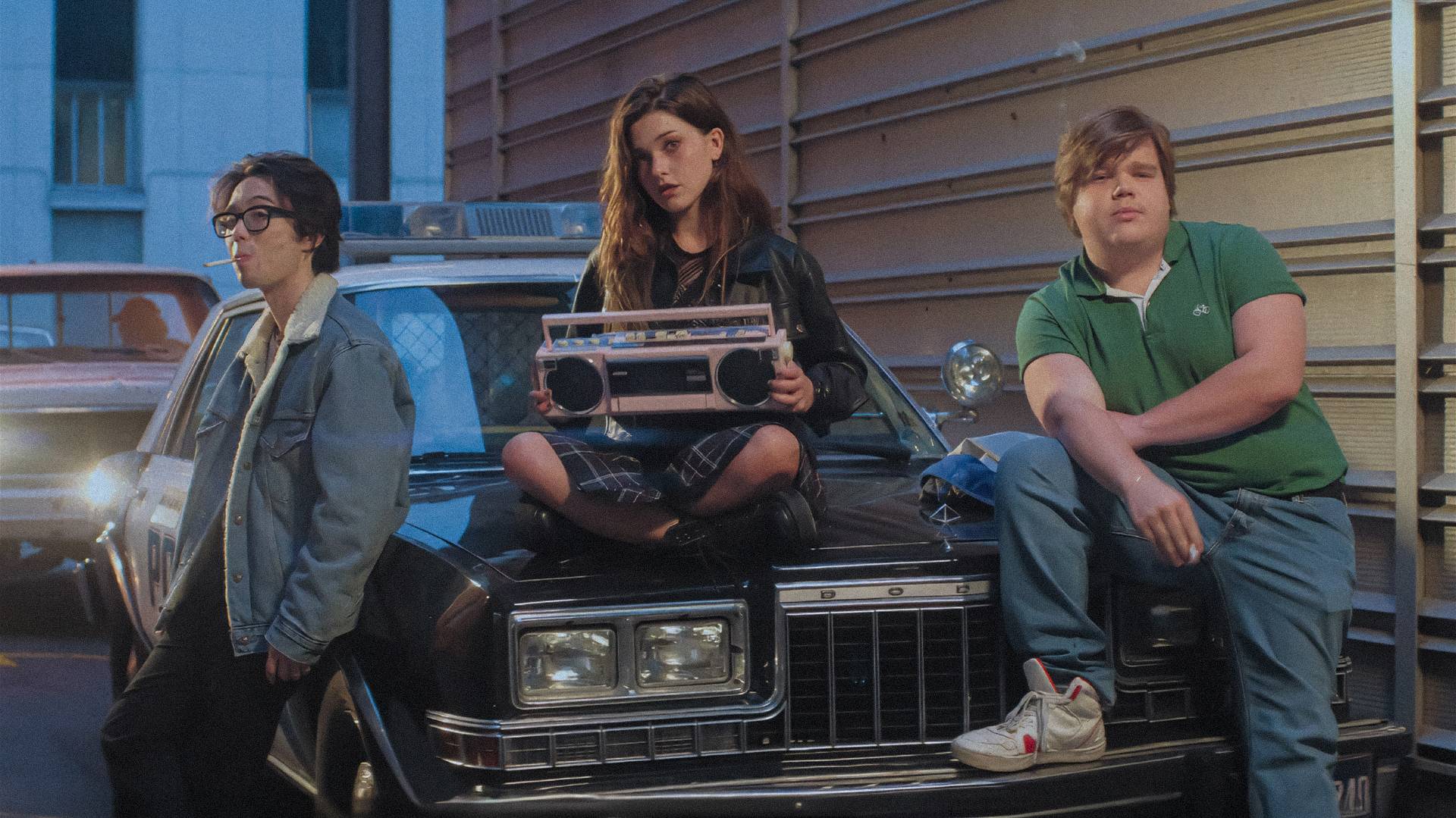
The film is rooted in producer Michael Baker’s lived experience of being raised in a Mormon household and getting into some trouble after travelling to Ottawa as a teenager. Director Rob Grant walked me through how he connected with Baker, how the project took shape, and why he initially hesitated to pursue material that, at first glance, seemed to sit outside his usual lane.
I had just finished Harpoon, which was a movie about three people stuck on a boat trying to eat each other. Mike Peterson and I were starting to get another project off the ground, and then COVID hit. Everyone went into the bubble. I remember going to my agent, Jason R Ellis, at the time, who’s also a producer on this, and saying, ‘I don’t know how to get a movie off the ground. I don’t even want to think about it. Maybe find something that I could just write to keep myself busy.’
Somehow, he connected me with Michael Baker (who Simon is based on in the movie), who grew up in a Mormon household, took a trip to Ottawa on a long weekend, and got into a lot of trouble with his friends. I remember telling my manager, ‘I don’t think I’m the right person for this. Did he not watch Harpoon? This is a very different switch.’ But the more he talked with Baker, he was like, ‘No, he wants a hard edge.’
I grew up in a Catholic household, and we started sharing our different versions of religious guilt, and I realized that for a teenager, social status and relationships can be played very much the same way I play horror scenes. My prior horror stuff has always had just enough drama that eventually, I thought, ‘Stop being scared; just go for the whole drama.’ I’d always wanted to do my version of a Dazed and Confused or Stand by Me. I wrote it and found myself really enjoying the process.
I was about 38 at the time and starting to go through my midlife crisis, realizing that all the thoughts I was having about where my life had gone and my career were still the same thoughts I’d had at 20. I thought, ‘This might translate.’ I handed it back to Michael Baker and said I wouldn’t ask to direct, but if he asked me to stay on board, I’d take that as a sign. I handed him the script, and he said, ‘Oh, I love it. When are we shooting this?’ I thought, ‘Well, I guess we’re on now.’ That was the whole weirdness of it. Of course, it took three more years of planning before we could shoot, but we got there.
The anti-Stranger Things ’80s Soundtrack and Aesthetic
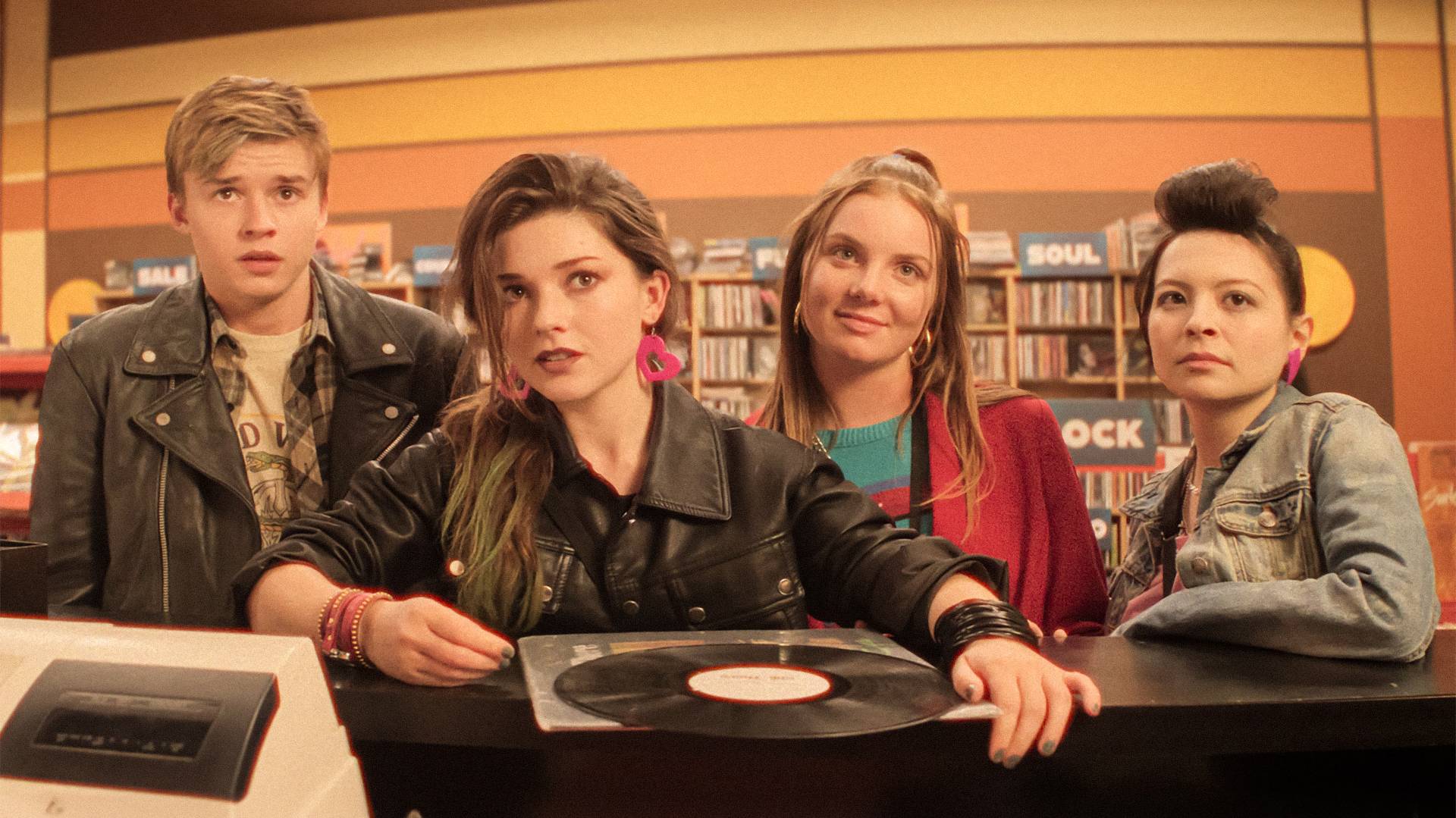
As is often the case with period pieces, music serves a central role in This Too Shall Pass. The film opens with “Forever Young,” and later features The Cure’s “In Between Days.” The role of music is understandably amplified, given that Michael Baker has been making music for many years. Simon, his character in the film, wants to be a rock star, and there are some songs from “Head Fake” (Baker’s band) that play as backing tracks throughout. Given how “front and centre” music is for the tone and plot of This Too Shall Pass, I was happy to have Rob Grant walk me through the role of music in the film and how important it was to subvert certain expectations of works set in the ’80s.
[Michael Baker] is a big Depeche Mode fan, so the music of that time is right up his alley. When we first started talking about the soundtrack, he said maybe his band could do covers for a lot of these. That’s a great idea for the right movie – but for period pieces, using modern songs doesn’t always work out. For us, doing a low-budget period piece, it was important not to give the audience any reason to think this isn’t true to the time. We had a list of songs, and a lot were written into the script: they carry around a Housemartins album; Simon’s looking at an album from The Cure. Early on, we went to our music supervisor, Natasha Duprey, and asked if she could clear any of these. She said we couldn’t afford them, but somehow she got the artists on board. Once she got The Cure for a reasonable price, everyone else had to honour that, too, and there was this synergy of them all taking the same discount.
We also had extra spots where his music ended up, and you couldn’t tell the difference when it was diegetic or in the background, as long as we didn’t feature anything that took you out. We made an important rule to be the “anti-Stranger Things” – avoiding bright lycra-coloured neons – leaning toward the late-’80s grunge heading into the ’90s, and that transferred into the music choices, too. We avoided almost all synth except the opening “Forever Young”; the song changes and gets destroyed as the movie opens, and you realize he’s in a cop car. We used subtle techniques to make sure it felt grungier and grimier. I’m 41 now, and my visions of the late ’80s were tobacco-soaked carpets and wood panels – pretty dingy – so that bled through the whole process.
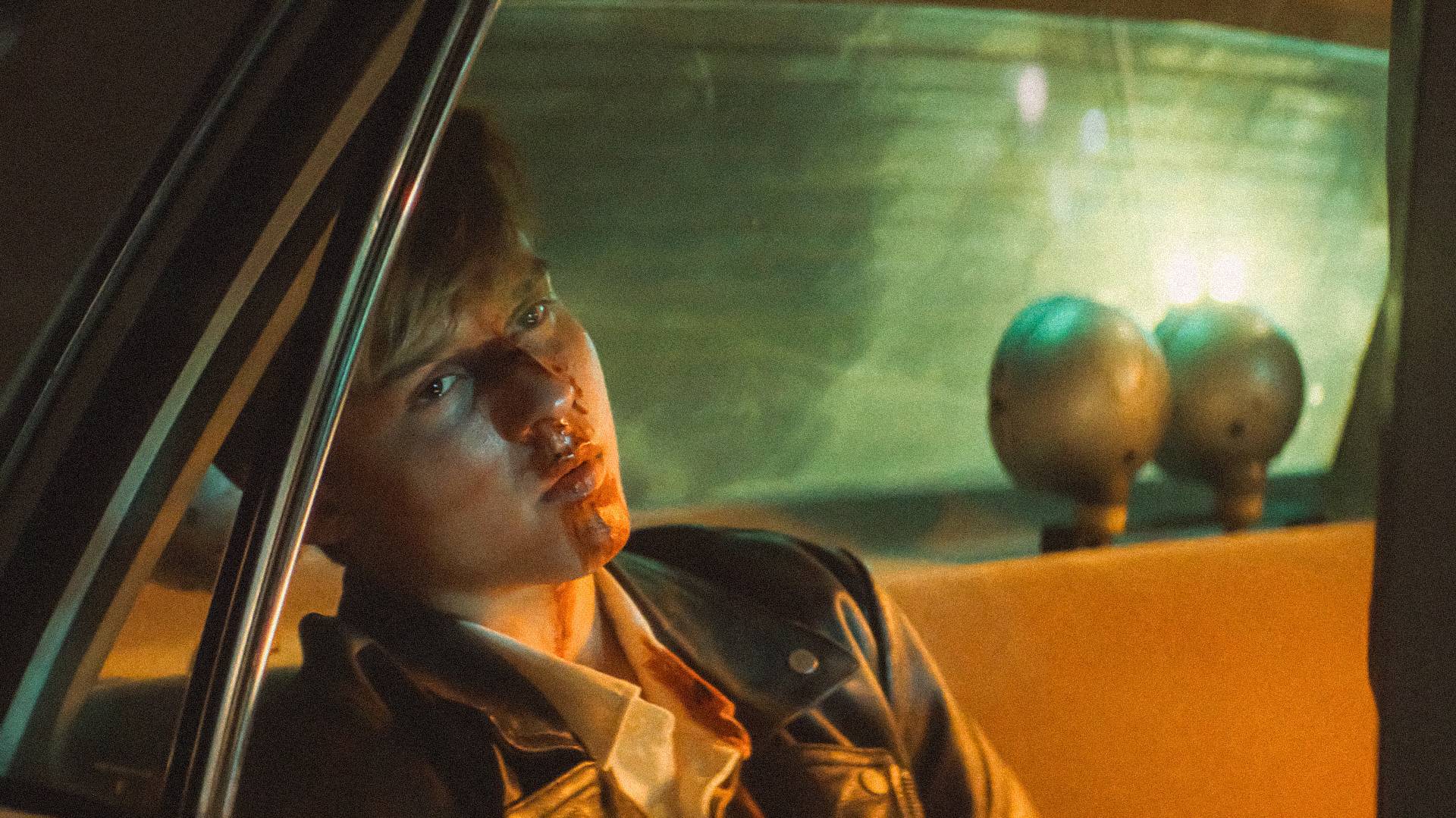
The opening scene’s use of “Forever Young” primes you for a neon-drenched, stereotypical ’80s vibe, but our main character is actually in the back of a cop car, and the neon glow is from police lights. The lead character starts a narration, and Rob quickly subverts the expectation, breaking the fourth wall as the officer addresses the fact that this character appears to be narrating. There are precedents for fourth-wall-aware narration, but it’s especially effective here: you’re leaning on a young actor to carry narration, and the film builds in a safeguard. If the narration ever feels forced, the text has already acknowledged that; if it’s strong, you simply sink into it. Rob expanded on how this came to be and his overall thoughts on narration.
That choice was twofold. One, I got a lot of grief for Harpoon having a narrator, and I defend narration pretty strongly, because many of the widely considered greatest movies use it – The Shawshank Redemption, Goodfellas – though it’s easy to dismiss as lazy. So part of me was giving a middle finger to that. Two, the lead character is intentionally trying to have his life be more like the movies, and it never works out, and I realized right off the hop I was missing an opportunity for it not to work out. Late in prep – maybe the last week – I decided he should try to do the narration himself, and the officer calls him on it. That was perfect, because it added to the feeling of the lead never getting what he wanted: a life that played like a movie.
The Films that Influenced This Too Shall Pass
By now, it’s clear that Rob is passionate about movies – not just his own, but the art form as a whole – and this carries to some of the kids in the film. They talk cinema, and one character feels strongly about John Hughes and films like Ferris Bueller’s Day Off and The Breakfast Club. Whereas our main character, Simon, views them optimistically and hopefully, not all of his friends agree, so I wanted Rob’s take on those classics.
It’s the optimism of youth – I love it. My first introduction to that vibe was Ferris Bueller’s Day Off, and I remember thinking, ‘This is so unlike my life’; I don’t have anything figured out like this guy. I wasn’t that age yet, but that was Simon’s reaction: it’s not supposed to be my life; it’s what my life would be like. Obviously, in the modern era, some of the decisions haven’t aged so well – decisions of the time – so of course, the film buff would have criticisms to lay against it, while the person who loves the optimism those movies represent says that’s not the point. It was important to show both sides.
The film channels the optimism of those classics while layering in Stand by Me–style coming-of-age beats. Given Rob’s affinity for film, I was curious which projects were explicit influences on the final product we saw on screen.
Dazed and Confused for sure, and American Graffiti was a big one – especially those older films where the through-lines aren’t defined and clear; they just go from one scene to the next. It was important to watch and ask what keeps the momentum going and how these work without MacGuffins or ticking clocks. In our film, the second half spends a significant portion around a coffee table, so I had to be careful. What resonated most in those movies was what they were talking about, and the character motivations or problems were revealed through their discussions with one another. I used that as my ‘Am I doing this right?’ check.
The Cast of This Too Shall Pass
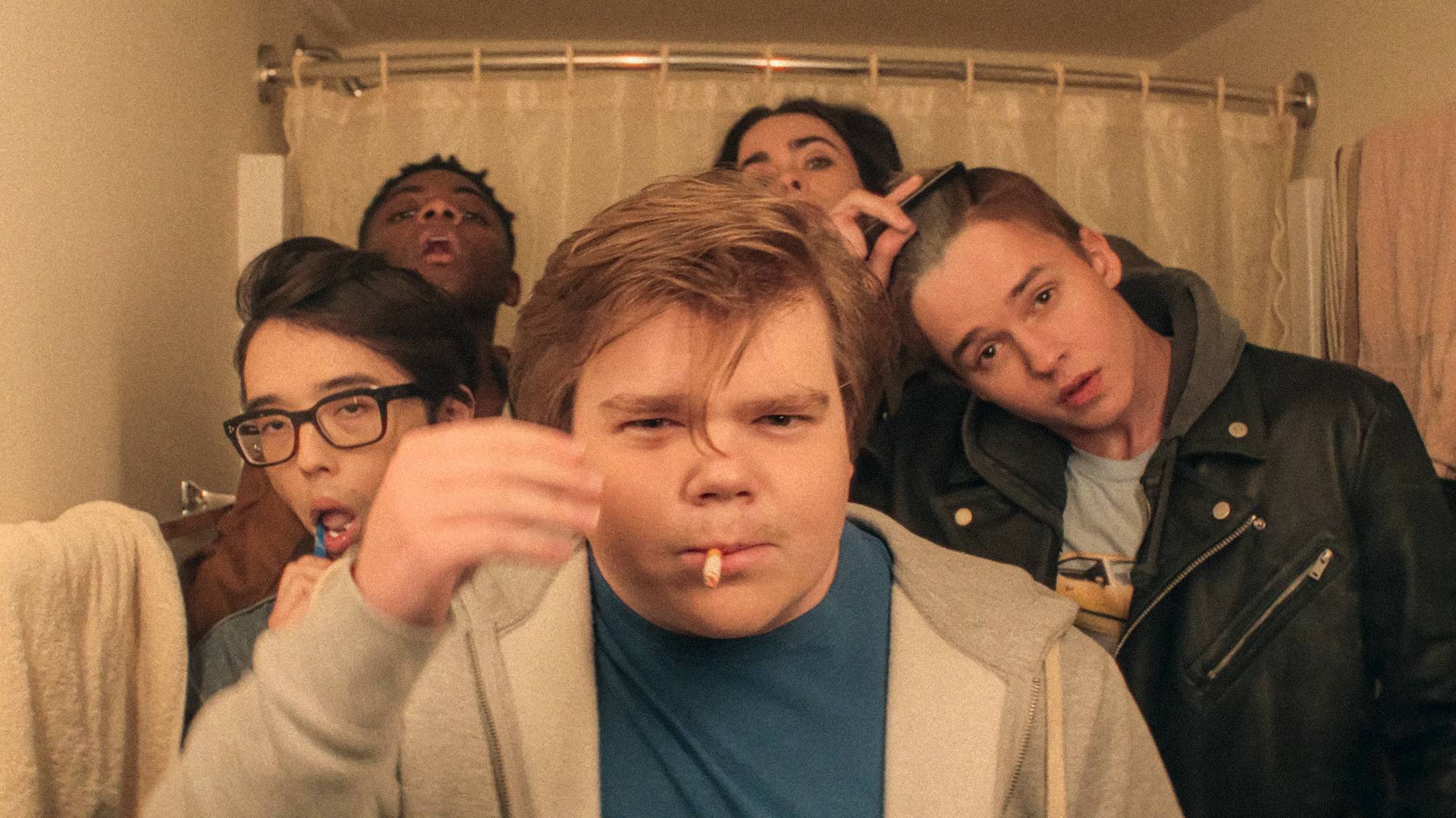
Something many of those influential projects share is great comedic timing, and that’s something Rob excels at. This makes sense, given the relationship between horror and comedy and Rob’s work primarily in horror or horror-adjacent films. This coming-of-age story – largely described as a drama – has a different relationship with humour, yet there are truly funny moments here, including some sharp one-liners (in particular, one about Jim Morrison’s manhood). I asked about the process of writing comedy in a film like This Too Shall Pass.
Writing comedy inside a drama is hard; having young actors deliver it is harder. Luckily, producer Mike Peterson gave me a week of rehearsals with the talent beforehand. You have to find the timing early, or at least know how to shift it on the day, because you can feel pretty quickly when it isn’t working. You can get deep into the philosophy of comedy – who’s the straight man, who’s the comic – but one has to be one and one the other; those tropes exist for a reason.
In Airplane, there’s a reason Leslie Nielsen never breaks anything beyond the flat-faced delivery. And you hope your actors are confident enough not to ham it up or to recognize when they are and dial back. It helps when bits are based on true stuff: that Jim Morrison line came from my mom saying she saw him and, well, saw his anatomy – he used to flash on stage. Little jokes from family dinners I knew were hilarious; for whatever cosmic reason, a bunch of them made it in because they fit the period.
The young ensemble is cohesive. While not every performance is perfectly balanced, the net outcome is positive, and ultimately, they reach a sum greater than their individual parts. I asked about assembling the cast and working with younger performers.
This was a departure for us, working with an age range from 16 to the early 20s, but it was important not to do the old coming-of-age thing where you cast 30-year-olds and dress them up as 20-year-olds. The hard part was finding people who looked age-appropriate, and the energy was different – you could tell even in auditions. Coco Kleppinger was our casting director. We got lucky that most scripts aren’t catered to that age bracket right now; when we sent it to agencies, we got a ton of excited teenagers. They’re not used to being the focus; they’re usually side parts or ‘the kids.’ We read over a thousand and mixed and matched.
Simon [played by Maxwell Jenkins] and Jeremy Ray Taylor were offers, but once those pieces were in place, it was about finding the right puzzle pieces to complement their skills and each other’s. It took about six months to get everyone. For an ensemble carried by Max, it was important not to have a weak link. Aidan Laprete, who’s now blowing up – he’s on the new “The Office” spinoff [“The Paper”] – had an audition so good we couldn’t not cast him. On set, he was the same. When I wrote that character, he was a Jack Nicholson type; that’s him. Difficult casting, but worth it.
Outside of our main characters, there’s someone who appears only in one scene, but he seems to pop up in almost every Calgary project these days. Films like Faultline; series like Julian Black Antelope’s “The Secret History of: The Wild West”; the Indigenous horror anthology “Tales from the Rez” from Trevor Solway; and Michael Peterson’s Shadow of God: Shane Ghostkeeper. The Calgary-based actor and musician plays a security guard with such straight-faced seriousness that the scene lands even harder; I laughed out loud (not something that always happens when watching a screener on my laptop), so I asked Rob about how Shane came on board.
He [Shane Ghostkeeper] came in from a tape submission as well, and I thought, ‘I know Shane – he’s awesome.’ The way he delivered the lines was so unexpected compared to how I had it in my head on the page – more morose, funnier – that I had to bring him back for a further discussion. He understood this person needs to take his job way more seriously than perhaps he should, and I even asked him to say one line exactly as in the audition. He was a cold read. I feel guilty if I don’t watch almost every tape submitted my way, and I don’t want to wonder if I missed a gem. He was a cold submission that knocked it out of the park for that role, which was based on my teen experiences hanging out in shopping malls and being told to get out. It felt like the right time for that, and we needed a couple of distractions to cut back and forth from the heist. Mike also made me careful not to be too mean to the security guy.
What’s Next for Director Rob Grant
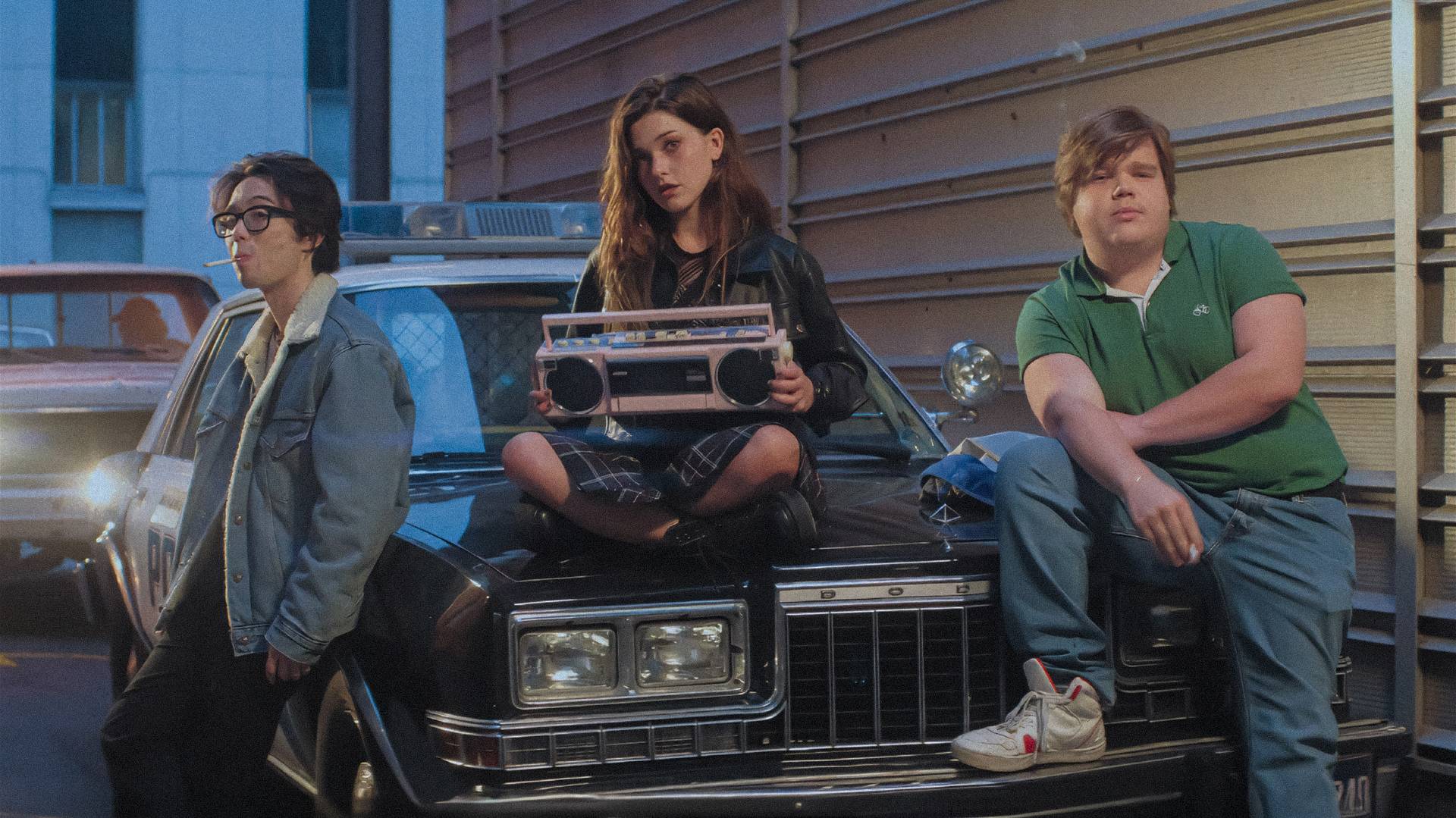
This Too Shall Pass seems to be loved by almost everyone who sees it, evidenced by its Audience Choice award at the Calgary Underground Film Festival, so perhaps it signals a shift away from horror for Rob Grant. While he didn’t give a direct answer on what’s next, I wouldn’t be too worried about Grant moving away from horror permanently.
It depends – I’ve always got a couple of scripts, and it depends on who’s dumb enough to give us money. The next one – there are a couple – is more like my usual slant; I don’t have another straight drama.
Before we wrapped, I asked if there was anything else he wanted to add about the project, a film that really, truly, is a hidden gem.
It’s a tough time for indies. We took a big chance going outside our usual genre bubble, so the genre people are like, ‘Hey, what are you doing?’ and the drama people are like, ‘Hey, what are you doing?’ We took a big swing, and I’m really proud of what came out. I think it’s got a lot of soul. There aren’t a lot of interesting coming-of-age stories in the market right now; maybe this fills a bit of the gap. More of it’s true than you think.
Who it’s for: Anyone who likes a genuine coming-of-age story that hits the perfect balance of drama, comedy, and nostalgia.
This Too Shall Pass Release Info
- Date:
- Format: Select theatres in North America; Video On Demand
- Distributor: Partner Distribution and Blue Fox Entertainment


