


At the Edge of the Volcano: Pete Ohs, Jeremy O. Harris, and Will Madden on Erupcja and Charli xcx
Back at the Table of Bubbles
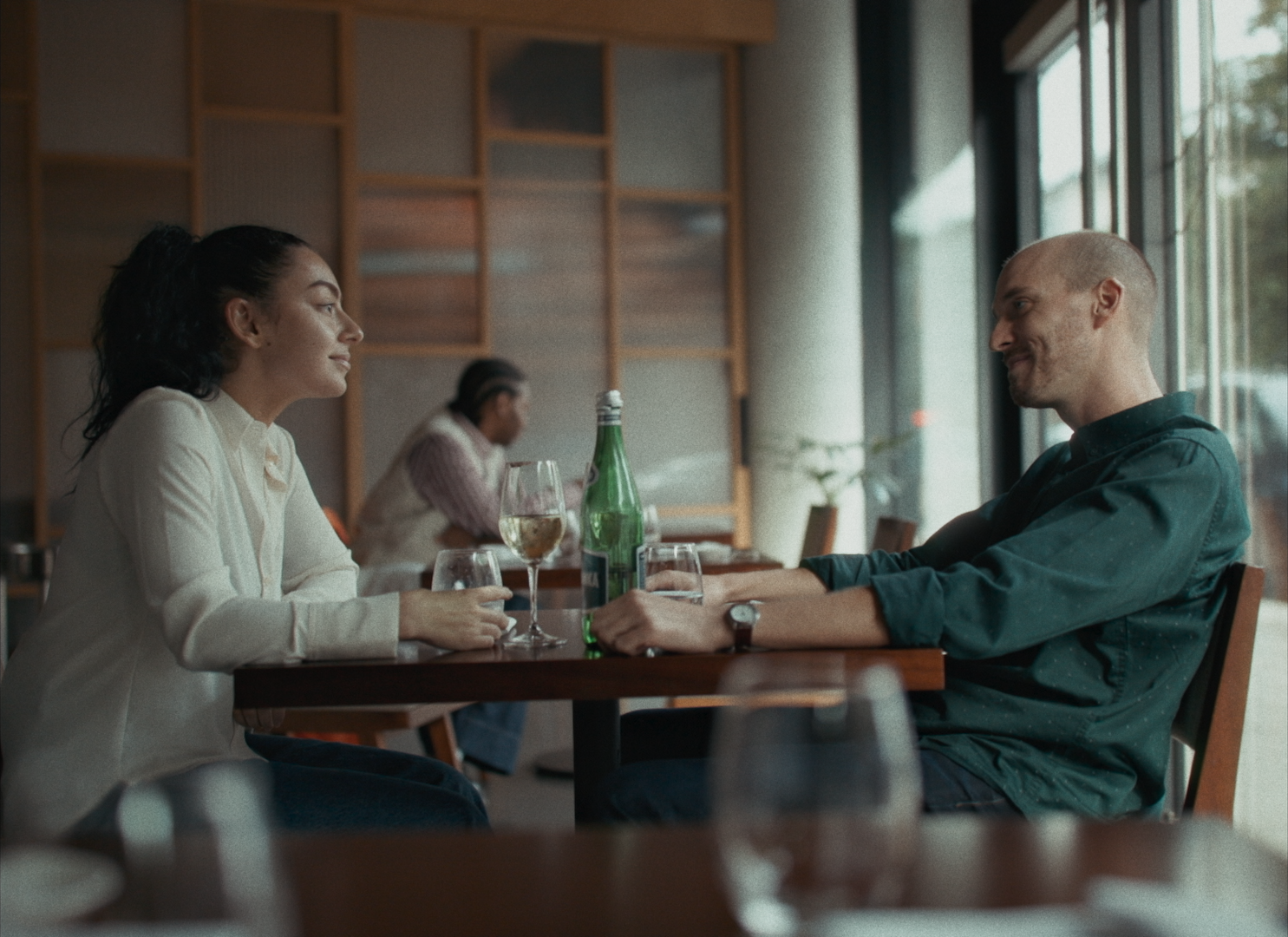
This is the second year in a row that I have been able to sit down with Pete Ohs at the South by Southwest Film & TV Festival and discuss one of his films. This Erupcja interview also marks the second year in a row that I have been able to chat with Jeremy O. Harris, who starred in, wrote, and was a core creative contributor to Pete’s The True Beauty of Being Bitten by a Tick, which played SXSW last year.
That conversation became less of a straightforward interview and more of a discussion about process. We talked about Pete’s philosophy of the “table of bubbles,” his approach to collaboration, and the strange kind of creative freedom that can emerge when no one is trying to carry the full weight of a film on their own.
This year, I walked into one of the hotels at SXSW to meet with Pete, Jeremy, and Will Madden, who stars in Erupcja and has been a frequent collaborator of Pete’s. To my delight, Pete’s mom, Lynda, was also at the table. There is something wonderful about seeing the generation that came before someone sitting nearby while you talk about their work, especially when the conversation inevitably becomes about art, trust, and the people who make you feel like creating something is possible.
Conversations with Pete and Jeremy, and, in this case, Will, have a natural flow. Jeremy is boisterous, funny, sharp, and gloriously unfiltered. Pete is quieter, at least in these settings, but there is a certainty to the way he talks about uncertainty. Will brings a different energy again, a kind of thoughtful openness that feels very connected to his screen presence.
On the surface, the obvious talking point is Charli xcx. Of course it is. She has become a household name in a way that few artists do, and Erupcja was shot during the strange cultural detonation of Brat summer. But the more interesting question is not simply how Pete Ohs ended up making a movie with Charli xcx. It is why someone like Charli would be drawn to this kind of low-budget, independent film in the first place.
That question brings us right back to the table of bubbles.
What is Erupcja About?
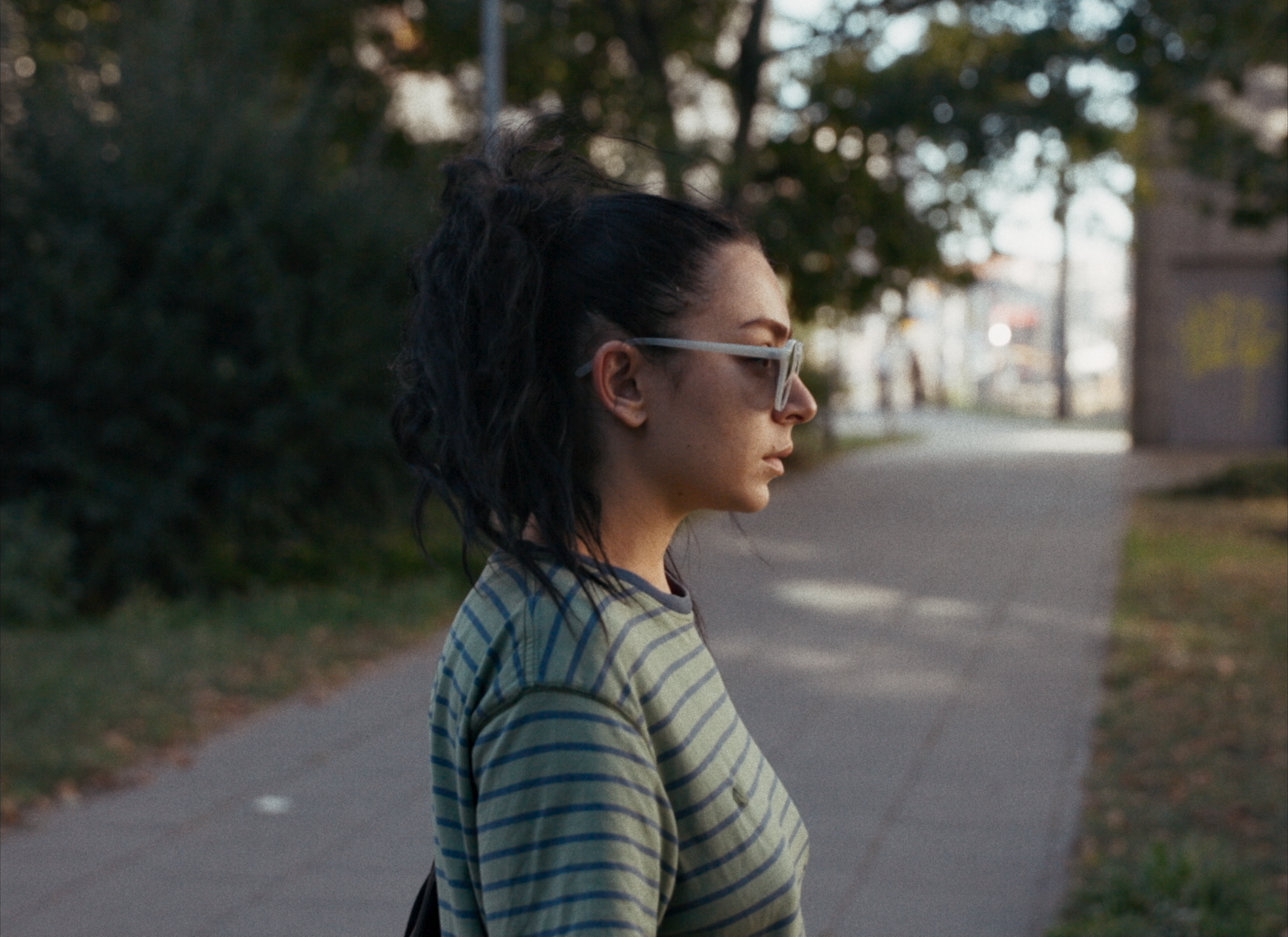
Erupcja translates to “eruption” in Polish, and that feels like the cleanest possible title for the film. Yes, volcanoes are central to the story. But the eruption is also emotional, relational, creative, and even existential.
The film is set in Poland and follows Nel, played by Lena Góra, whose connection with Bethany, played by Charli xcx, becomes the unstable centre of the film. Their relationship is not easily reduced to a familiar romantic structure. It would be easy for a movie like this to become a straightforward story about temptation, cheating, or sexual desire. But Erupcja is doing something stranger and more interesting. Bethany’s presence becomes a mirror for Nel, or perhaps a portal. She allows Nel to see some version of herself that has not been fully put away, even as Bethany’s own life appears to be moving toward something more stable.
That stability is represented most clearly through Rob, played by Will Madden. Rob is not positioned as a villain or an obstacle. He is, in Will’s words, “steady.” He is a good choice. He is the life that makes sense for Bethany. But Erupcja understands that sometimes the good choice is not enough to silence the part of you still drawn to chaos.
That is where the volcano metaphor becomes so effective. Volcanoes are beautiful. They are mesmerizing. They are easy to romanticize from a distance. But they are also destructive. They kill people. They interrupt lives. They leave damage behind.
That tension sits at the centre of the film. Erupcja is not a movie built around a traditional plot machine, where every beat is engineered to push toward an obvious dramatic confrontation. Like much of Pete’s work, it is interested in people going through real things in slightly heightened ways. It is a film about the meaning we attach to coincidence, the instability we invite into our lives, and the danger of mistaking an eruption for proof that something is meant to be.
Charli xcx and the Origins of Erupcja
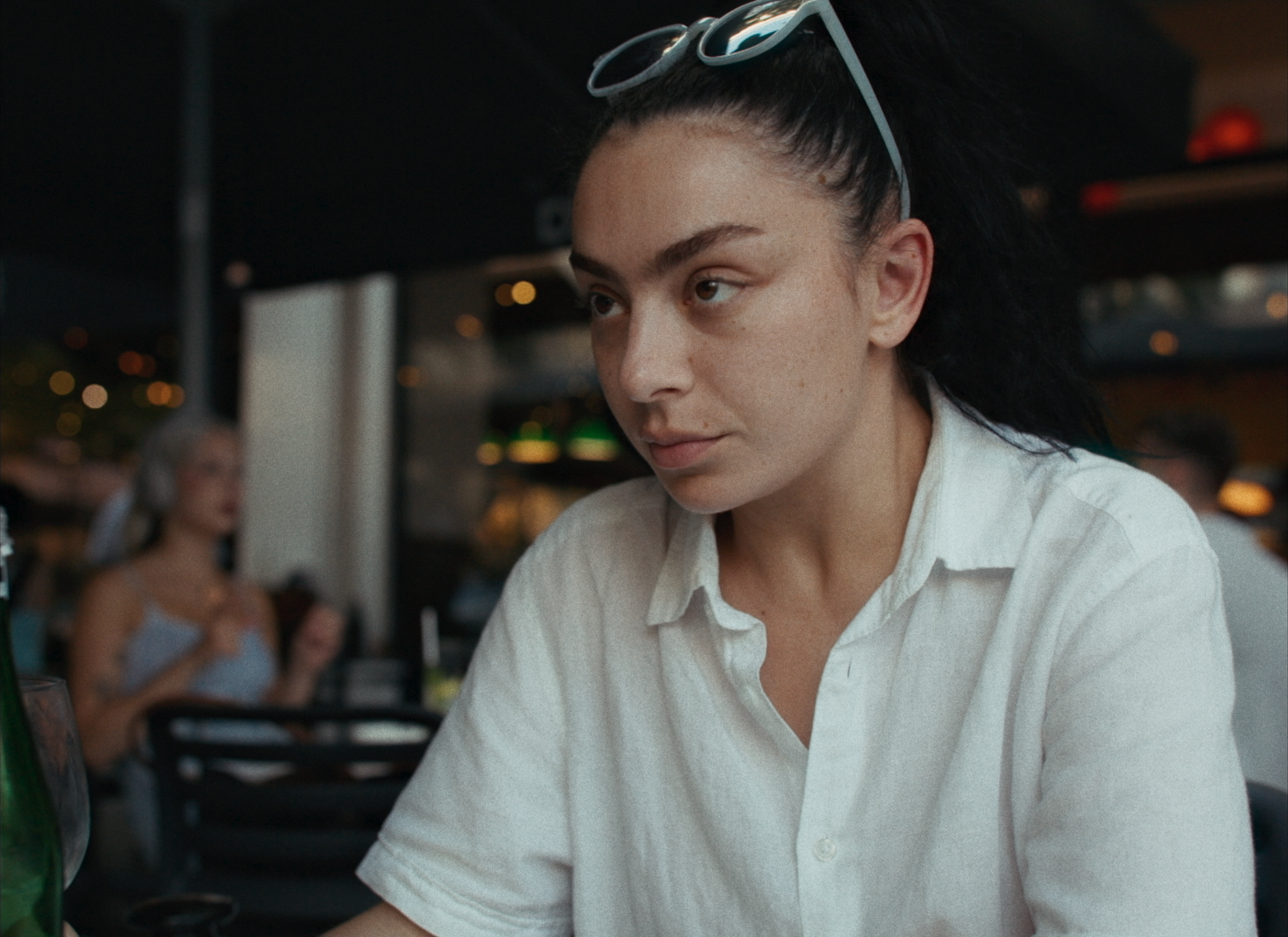
When I asked Pete how Charli xcx came into the project, his answer felt almost too fitting for the film itself. It was, in his words, “magical, mysterious, coincidental.”
“I was at a bar on the Lower East Side, in Jeremy’s neighbourhood,” Pete told me. “We were getting drinks at 3 a.m., and Charli walked into that bar.”
Jeremy knew Charli well enough to bring her over to the table, and he introduced her to Pete and his filmmaking process.
“He said, ‘This is my friend Pete. He’s a filmmaker. He has this really interesting process,’” Pete recalled. “She looked at me, and she said, ‘What’s the process?’ I described the process. At the end of describing the process, she said, ‘I want to do one.’ And I said, ‘You can do one.’ And three months later, we were in Poland.”
That is the kind of story that sounds almost too simple. It also feels like the kind of story that used to happen more often, or at least the kind of story we like to imagine used to happen more often. Someone knows someone. A conversation happens. An artist hears an idea and recognizes something in it. Then suddenly, against all reasonable expectations, there is a movie.
The timing also mattered. This was May 2024. As Pete put it, this was “pre-Brat.” He could already see Charli’s world changing, even before the full cultural wave had hit. At one point, he went to her website, saw that her world tour was starting in September, and messaged her to make sure this was still realistic.
“I was like, ‘Are you sure you can come to Poland to shoot a movie in August?’” Pete said.
Her answer was direct: “I’ll be there.”
“And she was,” Pete added.
On one hand, it is a wild piece of timing. On the other hand, it also reveals why this process could appeal to someone like Charli. Pete’s films are not built around years of waiting for permission. They are not waiting for the perfect conditions. They are built around a constellation of people, a place, a feeling, and a willingness to move.
In a way, Erupcja had to happen quickly because the world around Charli was changing quickly. The film caught her in a very specific pocket of time, just before the doors blew open even wider.
More than a Coincidence
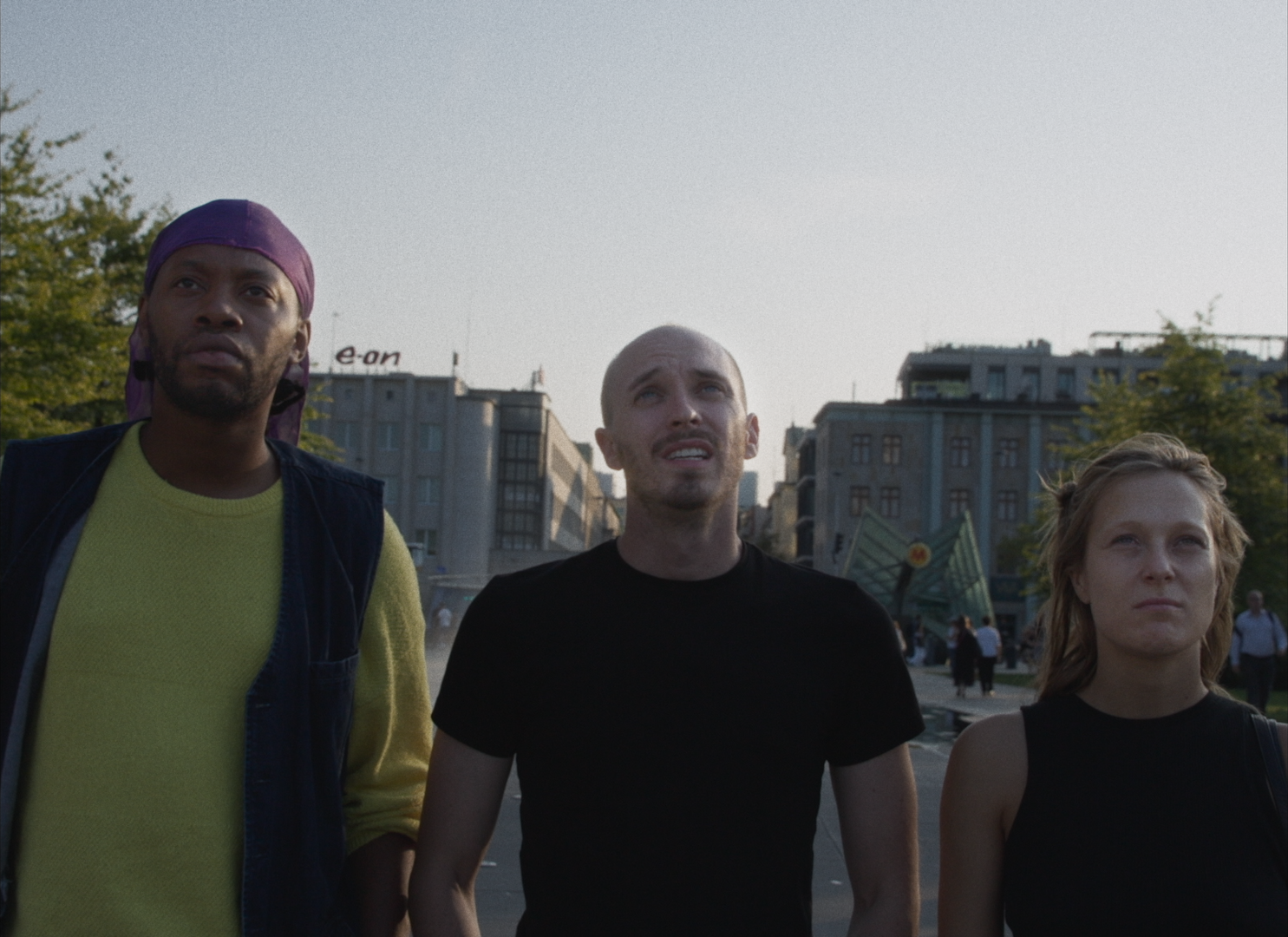
Of course, the film itself is deeply interested in coincidence. Not just coincidence as random chance, but coincidence as something we cannot help but interpret. We want the world to speak to us. We want patterns to mean something. We want to believe that if two people meet, or if a volcano erupts, or if a poem appears at the right moment, the universe is nudging us toward some larger truth.
Jeremy saw that connection clearly.
“It is also funny because the movie is so much about coincidence and finding meaning in coincidence,” he said. “While we weren’t conscious of this, we did have this wildly coincidental lightning-strike thing happen in the same neighbourhood where the idea came.”
Not long before meeting Charli, Pete and Jeremy had been having drinks with Oliver Hermanus, who told them a story about being stuck in Warsaw when a volcano erupted in Iceland.
“We were like, ‘Oh, that’s an interesting idea,’” Jeremy said. “And that was on the same block as where we met Charli a couple weeks later and pictured this movie.”
That is the part of Erupcja that feels almost impossible to separate from its making. A story about volcanoes begins with someone telling a story about being trapped by a volcano. A film about coincidence begins with a coincidental meeting. A movie about attaching meaning to eruptions is created through a series of tiny eruptions in the lives of the people making it.
Pete recognized how narrow the window was. He described it as “the one day, the one week, when she could say yes.”
“Otherwise, I think if we had asked the same question three weeks later, it would have been clear how crazy her life was about to be,” he said. “I think we were a weird life raft that got dropped into her summer and into her life before everything shifted.”
It is tempting to overstate the cosmic significance of this. Pete himself seems wary of that. But Erupcja is also a film about the fact that humans cannot stop doing exactly that. We attach meaning because we need meaning. We tell ourselves that the timing mattered because otherwise it was just timing.
Maybe that’s foolish. Maybe that’s beautiful. Maybe it’s both.
Let This Be the Inspiration
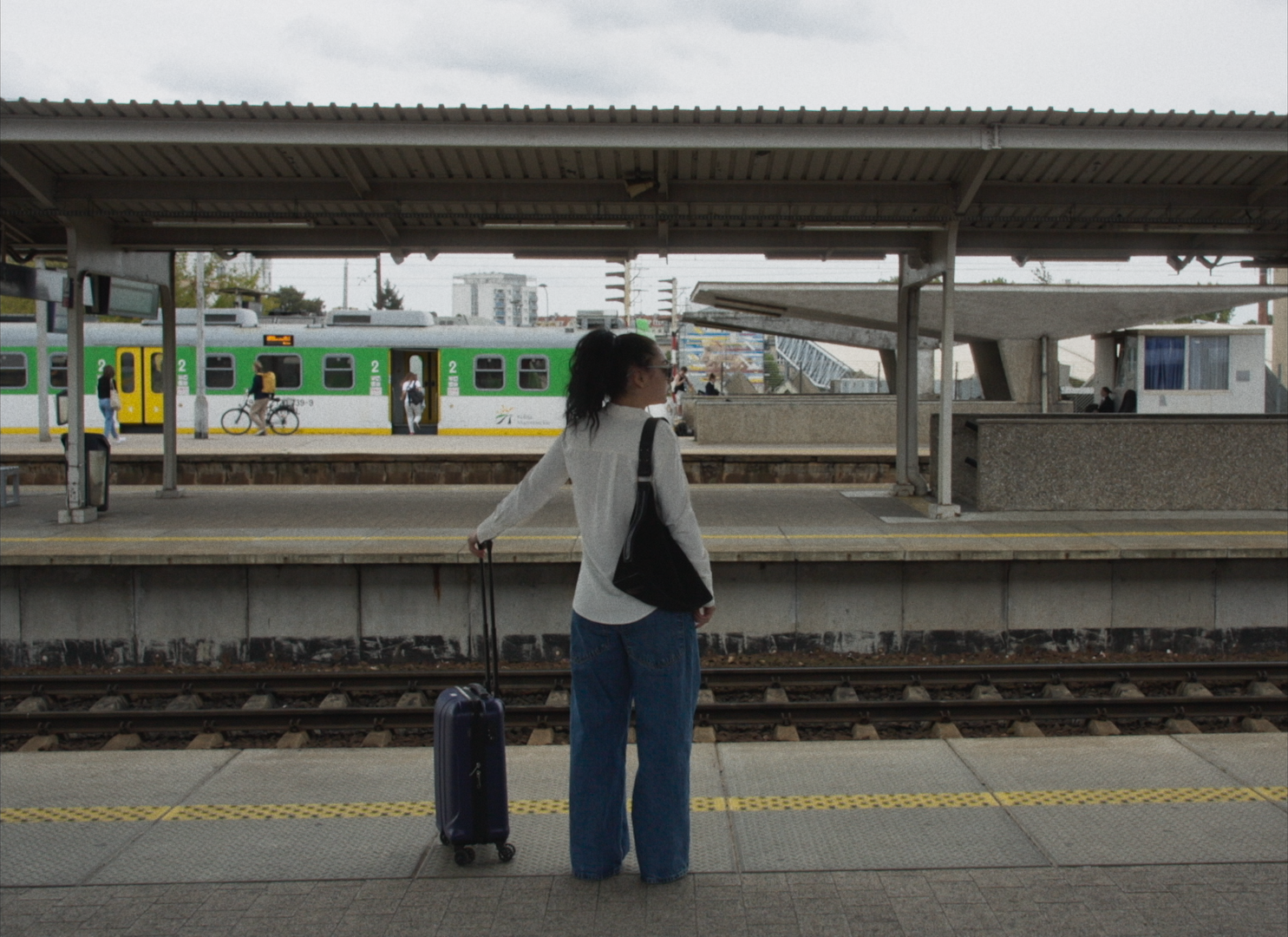
Location has always mattered in Pete’s work. His films often emerge from the place where they were made, rather than simply using that place as a backdrop. Erupcja is no different, but it also pushes that idea in a new direction.
When I asked him about Poland, Pete traced the connection back to the American Film Festival.
“There’s a really wonderful film festival there called American Film Festival that I first went to in 2021,” he said. “That was my first time in Poland, screening films there. I’ve now been there five years in a row.”
By 2024, Pete had moved to Poland and was living there. The way he described it was both funny and completely in line with his process.
“While living there and trying to become European, I was like, ‘I want to make a movie. This is where I am. Let this be the inspiration.’”
This simple phrase reveals a fairly radical orientation toward filmmaking. Many filmmakers start with a script and then search for the right place to execute it. Pete often seems to begin with the place, the people, and the present moment, then asks what kind of film those ingredients are trying to become.
“So as the different constellations are aligning,” he said, “it’s like, okay, there’s Jeremy. Okay, there’s Charli. Okay, there’s Poland. Okay, there’s Lena. Let’s bring in Will. What is that movie when you just put those ingredients together?”
That “constellation” idea may be the best way to understand Erupcja. It does not feel assembled from a master plan so much as drawn together by forces that only make sense once you step back.
There is also an irony here. Many of Pete’s films are contained, or at least shaped by, a small set of variables. Erupcja, however, takes one of the most recognizable pop stars in the world during the summer in which she is becoming even more recognizable and pushes the film outward. It is set in Poland, and it is not sealed off. They are outside. They are in clubs. They are in the streets.
It would have been easier to keep Charli indoors and control every variable. Instead, Erupcja moves toward the unstable thing. It lets the world press against the film.
Art, Collaboration, and the Orbit of Pete Ohs
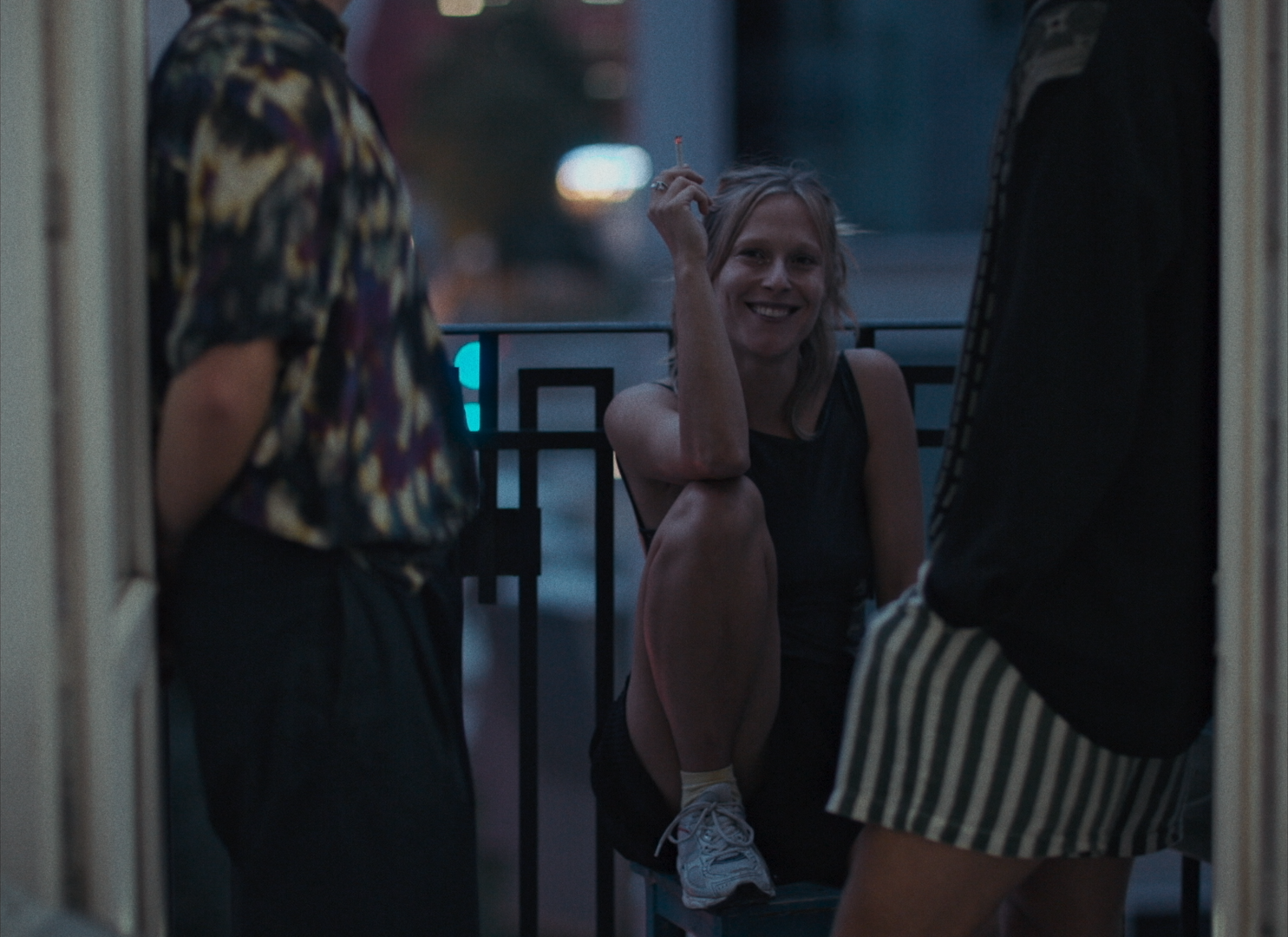
One of the things that fascinates me about Pete’s work is not just the finished films, but the people who keep returning to him. When you look at a film like Erupcja, the cast is immediately interesting. Charli xcx is there, obviously. Jeremy O. Harris is there, someone who has carved out his own unmistakable lane as a playwright and artist. Will Madden is there, a performer who has developed his own creative rhythm with Pete across multiple projects.
So what is it about Pete that brings these people together?
For Will, the origin story goes back to his brother, Danny Madden, and Beast Beast. Will told me that he met Pete at a party in Los Angeles. At the time, Danny was cutting his first feature, and Pete started coming over every day to help.
“Pete and Danny had met at some point earlier, and kind of knew each other,” Will said. “Pete was like, ‘Oh, come by and check it out.’ Then Pete just started coming over every day. I was living with Danny at the time, so Pete would come in at 10 a.m. and cut all day with Danny.”
Will got to know Pete through that process and through Beast Beast. Eventually, Pete began thinking about making a movie on his own.
“So that was our origin story, I guess,” Will said. “It was the pandemic, a lot of hanging out during the pandemic, taking road trips around. That solidified our friendship, and then that turned into another opportunity to work creatively together. Sort of our origin story, and more to come.”
For Jeremy, he had been introduced to Pete through Andrea Sisson at SXSW. They kept in touch, but the deeper creative connection came later, when Jeremy was working on his first documentary and needed a new editor.
“My friend was like, ‘There’s this guy I really like named Pete Ohs,’” Jeremy recalled. “And I was like, ‘I know Pete.’”
“What I didn’t know about Pete and I was that we had a sort of symbiotic brain match, or brain meld, while making this movie that made me feel like anywhere he wanted to go, I was down to be,” Jeremy said. “It’s been very fun to be welcomed into this wonderful little cult of Pete’s process that Will has been a part of so many times, and so many other people have been a part of.”
Pete’s work does not seem to attract people because it promises comfort. It attracts people because it promises participation.
That connects to the broader spirit of what Pete and Danny Madden have called the American Broke Wave, a collaborative filmmaking ethos built around making work with the people around you, sharing creative ownership, and refusing to wait until every industrial condition is perfect. Danny’s Downbeat, which was my favourite film of SXSW 2026, exists in that same creative orbit. Will appears in the film, and Pete served as an Editing Advisor to Danny.
The point is not that all of these films are the same. They are not. The point is that they feel connected by a belief that art is something you make with people, not something you hoard until the world gives you permission.
The Creation of Erupcja and Building on the Table of Bubbles
When I brought up the table of bubbles again, I joked that I love making Pete uncomfortable by heaping praise on him, especially with his mom sitting nearby. But I was curious how the process looks from Will’s perspective, especially after working with Pete more than once.
“For me, it always starts with a hangout where Pete says, ‘I got another idea,’” Will said. “It’s about this character, or that character. He has a little idea, a little sort of logline. Then he’ll be like, ‘And you’re this character.’ And I’m like, ‘Okay, go on…’”
That description sounds almost comically informal, but it also reveals how organic Pete’s process really is.
“It starts in this really little fetal stage of a few words put together,” Will explained. “Then over the months, the idea starts to percolate. Usually, it’s also wrapped around the location. It feels like that’s part of the inception. It’s like, ‘We’re going to be here, and now here’s the story.’ Or it’s symbiotic at the same time.”
Then the idea develops.
“So then the fetus grows,” Will continued. “Now it has little appendages growing out of it, which is like, ‘And then this actor’s involved,’ or ‘this collaborator.’ It slowly snowballs into half of an outline of a movie, and then a date where we’re going to shoot it.”
That is such a clear articulation of the table of bubbles in practice. It is not chaos for the sake of chaos. It is not laziness masquerading as spontaneity. It is a structure that leaves room for discovery. There is an outline, or at least half of one. But there is also trust that the film will become clearer as the people inside it begin to move.
For an actor, that can be freeing and terrifying. Will said that when there is no completed script to hold onto, he looks for something character-based that he can prepare, whether vocally or physically.
“It’s something I can tinker away with alone in my room and keep talking with Pete, and sometimes the other collaborators, in that early stage,” he said. “But really, then it’s hit the ground running. 99% of the work seems to come when we start shooting, or a couple days before we start shooting.”
Charli xcx, a Brat Summer, and Taking to the Street
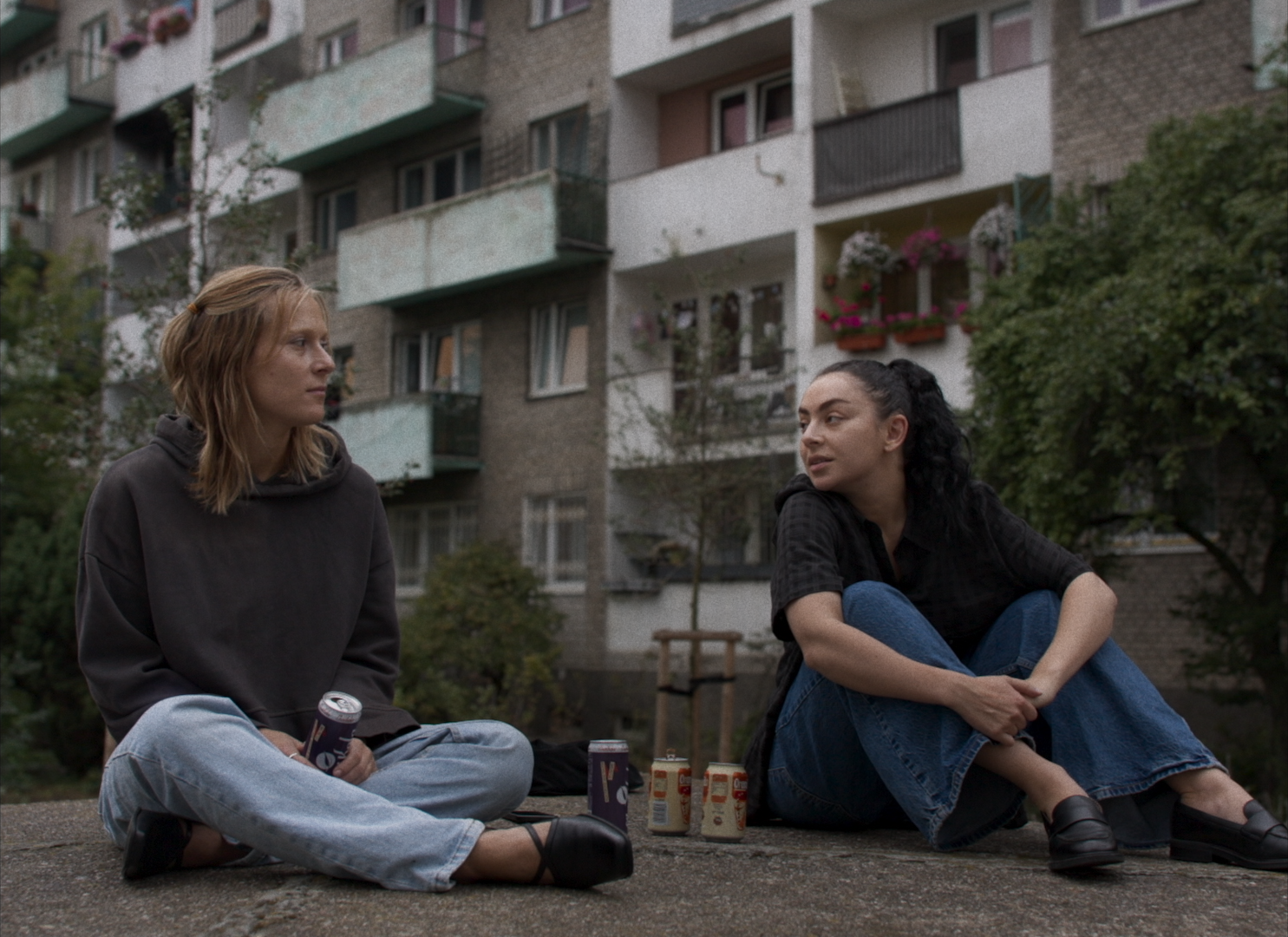
Of course, this sort of free-flowing openness becomes more complicated when one of your collaborators is Charli xcx during Brat summer.
I asked what it was like filming in public with her at that specific moment. Jeremy’s answer began with Pete’s process, which is exactly where it should begin.
“The thing that is really great about Pete’s process is that he’s so mathematical about it,” Jeremy said. “Every film up to this one has very much done a sort of deletion of chaotic variables, right? Because the process in and of itself already has a chaos inlaid in it, wherein we’re coming up with the story every day.”
Essentially, in past films, uncertainty existed inside a carefully limited space. Erupcja changes that.
“This one, because there was this chaotic new presence of a pop star, I think he decided to take that deletion out of the way and say, ‘Fuck it. Let’s just be in the world,’” Jeremy said. “There was already so much energy around her. I think it would have been crazy indoors or outdoors.”
The presence of Charli did not make control easier. It made control almost beside the point. Instead of hiding from that energy, Pete allowed it to become part of the film.
“I think that became this really fun thing where I saw his aperture expand once we were in the streets and not just in a house, and not just in one location,” Jeremy said. “I saw his curiosity find new ways to shoot things that hadn’t been opened to him before.”
That is one of the most interesting ideas in the entire conversation. Charli’s presence did not simply bring attention to the film. It changed the way the film could move. It forced the process outside. It pushed the filmmaking toward a new kind of exposure.
And by that point, Brat was everywhere.
“The thing that was most surprising to me is that the only song on the radio was ‘360,’” Jeremy said. “It felt like everywhere you were, it was in every TikTok, every meme. Everyone in Poland knew that she was there.”
But that recognition did not derail the film. Jeremy described Polish fans as respectful, often waiting until a scene was finished before asking for a photo.
“Because they knew she was there filming a movie, and that country has such respect for cinema, they also would always let her film her scene before they interrupted it,” he said. “People would see us at a nightclub filming a scene, and then politely wait in line, watch her act, not take photos. Afterwards, they’d be like, ‘Hi, I’m so sorry. Can I?’”
Charli, he said, handled it perfectly.
“Charli also, the consummate professional, is like, ‘All right, thanks.’ She has her glasses, takes the picture, has the pose, and meets all these people. Then we were able to go about our day.”
The fans found out quickly. Pete explained that Charli posted a TikTok of herself walking through the streets of Warsaw. She did not say where she was, but people immediately started doing what he described as “that Geoguesser thing,” recognizing the country and then the exact street.
“Immediately, the Polish internet and the Polish forums were like, ‘Okay, she is in Mokotów? She is on this street,’” Pete said. “They knew exactly where she was.”
There was never an official announcement that they were making a movie. Charli, in Pete’s words, “let the cat out of the bag kind of right away.” But again, because of her relationship with her fans, it did not become a real problem.
This all became part of the strange real-world pressure around the film.
Steady Rob
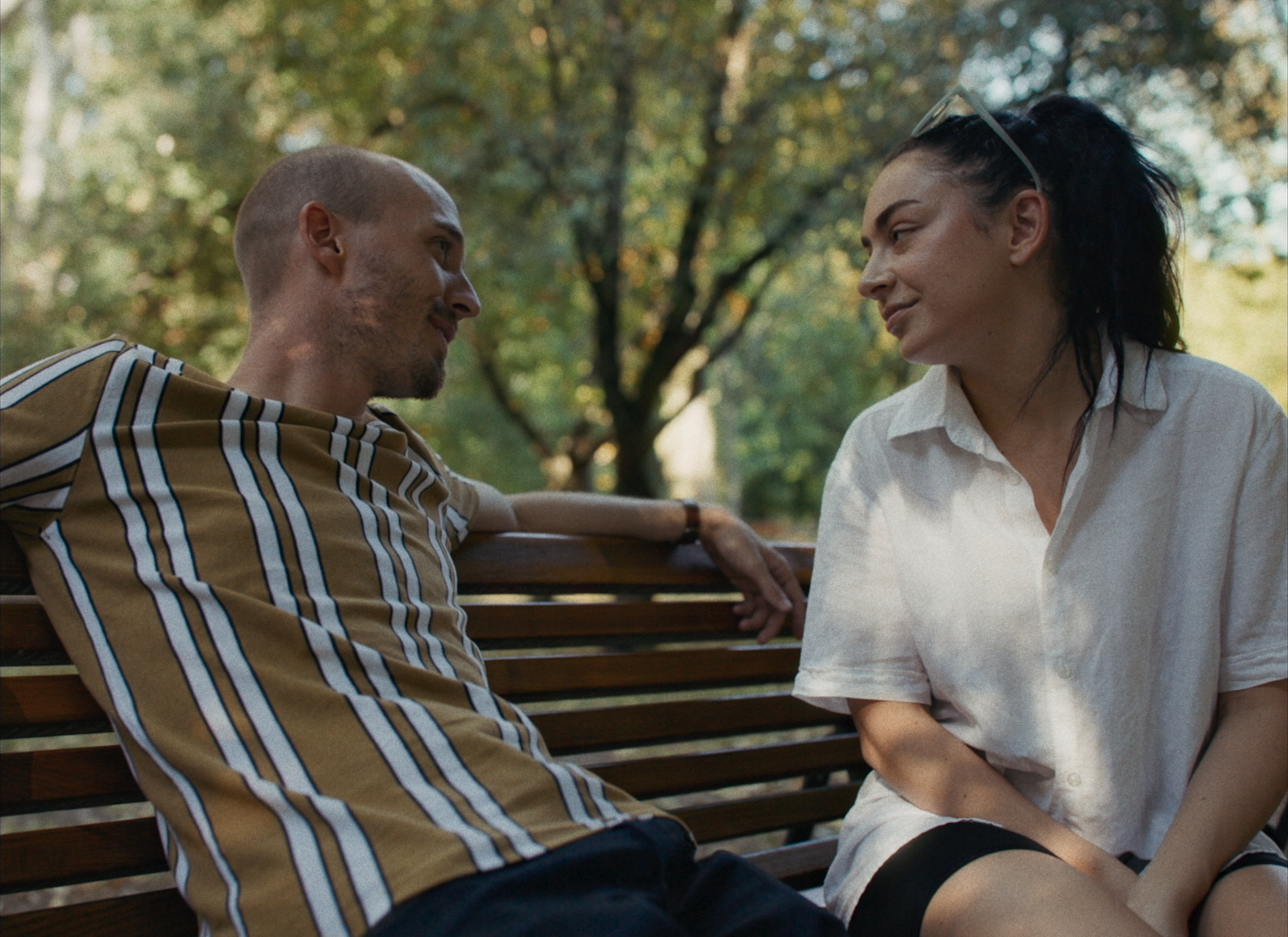
If Charli and Lena represent the pull of eruption, Will Madden’s Rob represents something quieter, steadier, and maybe easier to undervalue.
When I asked Will about building the character, he described the challenge of working without a traditional script. Normally, an actor has the full text. They know the story, the structure, and the function of their character inside it. Here, Will had to work from a different kind of anchor.
“In this, we didn’t have the whole text and the whole story and narrative, so we were kind of like, ‘Well, what’s my point so far at the beginning of the movie?’” Will said. “He’s a good choice of a boyfriend, and he’s steady. He’s Rob. He’s Steady Rob. He’s rock steady.”
That became the note.
“We’re telling a story about someone who’s throwing away a good thing to explore if there’s any more juice to squeeze out of her partying and immaturity before she gets all her shit together,” Will said. “So it was really the direction and the mantra, or the note, was: Steady. Rob is steady. Rob is steady.”
He described it as a useful note for acting in general: relax, calm down, breathe, be steady.
“When you don’t know what you’re shooting the next day or the next hour, it really is just in front of the camera and just with the other actor,” he said. “It’s acting distilled into breathing and being and listening. So it’s just like, Rob is steady. That was the anchor that I had to work with.”
At the table, I told Will how good he is in this film. I stand by that. He is one of those actors who can make us feel the impact of their silence. Rob works because Will does not overplay the hurt, the goodness, or the stability. He simply lets you understand what is at stake if Bethany chooses the eruption over the life Rob is offering her.
This is important, of course, because Erupcja is not only interested in the person chasing chaos. It is also interested in the person standing close enough to be hurt by it.
Main Character Energy
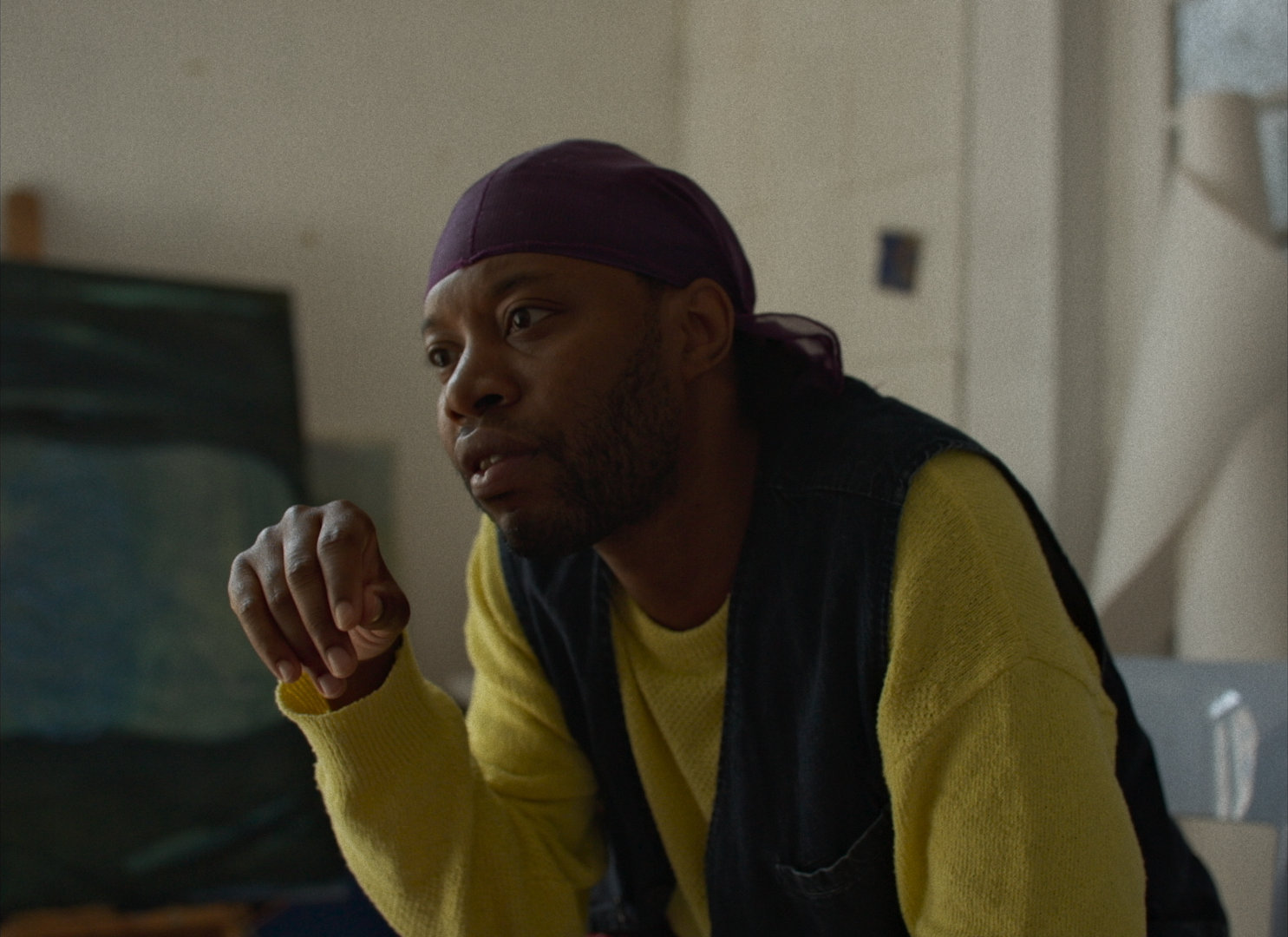
Jeremy connected this directly to one of the film’s most interesting emotional ideas: the question of being the main character of your own life.
“It’s sad that Charli and Lena can’t be here,” he said. “One of the things I really liked about some of the conversations we were having was that there is this natural impulse in your 30s to say, ‘Actually, I want to be the main character of my life again.’”
That is a deceptively simple idea, but it opens up the film in a major way. We talk about “main character energy” now as a joke, as a meme, as a kind of self-conscious performance of confidence. But what does it mean to stop being the main character? What does it mean to build a life with someone else? What does it mean when the shared life starts to feel like a compromise rather than a choice?
“So much of deciding to have a partner is deciding that you aren’t the main character anymore,” Jeremy said. “The life you’re building together is the main character.”
That line cuts right to the centre of the film. Nel is caught somewhere between the intoxication of selfhood and the maturity of shared life. Bethany, meanwhile, is moving in the opposite direction.
“I think one of the things that’s really interesting about this movie is that Nel is on a journey of deciding that she’s done having main-charactered it,” Jeremy said.
“Bethany, in a way, is on a Nora-from-A Doll’s House journey of being like, ‘Actually, I don’t want to be in a house. I don’t want to be in a house with a dog. I want to be out in the streets,’” Jeremy said. “Sadly, she ends up in her parents’ house. But there’s a really fun journey there that I also think was really fun to explore and to get from these girls, which is this other insight into what it means to be 30 when we all are deciding different versions of domesticity.”
That framing helps clarify why the relationship between Nel and Bethany feels so compelling. It is not just attraction. It is not just escape. It is two people recognizing different forms of instability in each other. One may be moving toward domesticity. The other may be running from it. But both are negotiating the fear that life is becoming smaller than they imagined.
Ultimately, this leads Erupcja to become a film about what happens when the life you are building begins to compete with the life you still imagine for yourself.
What’s the Joke?
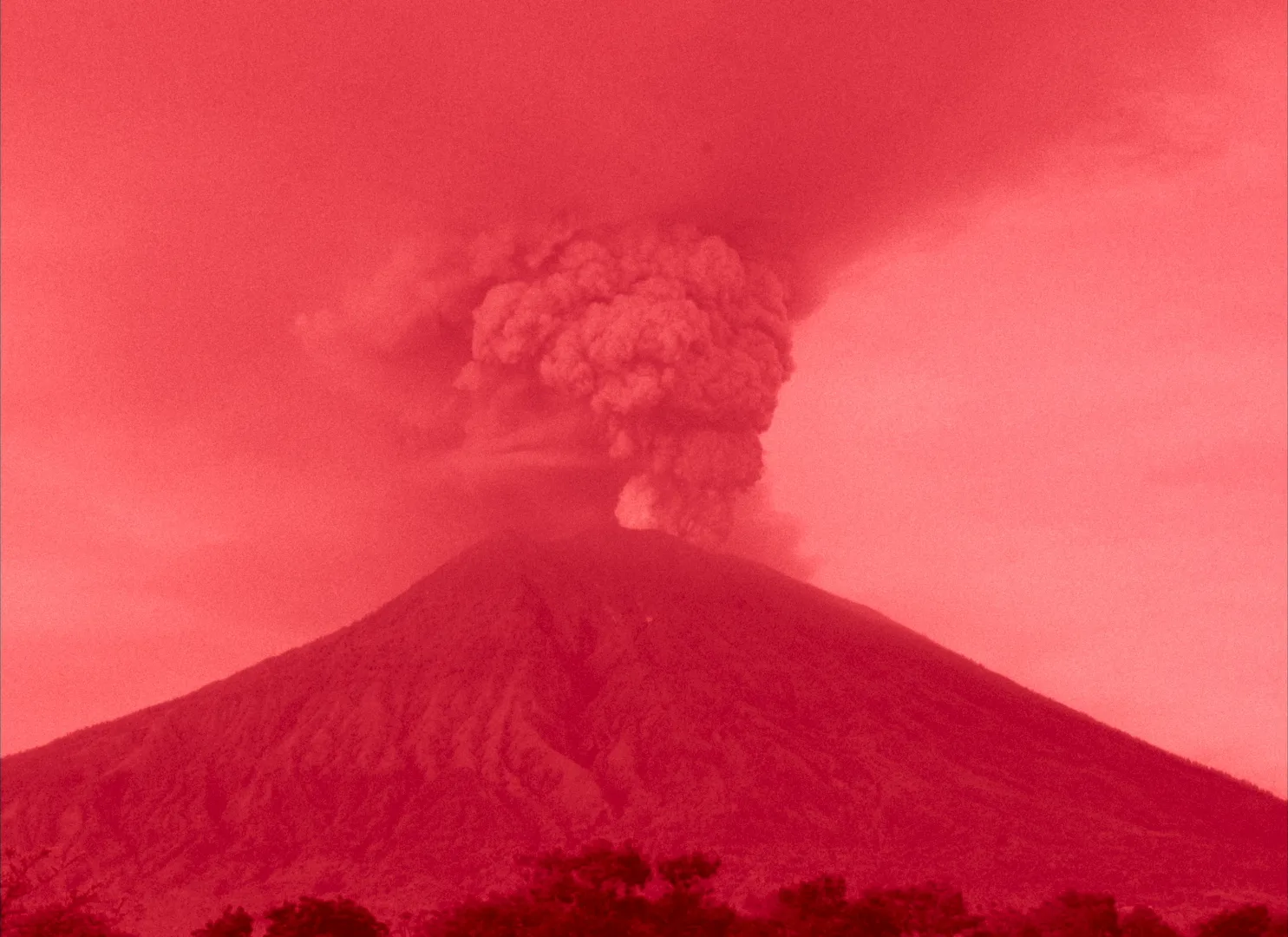
There is one line delivered by Jeremy’s character in Erupcja that lodged itself in my brain almost immediately: “What’s the joke? Volcanoes kill people.”
It is funny, blunt, and incredibly pointed. It punctures the romance of the volcano metaphor. It reminds you that an eruption may look beautiful from a distance, but the people nearby do not experience it as an image. They experience it as damage.
When I asked Pete about the origin of that line, his answer brought us right back into the actual mechanics of his process.
“We were writing that scene that we were about to shoot in 20 minutes,” he said. “Like, okay, we’ve got to shoot the scene in 20 minutes. What’s the dialogue going to be?”
They were sitting around a table, working through what they knew. The scene involved the women talking about how they met, and the idea that when they come together, volcanoes erupt.
“How I make movies is really collaboratively, where I’m writing it in this moment, and everyone is sitting around the table with me,” Pete said. “Frequently, I’ll write a line and then look to the person who plays the character who would respond to that. So I say the line and I’m like, ‘What do you say to that?’”
Pete looked at Jeremy and asked what Claude would say.
“And you were like, ‘What’s the joke? Volcanoes kill people,’” Pete said. “And I was like, ‘That’s the line. That’s perfect.’”
It is perfect because it refuses to let the metaphor stay safely abstract. Much of Erupcja is about the human need to attach meaning to our own existence. If we come together and a volcano erupts, then surely that means something. Surely that means we are unique. Chosen. Connected by forces larger than ourselves.
But volcanoes erupt all the time. And when they do, people get hurt.
That does not make the need for meaning foolish. It makes it human. We move through life, check boxes, make plans, build relationships, and then still find ourselves drawn to the thing that makes us feel singular. Sometimes that thing is art. Sometimes it is love. Sometimes it is chaos masquerading as destiny.
The danger is forgetting that our search for meaning can lead to the destruction of those we love.
Scripting in Real Time
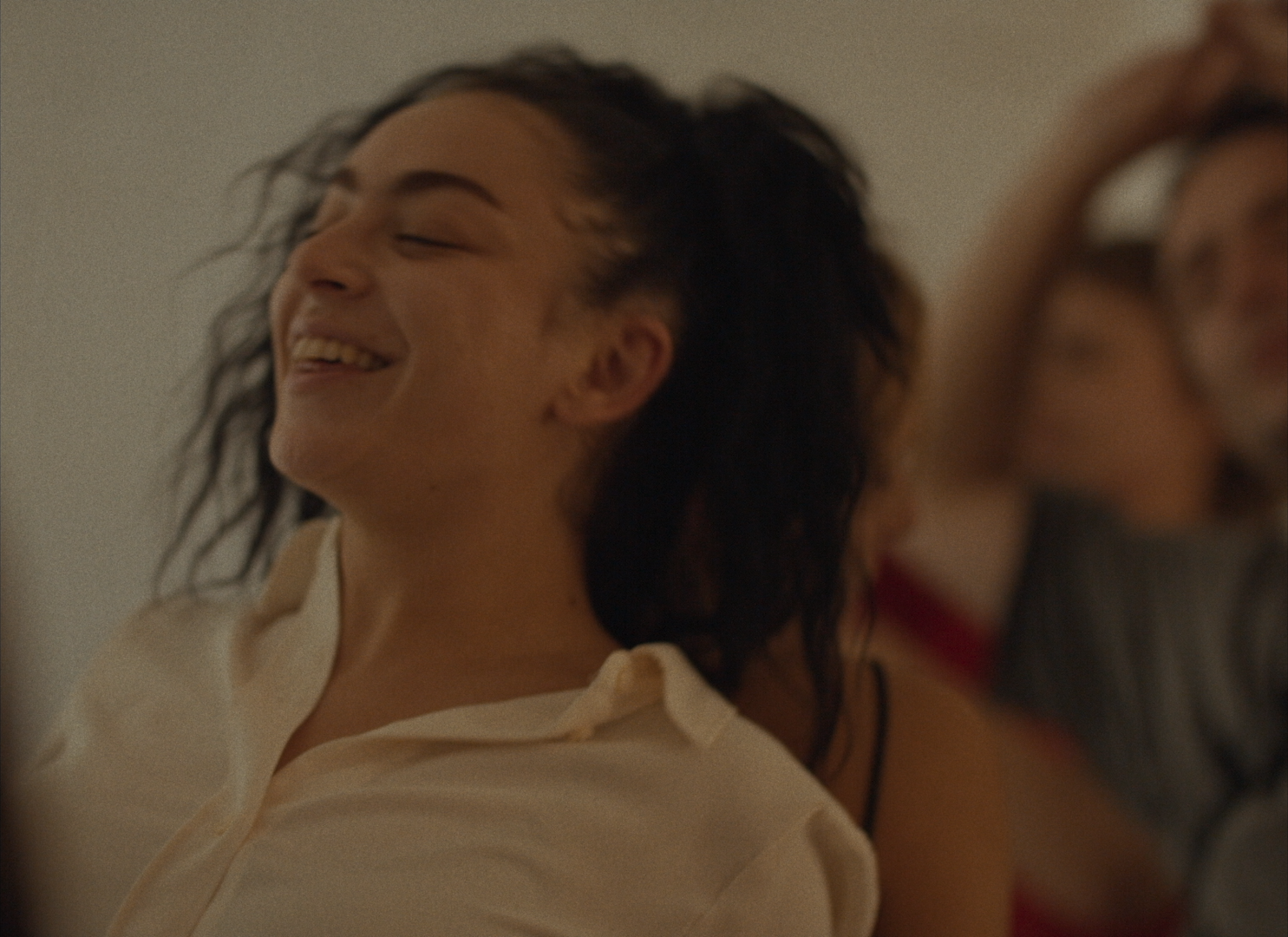
After Pete explained the volcano line, I asked him whether he was literally writing these scenes in the Notes app.
The answer was yes.
“It’s literally in the Notes app,” Pete said. “Every scene is a note in the Notes app. I text the note to the group text with the other actors. They’re then able to open the note up on their phone. They’re able to watch it get live-updated. They’re able to edit it too, add things to it.”
Jeremy jumped in with the only appropriate response.
“We love Apple,” he said.
Then, with the exact mix of sincerity and absurdity that makes talking to Jeremy so enjoyable, he added: “Collaborative Notes — they really tore with that feature.”
It is a funny moment, but it also distills the entire process. Collaboration can sound lofty when people talk about it in broad terms. Everyone says they collaborate. Everyone says they listen. But in Pete’s films, the collaboration is practical, immediate, and almost aggressively unromantic. It is a Notes app. It is a group text. It is someone asking, “What do you say to that?” twenty minutes before the scene is shot.
That does not make it less serious. If anything, it makes the process feel more alive.
The Perfect Ending
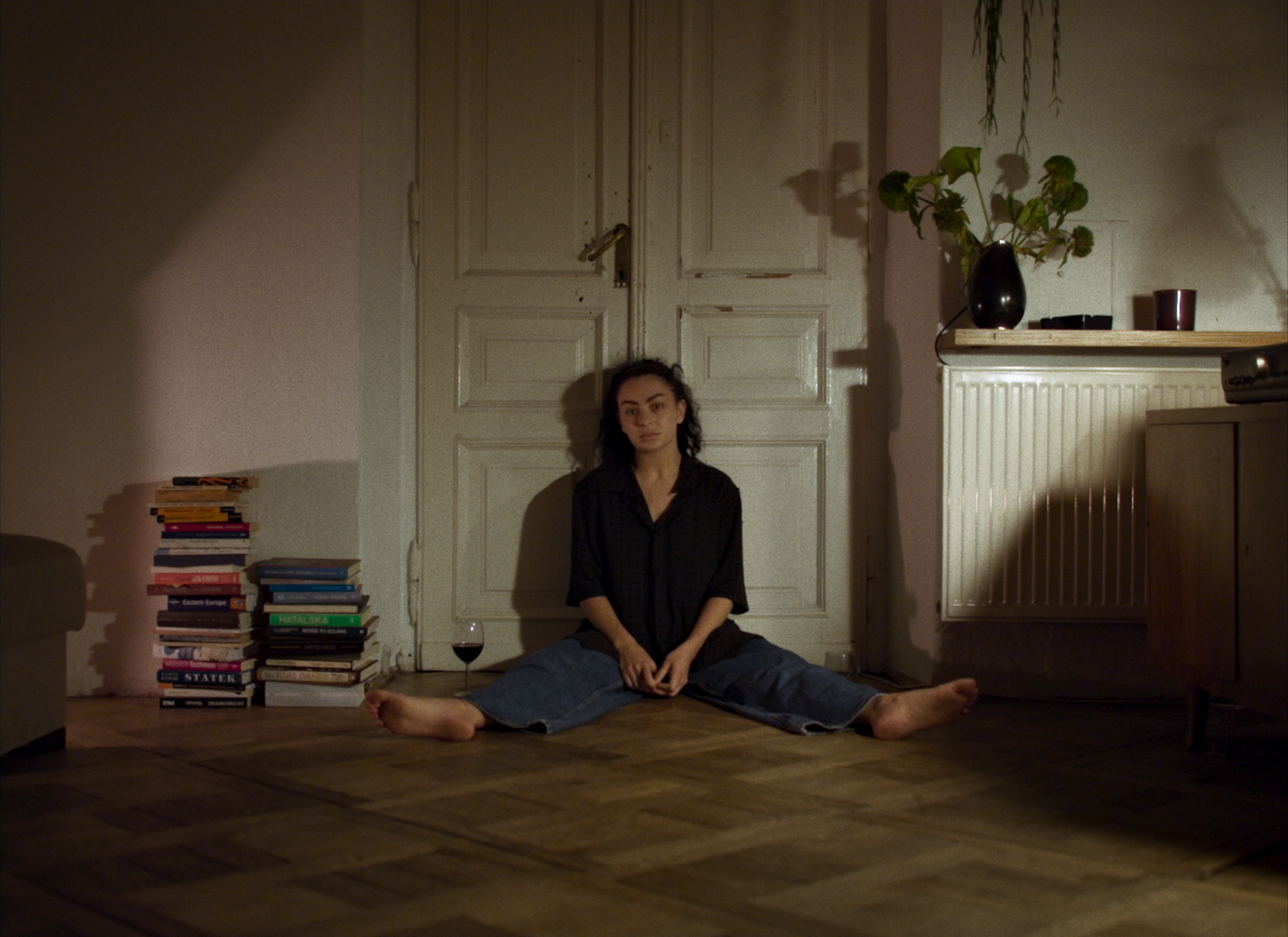
Near the end of our conversation, I asked about the Lord Byron poem “Darkness,” which appears prominently in the film. Like almost everything else in the Erupcja story, it arrived through coincidence, was placed in the back pocket, and then returned exactly when it was needed.
“Early on in discussing the movie with these actors, we knew that there were these characters,” Pete said. “We knew that there was a volcano involved. We knew there was some romantic energy happening. Charli texted me this image of this Byron poem.”
Charli had heard the poem and felt it connected to what they were talking about.
“She was just like, ‘I just heard this poem, and it seems like this is connected to the stuff we’re talking about,’” Pete said. “I read it and was like, ‘Oh yeah, that’s interesting. That’s cool. I don’t know how that fits into the movie, but okay, great. That’s in our back pocket.’”
Then he forgot about it.
That is one of the things I love about Pete’s process. The back pocket matters. Not every idea has to be understood immediately. Some things just need to be kept nearby until the film is ready for them.
The poem returned on the last day they had with Charli. They were preparing to shoot a scene with Lena and Charli, with Nel and Bethany, in Nel’s apartment. Because the film was being shot chronologically, they knew where they were in the story. But Pete worried that they were simply going to shoot another scene of two people talking somewhere.
Jeremy pushed back.
“It needs to be something special,” Pete recalled Jeremy saying. “This is Charli. This is Charli xcx. Let’s do something.”
They went for a walk around the block during dinner. They were going to shoot the scene in two hours. Then Pete remembered the poem.
“I was like, ‘That poem. Remember that poem?’” Pete said. “And you were just like, ‘Yeah, that’s it.’”
He went back to dinner, sat next to Charli, and asked whether she remembered the Byron poem she had sent him.
“I’m like, ‘What if Bethany recites the poem?’” Pete said. “She was like, ‘Right, that’s cool. You want me to memorize it?’ And I was like, ‘Can you?’ She was like, ‘I’ll memorize it.’”
Then she left the table. Pete does not know where she went. Maybe the bathroom. Maybe around the block. But two hours later, they shot the scene, and she had it memorized.
Jeremy added another coincidence. He and Charli had been at GQ Heroes at Soho Farmhouse in Oxfordshire, where the cabins had radios playing inside them. They ran into each other, talked about partying and making the movie that summer, and then Charli went into her cabin.
“The Byron poem was playing, which is where she first heard it,” Jeremy said.
That is almost too clean. Too narratively convenient. If you wrote it into a movie about coincidence, someone might tell you to pull it back.
But Jeremy framed these coincidences beautifully, through his understanding of Pete.
“He doesn’t believe in coincidences meaning anything, except potentially that it means you’re on the right path,” he said of Pete. “I think the accumulation of coincidences that led to this movie feels like we were on the right path. The universe wanted it to happen.”
Then came one last layer.
What Charli recites in the film is just the first page of the poem, because that was the version they had from Wikipedia. That is all they looked at. That is all they used.
“As we were doing it, Will was like, ‘You know it ends mid-sentence at the end of the poem? You’re ending in the middle of a sentence,’” Pete said.
Later, as they were finishing the movie and figuring out the ending, Will had an idea: what if Rob says the rest of the poem?
Pete finally looked at what came next.
“Four lines later, it says ‘volcano,’” he said. “I was like, ‘Oh my God.’”
Then, right as our conversation was ending, Will recited the line from memory: “Happy were those who dwelt within the eye / Of the volcanoes.”
There could not have been a better way for the conversation to end.
That is what I keep returning to with Erupcja. Charli xcx may be the reason many people first pay attention to the film. That is understandable. She is the spark. But the real story is what the spark reveals: a filmmaker whose process attracts people not because it promises safety, but because it promises possibility.
As an extension of this, Pete recently shared on Instagram that he had made several clips (and other materials) from the film available to anyone and everyone (literally, on Dropbox), encouraging them to make their own edits with the footage. To make their own art. To explore the project in new and unique ways.
That is what connects Erupcja back to the table of bubbles, to the American Broke Wave, to Danny Madden’s Downbeat, to Will’s road trips and Jeremy’s brain meld, and Charli walking into a bar at exactly the right time. It is all part of a larger belief that art does not have to be locked behind perfect conditions. It can be made with friends, in motion, with uncertainty still attached.
As a creative, I find that deeply inspiring. It makes me want to pick up a camera and shoot something. Not because the work will be perfect, or because the conditions will be right, but because sometimes you just have to get people around you and create something. You can sort out the details in your Notes app later.
Erupcja is now playing in select theatres.


