


Yorgos Lanthimos Uses the Camera to Create Perpetual Unease in Bugonia
What is Bugonia About?
Bugonia finds Yorgos Lanthimos doubling down on composition and, in tandem with Director of Photography Robbie Ryan, breaks certain cinematic “rules” to help externalize psychic unease. Coming off Poor Things and Kinds of Kindness, this is a colder, more austere mode.
It is a loose reimagining of the 2003 Korean film Save the Green Planet!, but to say that it is a true remake would not be entirely accurate. The original Korean film did not do well when it was released, but in the two decades that have followed, the perception of the film has shifted, and it is generally considered to be a great work with a clear place within the Korean cinematic landscape. Over the years, there have been several conversations amongst producers about whether an American remake would make sense. The idea ended up with Ari Aster, who passed it along to Will Tracy, who ended up writing the screenplay (he was one of the lead writers on Succession), and then that version of the script was brought to Yorgos, who contributed his own unique insights. Interestingly, Yorgos had never seen the original, so he brought much of his own palette to the film.
The film follows two conspiracy-obsessed men (Jesse Plemons and Aidan Delbis) who kidnap Michelle Fuller (Emily Stone), a high-powered pharmaceutical CEO, convinced she’s an alien intent on destroying Earth. As she’s held in their so-called “Human Resistance” bunker, the standoff spirals into a darkly comic psychological duel over proof, power, and belief. In short, the film’s images put viewers on edge by design—using composition, exposure, and camera placement to make unease felt.
Shooting Bugonia on VistaVision
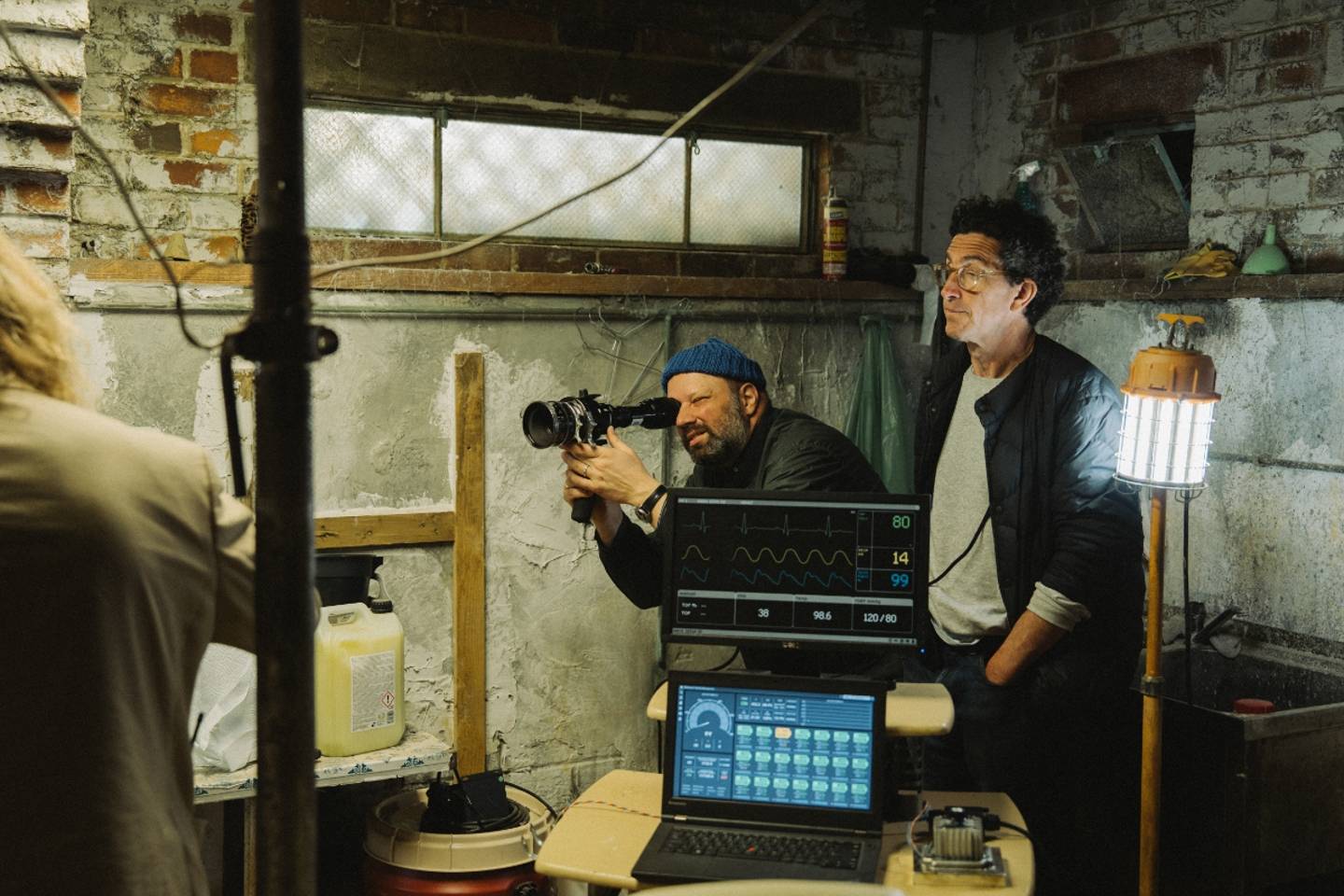
The film was shot on VistaVision (a horizontal 8-perforation 35 mm film format prized for image detail; also used on Brady Corbet’s The Brutalist and Paul Thomas Anderson’s One Battle After Another), which is undergoing a modest renaissance. Still, they are not easy to operate because the cameras are heavy—some kits weigh as much as 200 lbs, depending on the exact configuration. Because they are also noisy, it has historically been difficult to sync audio; with improved methods in post-production, this is now more feasible, which in turn helps explain the increase in use in the last couple of years.
Utilizing Short-Siding in Bugonia, with DP Robbie Ryan
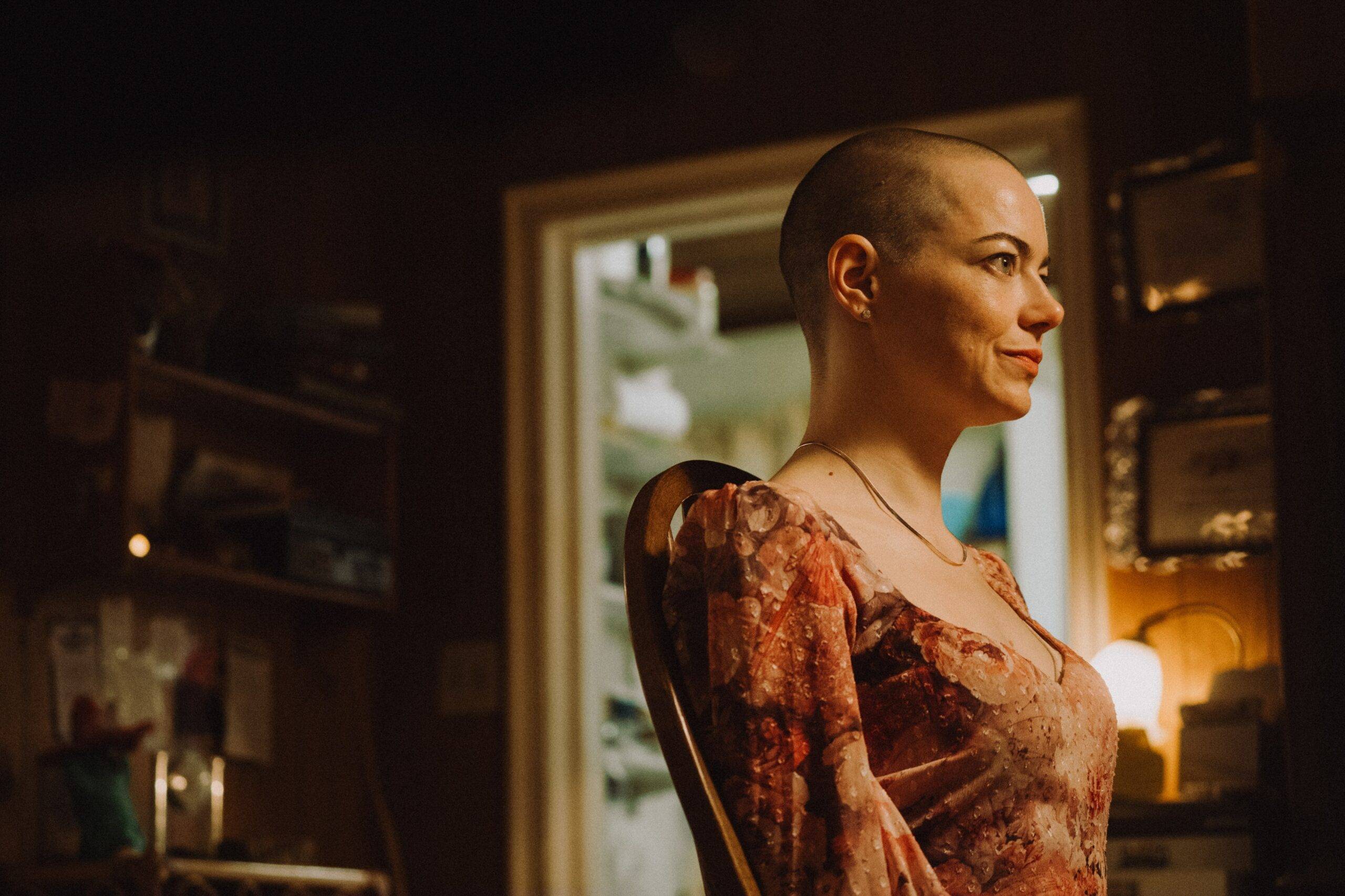
Working with DP Robbie Ryan, Lanthimos frequently short-sides speakers—placing them toward the ‘closed’ edge of frame, i.e., reducing look-room (the space in front of a subject’s gaze)—to subliminally wrong-foot dialogue. It breaks film-school convention (look-room), but the discomfort is the point. While it’s often discussed in documentaries and talking-head footage, Yorgos and Robbie Ryan use this in Bugonia during conversations to create a sense of unease, thereby signalling that something is wrong, something is off. You see it in Teddy’s conversations with Michelle and also his cousin Don (Aidan Delbis). It’s unnerving in these contexts. The conversations occurring at this time are off; they are uneasy, and this visual framing expands upon those feelings.
Yorgos Lanthimos and Robbie Ryan Breaking Other Visual “Rules”
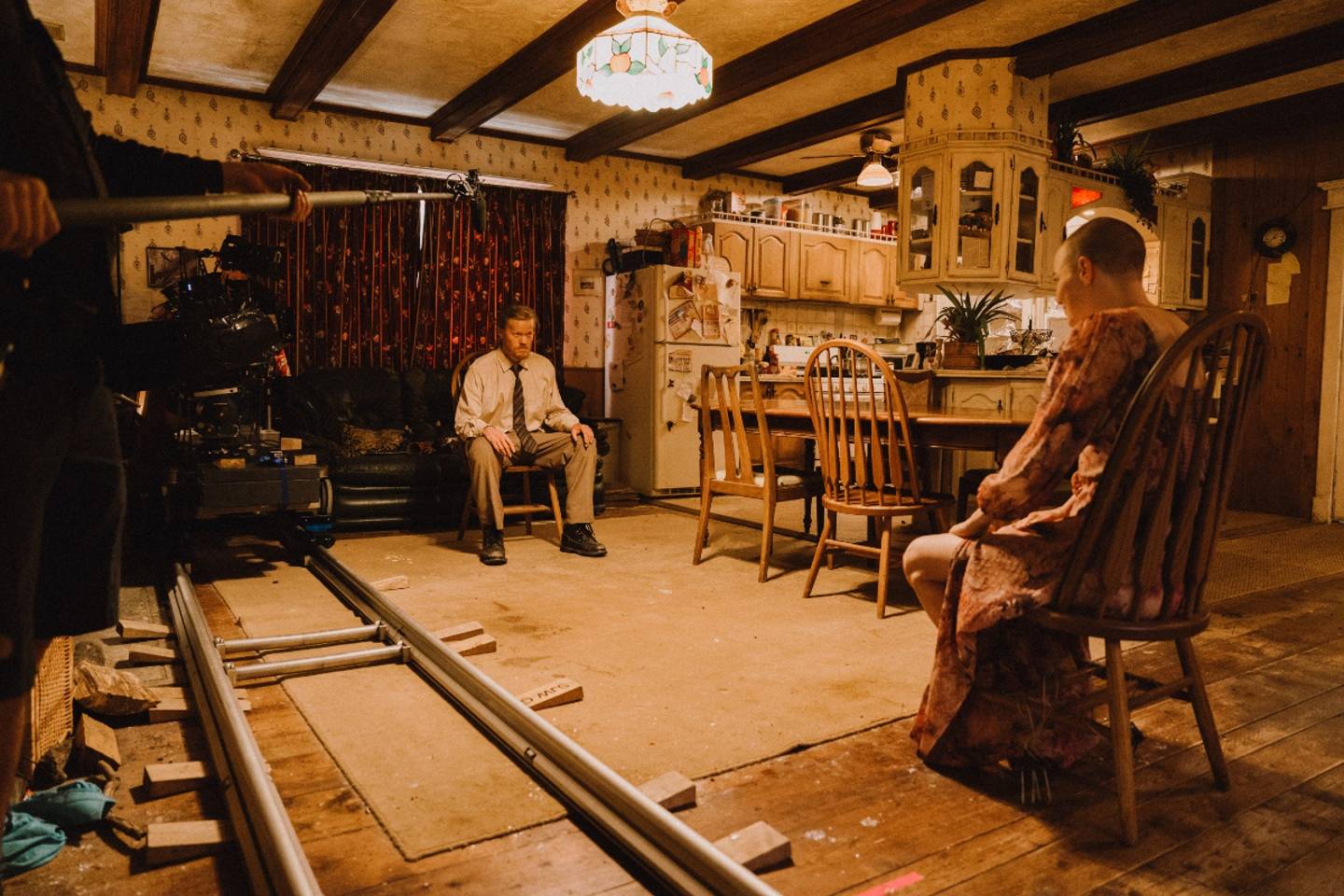
Some other things from a visual perspective that go against the grain of what you would be taught in film school: there are scenes at Teddy’s house, specifically where the windows in the background are blown out, which means that the highlights are overexposed. We lose some details in the highlights. Normally, you are taught to expose for that first and then light your subject so that everything is perfectly exposed. But Yorgos does not rely on a significant amount of artificial light. He tends to lean on natural lighting, which means that it is almost inevitable that these windows will be blown out.
It is a characteristic instance of function over style. Teddy is living in a state of disarray. If everything were perfectly exposed artificially, that wouldn’t make sense from a tonal perspective. Details like this show that you can break rules if you know what you’re doing and why you’re doing it. And here those clipped highlights echo Teddy’s domestic destruction—order blown out to white—so the “rule break” contributes to our understanding of the character.
Redefining the “Low Angle” in Bugonia
Something that Yorgos likes to employ is a tremendous number of low-angle shots. The low angle is, of course, not uncommon in filmmaking, but most often when we see these low angles, they’re paired almost exclusively with a medium or a tight shot of a subject to have that subject look more imposing or powerful because we, the audience, are looking up toward them. Yes, sometimes Yorgos does use those low angles on medium or tight shots in this way, but he also uses them a lot on wides, which is far less common.
In Bugonia, it elevates this sense of unease — something always feels off-kilter. When the camera is set at the average human eye line, that feels the most natural for the viewer. By bringing the camera down on these wides, it does not necessarily imply a particular power dynamic; rather, it tends to bring a sense of discomfort, which is classic Yorgos.
Using Lines and Symmetry to Juxtapose the Worlds of Teddy and Michelle
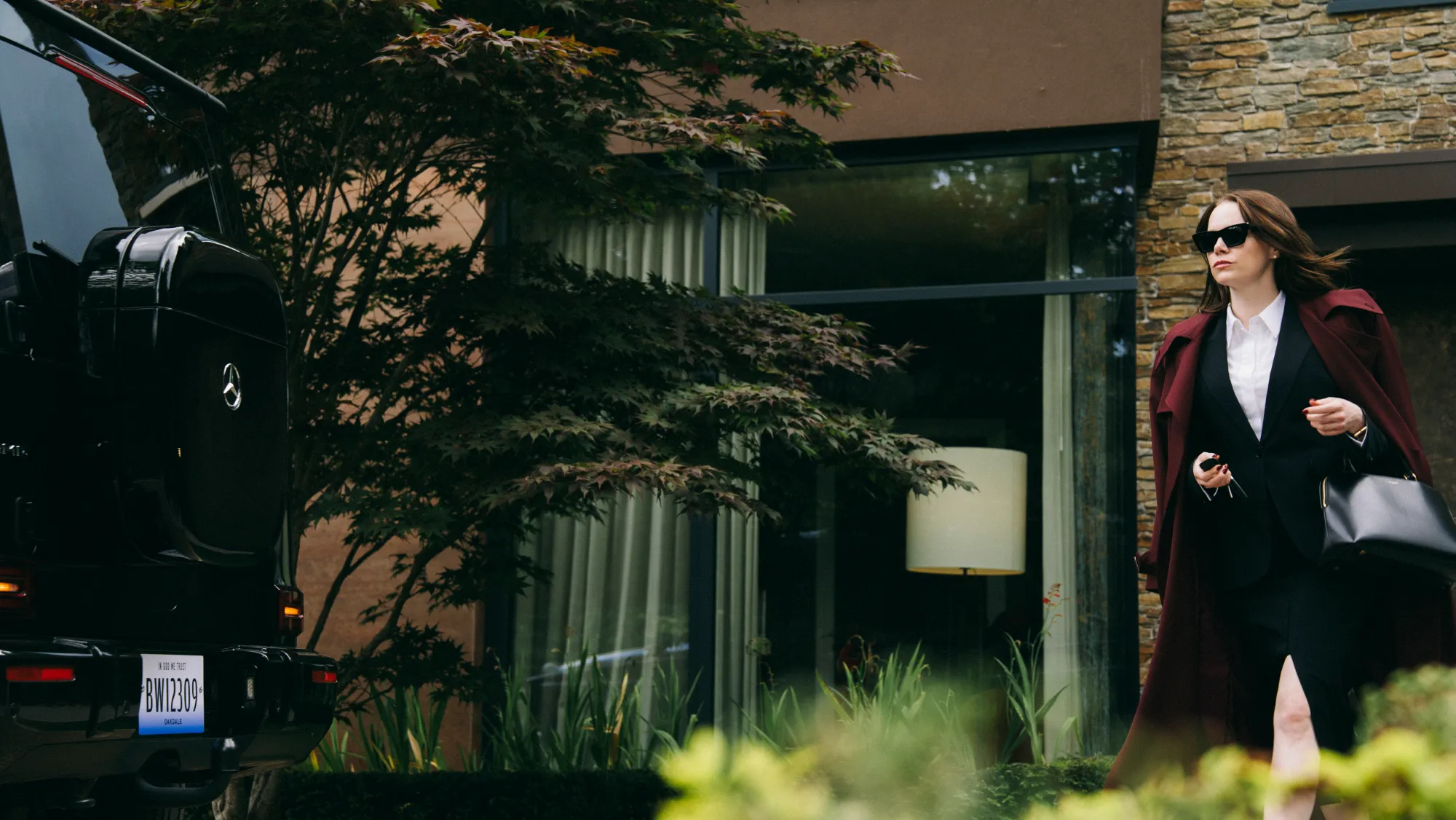
Also notable is the use of lines of symmetry or lack thereof. In the early scenes with Michelle, we have beautiful leading lines that are almost perfectly symmetrical, creating frames within a frame, perfectly parallel to one another—this sense that everything is put together perfectly. This is directly contrasted with scenes with Teddy, where these lines frequently converge in non-symmetrical ways or break perfectly vertical, perpendicular lines, not creating perfect frames. Ryan and Lanthimos so subtly, yet effectively, are able to convey the difference in power and control between these two characters in this way, thereby reinforcing the contrast in their worlds.
Lanthimos’ Approach to Camera Movement and Stillness
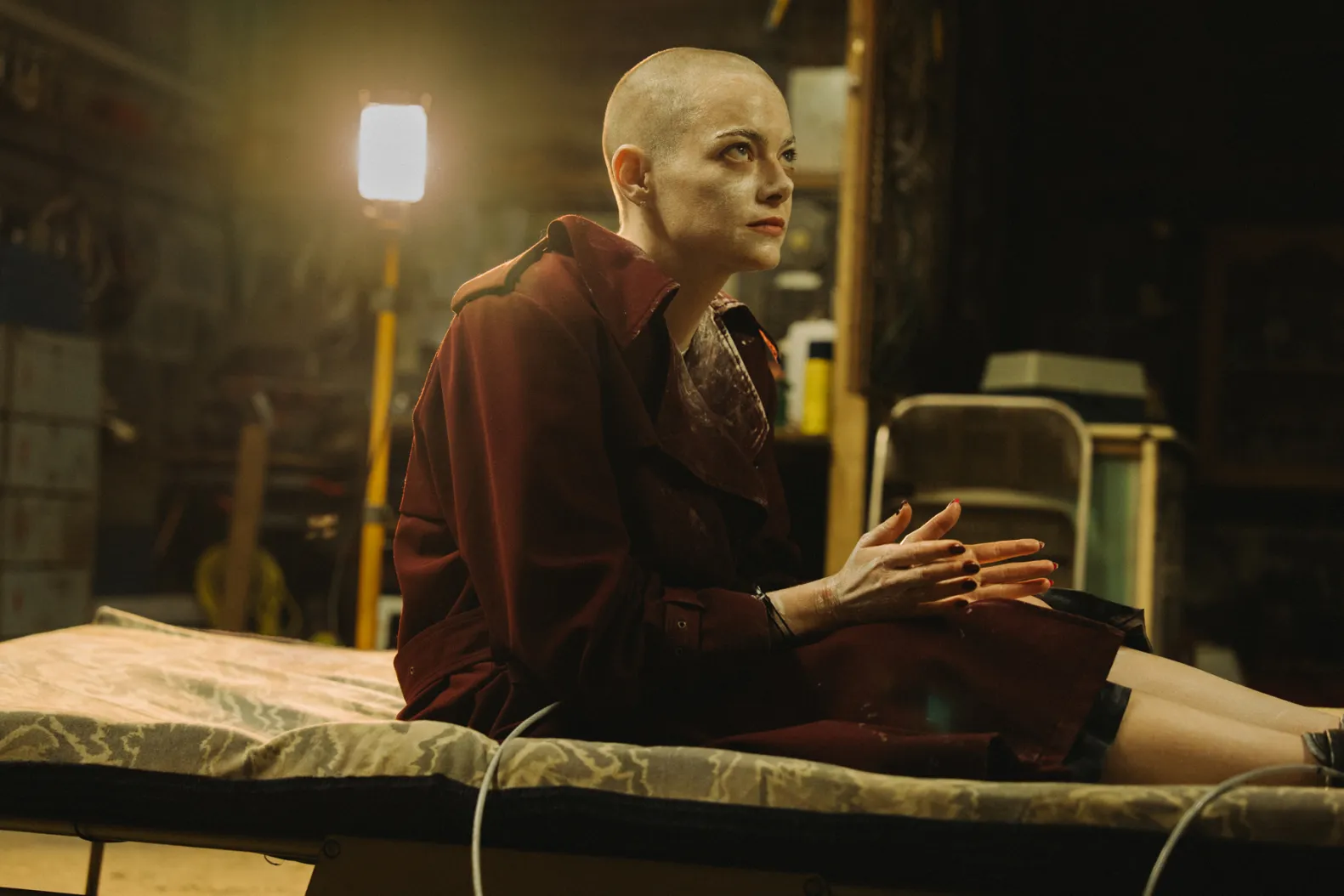
Similarly, Lanthimos believes that camera movement should correspond almost directly with the movement of the characters in frame. Early in Bugonia, when we see where Michelle Fuller lives, there are several wide and expansive shots showing the scene with moving cameras. Later, as much of the film is moved into Teddy’s basement, these cameras shift to static cameras with very limited space. For Lanthimos, when characters are moving, the camera should be moving as well, and when characters are still, the camera should also be relatively still. Because, in these basement scenes, Michelle is trapped in place, the camera remains “trapped” as well. It ends up feeling almost like a chamber piece at times: straightforward, single location, with restraint in cinematography.
Is Bugonia Worth Watching?
While not Yorgos Lanthimos’ best film to date, it is a solid entry in his filmography and brings his quintessential “weirdness” back to the big screen. As always, Emily Stone and Jesse Plemons excel in their lead roles, and, at the end of the day, Bugonia is sure to spark interesting discussions about human nature and whether we are dooming ourselves to destruction.


