


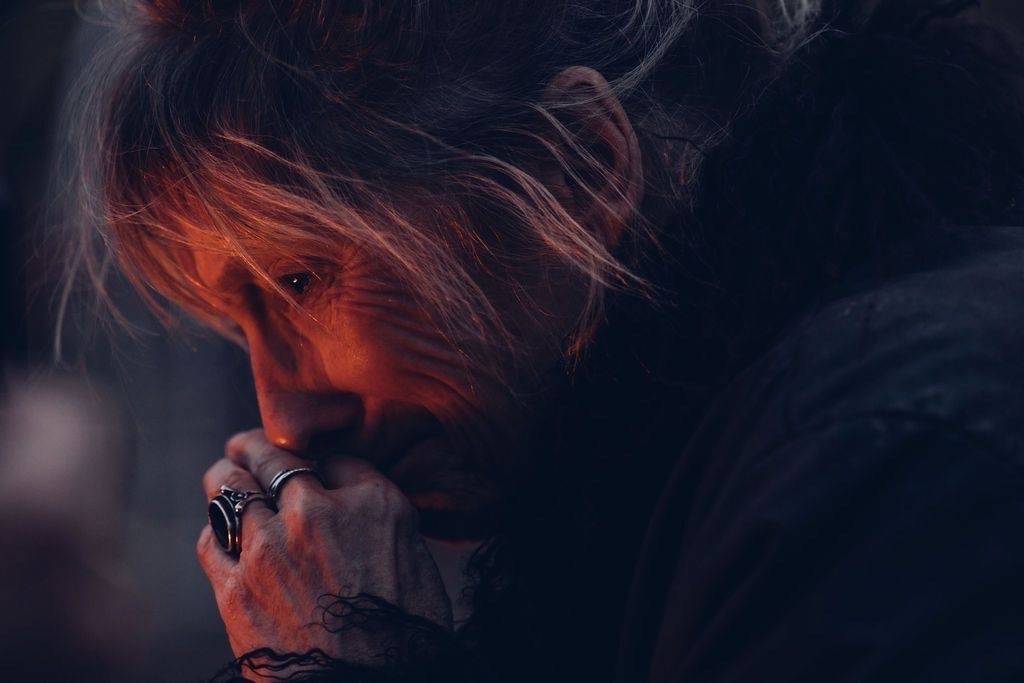
Still from THE WELL (2025) | Courtesy of Fantasia Festival
The Well is a post-apocalyptic thriller that maintains a tight scope with a focus on each character as an individual. Hubert Davis – best known for documentary work, including the Oscar-nominated short Hardwood, which made him the first Black Canadian to receive an Academy Award nomination, brings that sort of observational sensibility to narrative form. The result is a film more interested in small human beats than action sequences, with a pace that allows behaviour and space to do the heavy lifting.
The Well premiered on July 21, 2025, at the Fantasia International Film Festival.
What is The Well About?
In a near-future where the world’s water is contaminated, Sarah Devine (Shailyn Pierre-Dixon) lives with her parents, Elisha (Joanne Boland) and Paul (Arnold Pinnock), on an isolated property protecting their clean supply. When Jamie (Idrissa Sanogo) is found in one of their traps claiming to be Elisha and Paul’s long-lost nephew, the family’s fragile trust is tested. A crack in the filter that safeguards their water forces Sarah and Jamie to leave in search of a replacement part. Their route takes them to a compound run by Gabriel (Sheila McCarthy), whose order and security come with conditions.
This setup is common to near-future stories built on environmental collapse, but Davis plays it at a smaller, more intimate level. Instead of any real grandeur, the film emphasizes family, belonging, guilt, and the varied human responses to pain and scarcity.
Hubert Davis’s Direction & Pacing
This is Hubert Davis’s first narrative feature, and his documentary background is evident. He appears content to let us observe rather than inject unnecessary incident. The pacing is deliberately measured, as scenes often stay with the consequences of choices rather than rushing to the next plot turn, which may frustrate viewers seeking constant escalation but ultimately serves the film’s interest in how people carry fear and hope.
Davis also spreads attention across multiple perspectives. That choice has a clear aim: to show the range of human responses to pain, suffering, and threats to identity. The trade-off, of course, is time. At 91 minutes, we inevitably have limited time to spend inside any one character’s head. Sarah remains the closest thing to a centre. By following her, she provides a juxtaposition against her more hardened parents, and illustrates one’s ability to hold onto hope in humanity – not only in rebuilding society but also in individual goodness.
The Cinematography & Visual Design of The Well
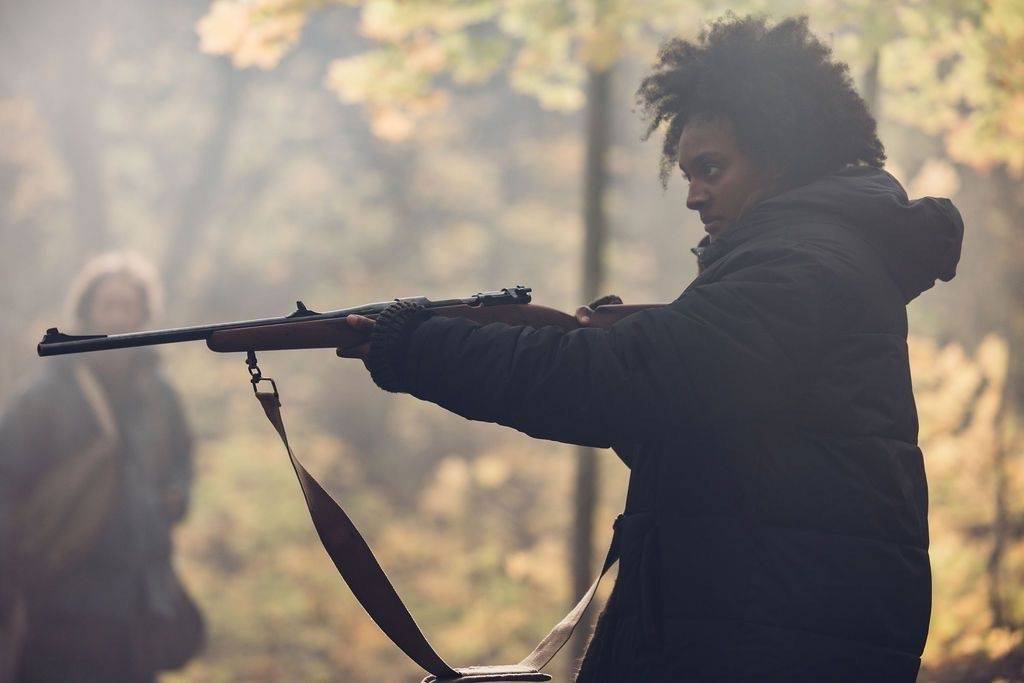
Still from THE WELL (2025) | Courtesy of Fantasia Festival
This emphasis on perspective is clearest in the third act, when Davis and cinematographer Stuart James Cameron take the time to frame each key character in their own single shot, asking us to empathize even when we may be more naturally inclined to cast aspersions. Shot in and around Hamilton, Ontario in the Fall of 2023, the images lean low-key with some deep blues.
While most of the film is set in the characters’ present, there are moments of memory. These passages are softer and more diffuse, treated as fragile and almost dreamlike, in contrast to the cleaner, harder look of the present.
That being said, much of the film appears to be shot on anamorphic glass, which introduces subtle edge distortion that recentres attention and creates a sense of unease at the margins of the frame. This visual choice effectively mirrors how safety feels conditional and local, and how we move further away from our own personal “centre”, things begin to feel less natural and more uncomfortable.
The camera is frequently in motion: following, drifting, reframing as characters negotiate space, but it does stop at very intentional moments. When Davis and Cameron lock off on a tripod, it is typically to hold on small survivals in nature or on a physical process tied to water. These frames serve as a reminder to take the time to slow down when we can and to actively seek the glimpses of beauty, even if we may feel as though the world is crumbling down around us.
Is The Well Worth a Watch?
The Well is a patient, human-first entry in the post-apocalyptic lane. It revisits familiar ideas: environmental collapse, scarcity ethics, and the tension between protection and openness, but treats them with consistent visual choices and storytelling that emphasizes each unique human beat. The slower tempo and widened perspective mean it never plays as a single-protagonist survival tale, and while some viewers will want more time tethered to Sarah alone, others will find the film to be an effective representation of varied human journeys and how we might respond differently to the same hardship.
Ultimately, while The Well won’t be for everyone, Davis gives enough on-screen to keep us interested. He aptly applies documentary instincts to a narrative frame in a way that makes space for humans to register as, well… humans. The Well premiered at Fantasia and has Canadian distribution with Vortex Media, and XYZ Films has international distribution rights.


