

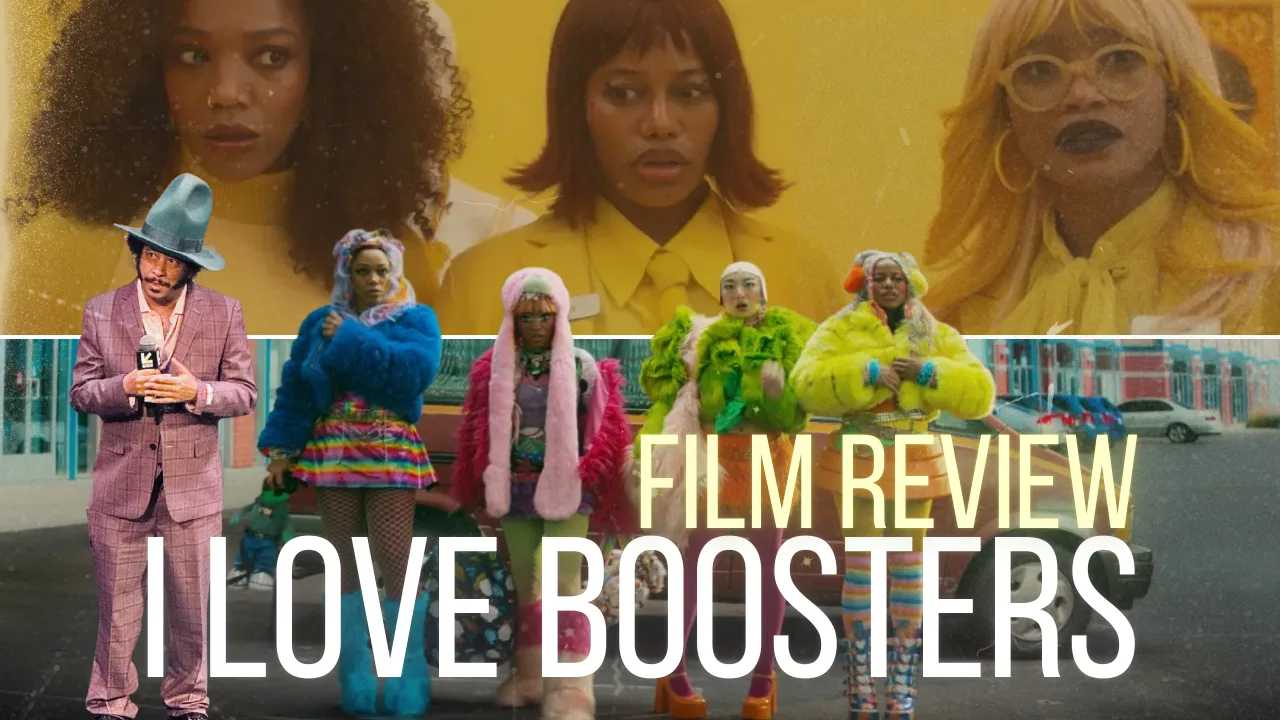

I Love Boosters Review | Boots Riley Delivers Another Wild, Unruly Work of Art
Some filmmakers feel genuinely singular, and Boots Riley remains one of them.
I Love Boosters opened the 2026 SXSW Film & TV Festival with its world premiere at the Paramount Theatre, and it felt exactly like the kind of film you would want to launch a festival with: loud, unruly, politically charged, funny, abrasive, beautifully designed, and impossible to confuse with anyone else’s work. The house was packed, the energy was immediate, and Riley walked onstage carrying himself with exactly the sort of eccentric confidence that has come to define his artistic persona. If you know his work, you know the feeling. If you do not, this is as good an introduction as any.
Riley even told the crowd that he sees this one as his best work yet, which is a bold thing to say when Sorry to Bother You still stands as one of the most original American films of the last decade. I am still more personally drawn to Sorry to Bother You, but that does not make I Love Boosters any less fascinating. In fact, I would not be surprised if many viewers prefer this one.
What is I Love Boosters About?
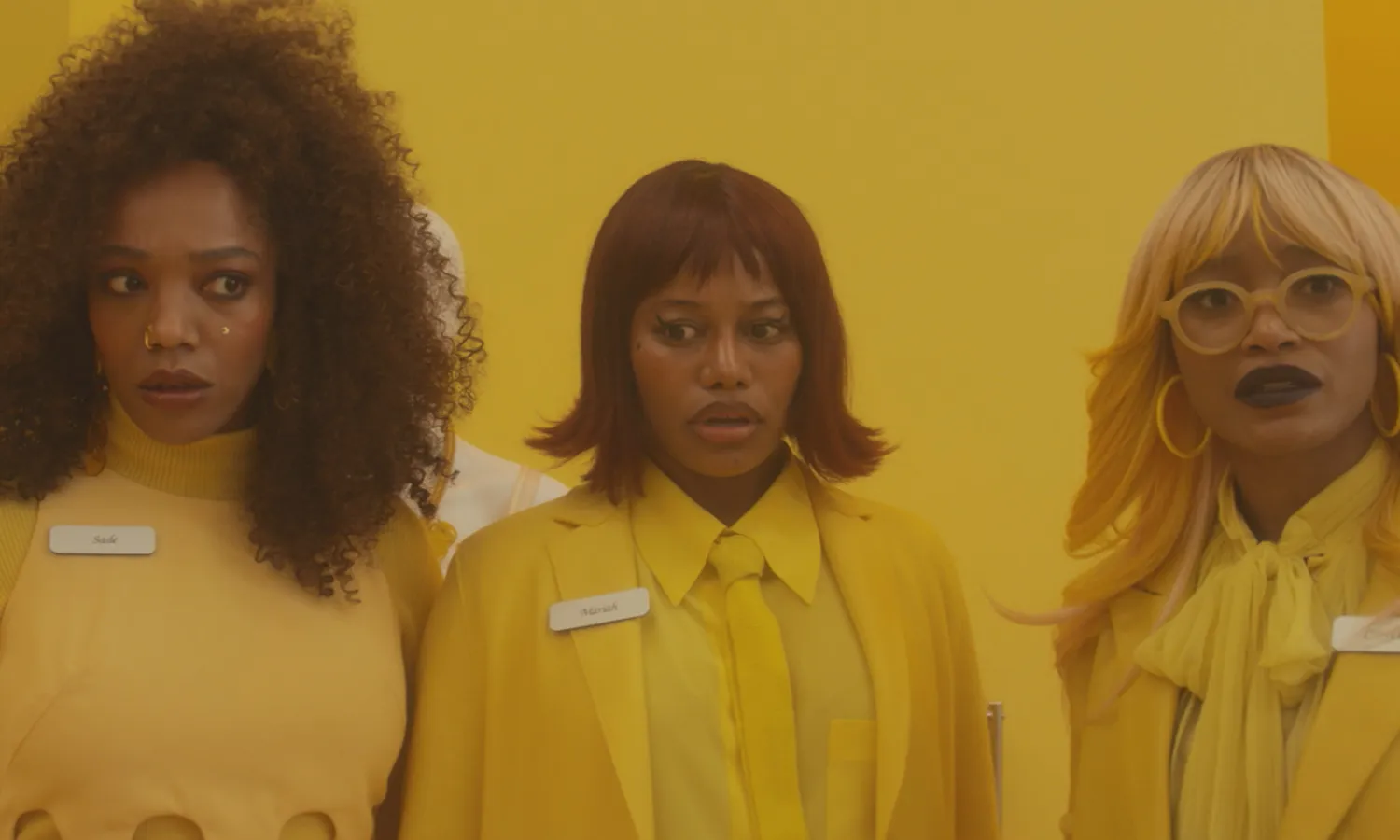
On paper, the premise is simple. In practice, the experience of watching the film is anything but.
At its most basic level, I Love Boosters follows a crew of “boosters” known as the Velvet Gang as they target a ruthless fashion maven. And while that incredibly short synopsis may be accurate, it does almost nothing to prepare you for what the film actually feels like. Riley’s movies are never just plot machines. They are ecosystems. They operate on dream logic, political satire, heightened performance, and sudden left turns that keep destabilizing whatever sense of normalcy you thought you had found.
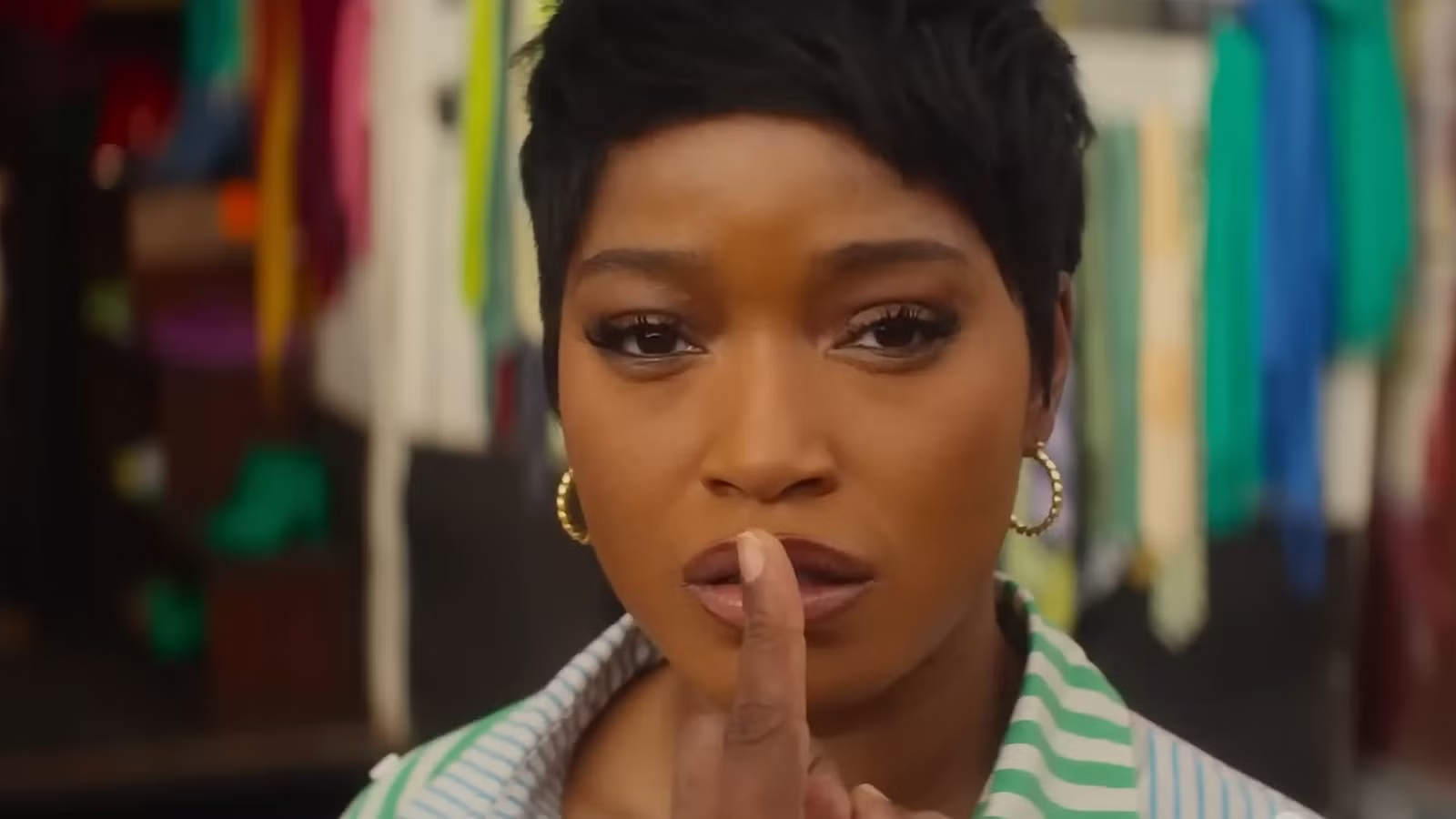
Here, the core trio is made up of Keke Palmer, Naomi Ackie, and Taylour Paige, who play boosters stealing luxury fashion and redistributing it back into the world at lower prices. On the other side of that conflict is Demi Moore as Christie Smith, an elite designer and late-capitalist fashion tyrant whose entire empire becomes a target. That is the shape of the story, but it still undersells the actual film, because Riley folds in sci-fi, political theory, and visual gags that land somewhere between social satire and surrealist prank. The result is a film that can be described, but not really explained. This is one you truly need to see in a theatre.
That is part of what makes Riley such a specific filmmaker. He blurs the real and the unreal so freely that some viewers will absolutely bounce off it. There are times when the film’s refusal to behave conventionally makes it harder to hold onto tangible emotional stakes. That is a legitimate criticism. But if you are willing to surrender to the world Riley is building, I Love Boosters becomes an exhilarating thing to sit with: funny, strange, occasionally maddening, and almost always interesting.
The Cast of I Love Boosters
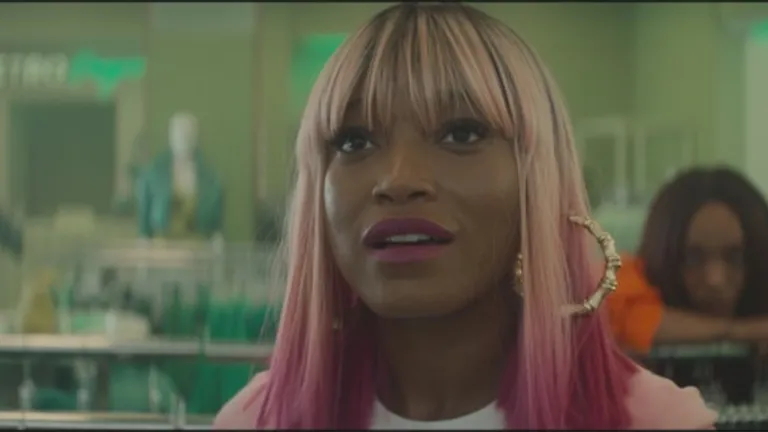
The cast is one of the film’s great strengths. Keke Palmer, Naomi Ackie, and Taylour Paige are terrific together, and they understand the rhythm Riley is asking them to play in. Palmer, especially, feels completely at home in this mode. She has the kind of comic elasticity that lets her sell both the grounded and the absurd without ever seeming to strain for either. She gives the film a centre even as the movie itself keeps splintering outward into stranger and stranger territory. The same is true of Ackie and Paige, who help keep the core trio from ever feeling like abstract ideological pieces on a chessboard. They are funny, expressive, and fully alive in the madness around them.
Demi Moore is also having a great time here, leaning into Christie Smith’s cold, ridiculous hauteur with exactly the right level of theatrical menace. The same can be said for Will Poulter, who gets some of the film’s sharpest comic beats. LaKeith Stanfield, reuniting with Riley after Sorry to Bother You, once again proves how naturally he fits Riley’s sensibility. I will avoid spoiling the particulars of what he is doing here, but every time he entered the frame, the film got a jolt of energy. His performance lives on the same strange beat, again and again, but for some reason, it just keeps working.
The Craft of I Love Boosters
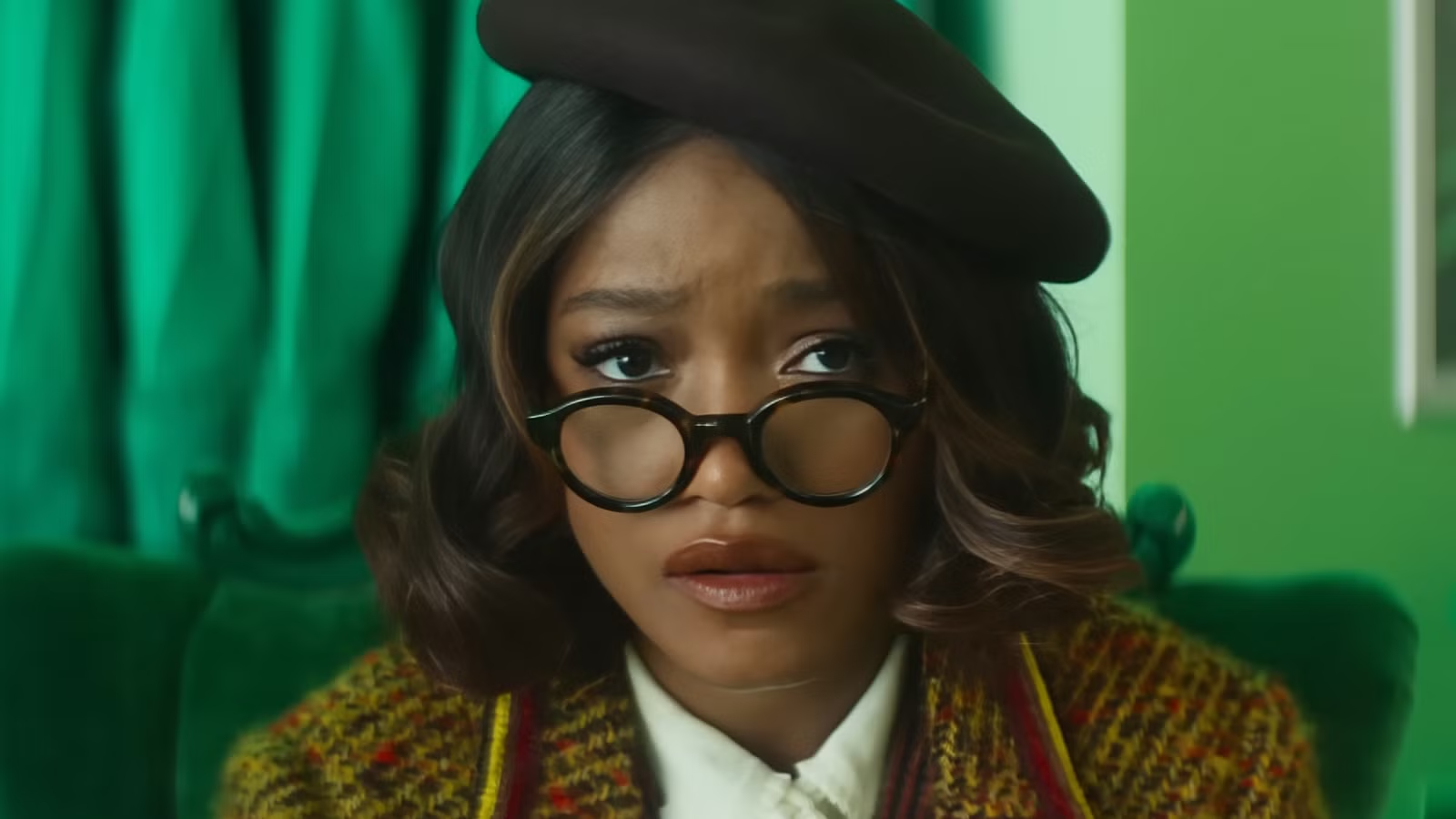
Even if the film’s story does not fully click for you, the craft is undeniable.
The official credits list Natasha Braier’s cinematography gives the movie a warped, heightened visual identity. Production designer Christopher Glass builds environments that feel tactile, playful, and slightly unreal while remaining purposeful. Costume designer Shirley Kurata, whose previous work includes Everything Everywhere All at Once, gives the film a wardrobe language that does a huge amount of tonal and character work all by itself.
And then there are the things that make I Love Boosters feel handmade in the best possible way. The stop-motion work is extraordinary. The miniature work, especially in the latter half, adds a kind of tactile delirium to the film that digital slickness simply would not have achieved. As Riley explained after the screening, what began as a smaller idea apparently expanded into far more extensive use of miniatures once the team realized what the format could do for the film.
One of the most intriguing details from the post-screening discussion involved the film’s lenses. Riley described Braier working hand in hand with Panavision to create hybrid optics tailored to the look they wanted, including a strange accordion-like visual apparatus used for the LaKeith Stanfield scenes. Whatever the exact engineering was, the effect is memorable. It gives those scenes a pulsating, unstable quality that is both funny and vaguely unnerving.
The Dialectical Materialism of It All
Because this is a Boots Riley film, the politics are not subtext. They are text. But what I appreciate is that I Love Boosters rarely feels like a lecture, even when it is openly drawing on Marxist ideas.
There is a futuristic device at the centre of the film that is explicitly tied to dialectical materialism, and I found that absolutely hilarious the first time it came up. Years ago, I taught political ideologies in England, so hearing a major SXSW opening-night comedy start riffing on Marxism, contradiction, thesis and antithesis, labour, alienation, and revolutionary possibility hit me in the best way. The miracle is that Riley manages to build those ideas into the machinery of the film without everything devolving into a sermon. The movie is political, yes, but it is also playful. It wants to provoke and entertain at the same time.
That is also what makes the film’s industrial context so fascinating. The budget was roughly $20 million and is NEON’s biggest in-house swing to date, which heightens the film’s built-in contradictions. Here is a relatively expensive studio-backed genre object openly toying with Marxist language, class antagonism, and capitalist absurdity. Riley seems fully aware of that contradiction, and the movie itself seems aware of it too. Strangely, that self-awareness becomes part of the joke, and part of the film’s intelligence.
Is I Love Boosters Worth a Watch?
Absolutely, with one qualification: it is not for everyone.
This is a surreal, aggressively strange, deeply stylized work from a filmmaker who has no interest in sanding down his edges. Some people are going to love that. Some people are going to hate it. Some are going to admire it more than they fully connect with it. I fall a little into that third camp. It didn’t hit me as hard as Sorry to Bother You did, and I also felt the second act drag just slightly before the film veered into something far more unhinged by the end. But even when it wobbles, it is wobbling in interesting ways.
At the very least, I Love Boosters is worth seeing because it feels like a real artistic object. It is packed with ideas, packed with craft, and packed with images that do not resemble the flattened sameness of so much contemporary studio filmmaking. Riley remains a one-of-one filmmaker, and I Love Boosters is unmistakably his.
The film premiered as SXSW’s opening-night world premiere on March 12 at the Paramount Theatre and is set for a theatrical release from NEON on May 22.


Pingback: Top 5 Films from SXSW 2026